

Ethiopia. Why Ethiopia?
Yes, why Ethiopia?
So, here’s the deal. This is the story of how I ended up in Ethiopia, on the continent of Africa.
Was this a well-thought-out plan and extensively researched? Did I have a lifelong dream of visiting Ethiopia? No, none of the above was true. My visit was purely random.
I always have a plan.
I was going to be spending two weeks in Africa. The first weekend had me seeing a race in Angola. The second weekend had me seeing a race in Senegal. During the middle of those weekends, I figured I could carve out three days in another African country just to see what I could see.

Google and now ChatGPT.
I did about three minutes of Googling and some more time with ChatGPT. I found out that I could fly from Angola to Togo, another country in Africa. It wouldn’t be difficult to get from Togo to Senegal. At that moment, I didn’t even know Togo WAS a country.

104.
There are 193 countries in the world, depending upon who you ask. If I could make it to Togo, that would be the 104th country that I have visited.

The largest city in Togo is Lomé. Lomé is a border town between Togo and Ghana. If I could get myself to Lomé, then maybe under the cover of darkness, I could sneak across the border into Ghana and get country number 105. I am an opportunist.
I’m retired. I spend my time and eat every one of my breakfasts…in my office.
Of all of the rooms in our modest seaside cottage. I probably spend the most time, right up there with our bedroom, in my home office. That’s where I do all of my planning and research.
Visas…real important.
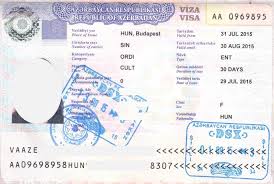
The challenge with international travel is understanding each country’s visa system. Some countries don’t require a visa for American residents. Others require you to apply in advance of your visa and sometimes charge fees as high as $250 per person (Russia!). Others simply allow you to get your visa “upon arrival.”
O.K. I’m not perfect.
Usually, I check the visa requirements for any country I’m planning to visit because of a bad experience I had once while traveling to India. I didn’t think India required a visa. I thought I had seen that somewhere.

So, what happened with that India trip? A few years ago, we planned a 10-day trip to India, which included the World F1 Grand Prix in Noida.
Before we left, on a Tuesday, we were having lunch with our airplane captain son, J.J. This was a random lunch get-together. He had just completed his last flight with his regional airline before moving up to his first officer position with one of the “Big 5” American Airlines.
J.J. asked me how the India visa process had gone. “India Visa?” I asked. A little more discussion made it clear that India absolutely required a visa. We didn’t have any Indian visas! We had needed to apply for those in advance. I learned about this on Tuesday. We were leaving for India on Saturday. Oh my.
Randy, c’mon, man.
Some folks might be thinking and even saying to their spouse and loved ones. “This Randy is a character. He does everything by the seat of his pants. Now, in India, he’s going to pay!” My response? Maybe, but maybe not.
The only way I could get a visa for India at this time was to travel to the “Indian ENTRY (Emergency) Visa San Francisco Consulate.” This proved that India knew there would be guys like me. They had set up an EMERGENCY CONSULATE just for me! The closest consulate was in San Francisco, 500 miles from where I live, south of Los Angeles.
No problem. I would fix things.
I figured I would drive up the next day, on Wednesday, and be there when the office opened. I would have those visas and be home by Wednesday night. Problem solved.
Not every problem has an easy solution. As luck would have it, bad luck, Wednesday was a national holiday in India, and their consulate in San Francisco would be observing that holiday nearly 8,000 miles away as the crow flies. The consulate was closed on Wednesday. Oh my.
New plan. I would drive up to San Francisco on Wednesday night and be there when the doors opened on Thursday morning. Time was ticking. Our flight to India was Saturday afternoon.
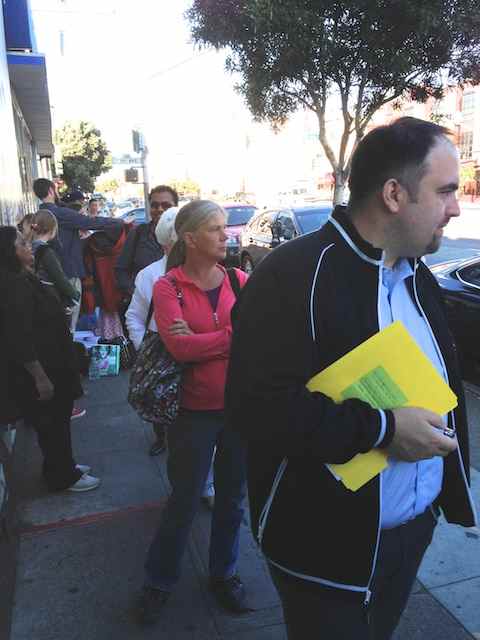
I was one of the first people in line Thursday morning at the consulate. I submitted Carol’s passport with mine to get those visas. They told me I would have to return at 5 p.m. At that time, the passports would be returned to everyone with the emergency visas. I spent the day walking around San Francisco, which is a great way to spend any day, and returned at 5 p.m.

Carol? Where is Carol’s visa?
About 75 people were waiting in the office at 5 o’clock for their passports and their Indian visas. They started calling one name after another. Finally, they called my name, but not Carol’s. I waited. I waited some more. Then they said they had finished calling all of the names. About four of us were still waiting. It turned out that there had been a “mix-up.” There was no visa for Carol. They said I would have to return the next day, Friday at 5 p.m., and go through the process again, and her visa would be ready. Oh my.
Not only were the Indian visas expensive, but getting a second night at a hotel in San Francisco was costly as well. On Friday, I continued touring the Bay Area and returned to the Indian consulate at 5 o’clock. They started calling all of the names again, one by one. Finally, with about 10 people left in the room, Carol‘s name was called, and I grabbed her Visa.
Now it was Friday night in San Francisco, and I had those Indian visas. As more bad luck would have it, there was a public transportation strike in San Francisco, which made traffic extra heavy. We were leaving for India in 22 hours. I was 500 miles from home. It took me a while to get out of San Francisco and make that 500-mile drive, but I got back home at about 4 a.m. We were leaving for the airport in eight hours.
Folks, I have extensive experience with international travel. It is problems like this, often created by my own doing, that help make the next trip that much easier to navigate.
Now, back to how I would get to Togo.
Yes, back to Togo. I went online and ordered a Togo visa for $62 US. However, I could never get the system to work and finally gave up, even though I had paid for the Togo visa. Carol told me I should try to get a refund. No thanks. I had better uses for my time.
If not Togo, then where?
I did some more research and found a replacement for Togo. That is how I ended up in Ethiopia! They had a $62 visa fee as well, but at least their system worked for me. I was going to Ethiopia!

Your opinion, please.
My flight from Luanda, Angola, to Addis Ababa, Ethiopia would have an hour-and-a-half stop in the Republic of the Congo (yes, all of these African countries have colorful flags!). If I were allowed to get off the plane and enter the airport for 90 minutes, would that count as a “country visit“? What do you think?
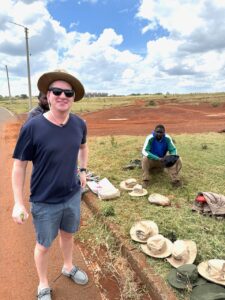
I was on the fence on this one. I talked to my good friend Dustin, who is also trying to see as many countries as he can and hopes to see 100 of them by the age of 50. He’s got about six years to go. Dustin will easily meet his goal.
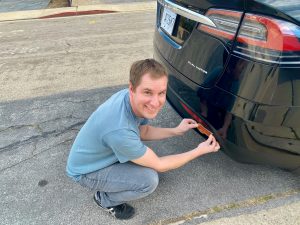
Dustin says no.
Dustin didn’t think a visit like that to the Republic of the Congo should count as a new country. My point of view was that if I got off at the airport and had a meal or a drink in the Congo, I would have to count it as a country visit.
Here’s an example of what could happen. If I had a margarita, got sick, and nearly died from it, how could I say when someone asked me, “Where did you get sick from the margarita?” My answer would be the Republic of the Congo. There was no way I could then say that I had never been to the Republic of the Congo! Do you follow my logic?
As luck would have it, passengers were not allowed to get off the plane during our 90-minute stop at the RoC. So, all discussion of whether the Congo would be a new country visit was now moot. Yes, these are all first-world problems to decipher.

I am a Hyatt man.
One of the pluses of visiting Addis Ababa, Ethiopia, was that they had a Hyatt Regency hotel where I could stay.
By the end of 2025, I will have been credited with 182 Hyatt stays. Some of those days came from bonuses and other benefits, but I probably have physically stayed in a Hyatt hotel about 150 nights for the year.
I made a reservation at the Hyatt Regency in Addis Ababa. My reservation included a guaranteed suite upgrade at no extra cost. In my opinion, and in every travel podcast and miles and points podcast I have ever listened to, Hyatt is not only the best frequent stay program in the HOTEL business, but in the AIRLINE business as well.
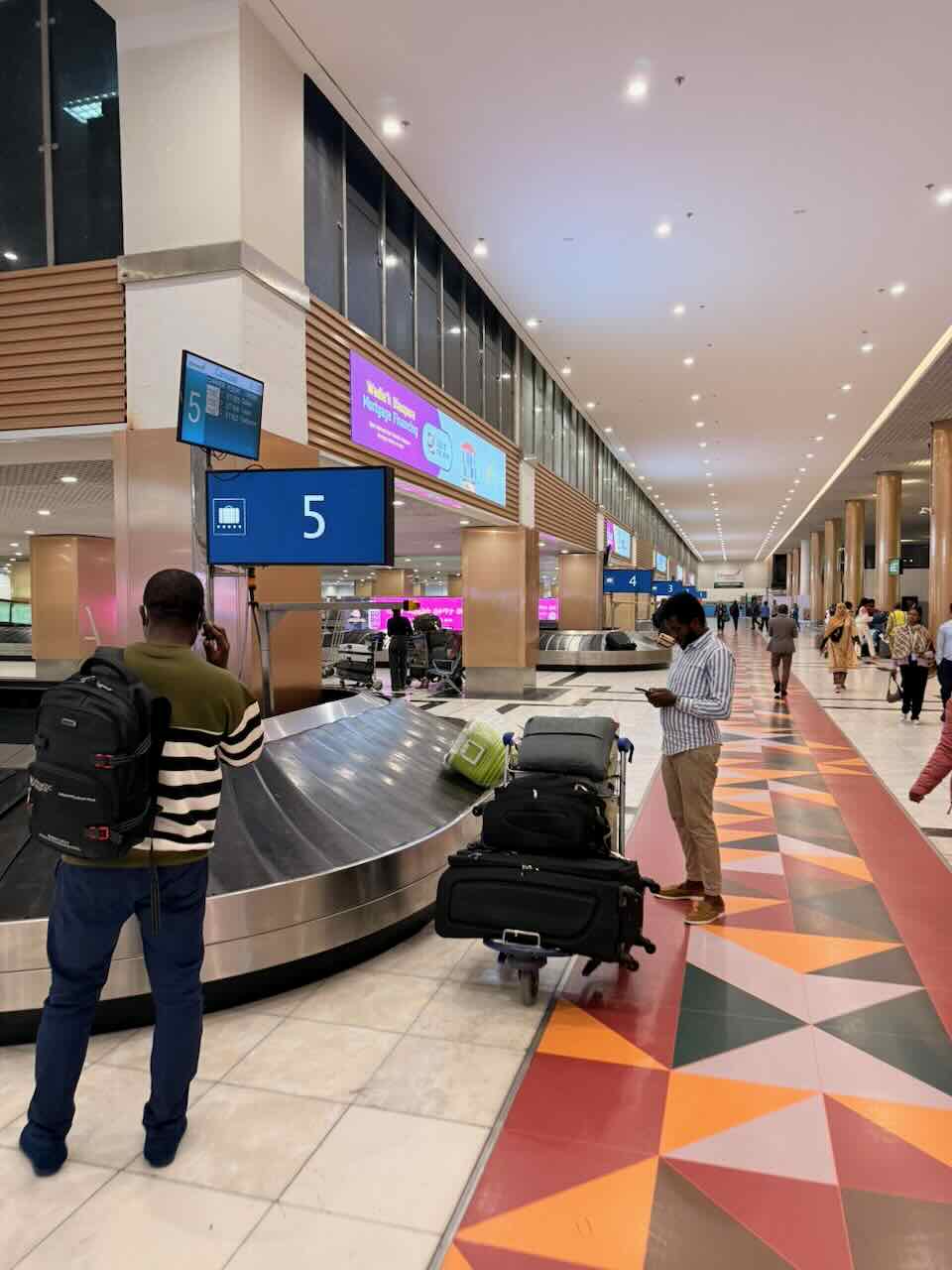
Ethiopian arrival.
Clearing customs in Ethiopia was easy. They had a modern, large airport. I would find out over the next three days that Ethiopia is a very well-developed African country, especially compared to Angola and Senegal, the two other countries I visited on this trip.
Ethiopia is the second-largest African country by population. They have 130 million people with a median age of just 19. Ethiopia is one of the world’s poorest countries, and 80% of the economy is based on Agriculture. Life expectancy is relatively low, with men at 65 and women at 68. They have a literacy rate of somewhere around 50%.
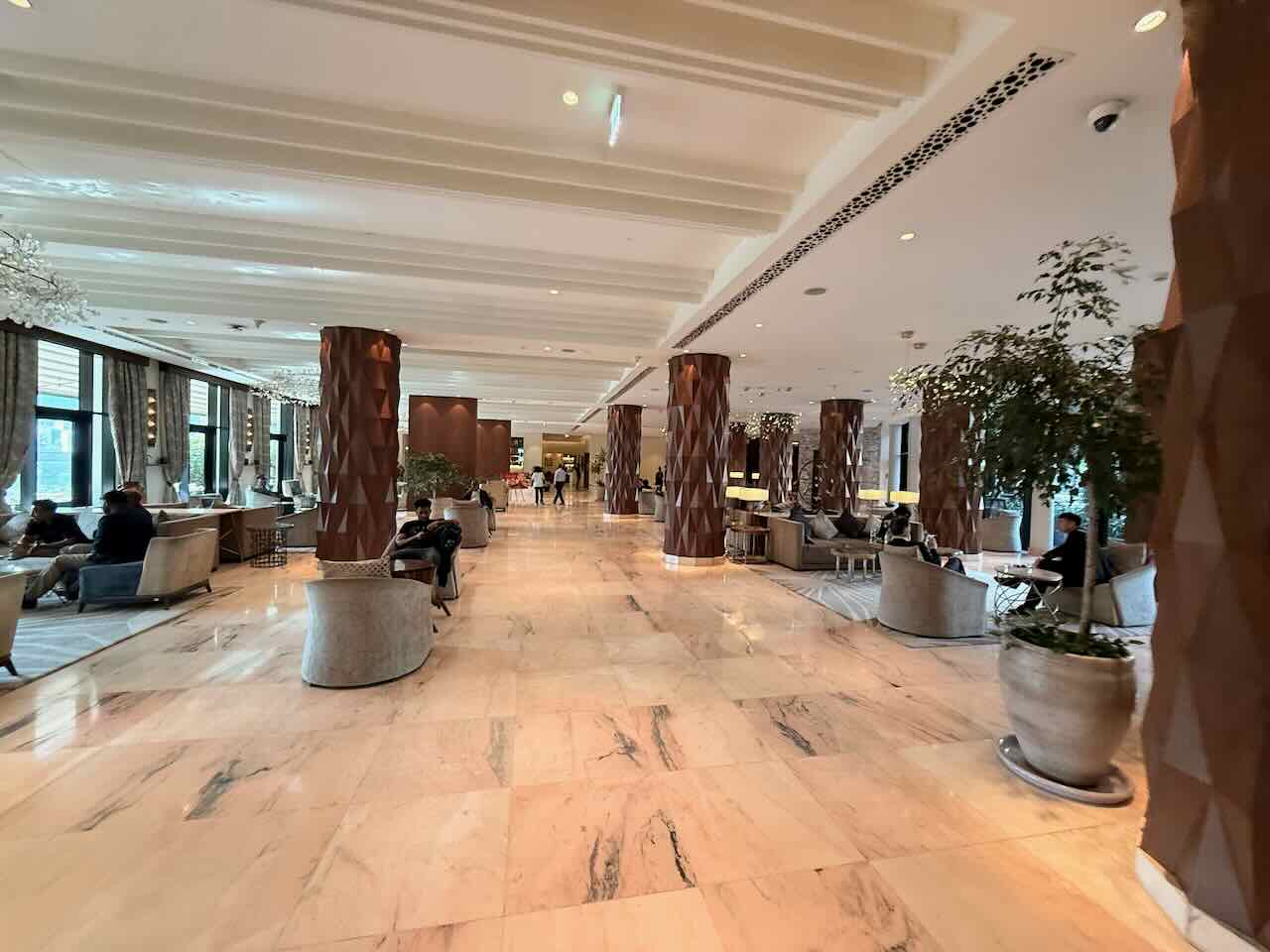
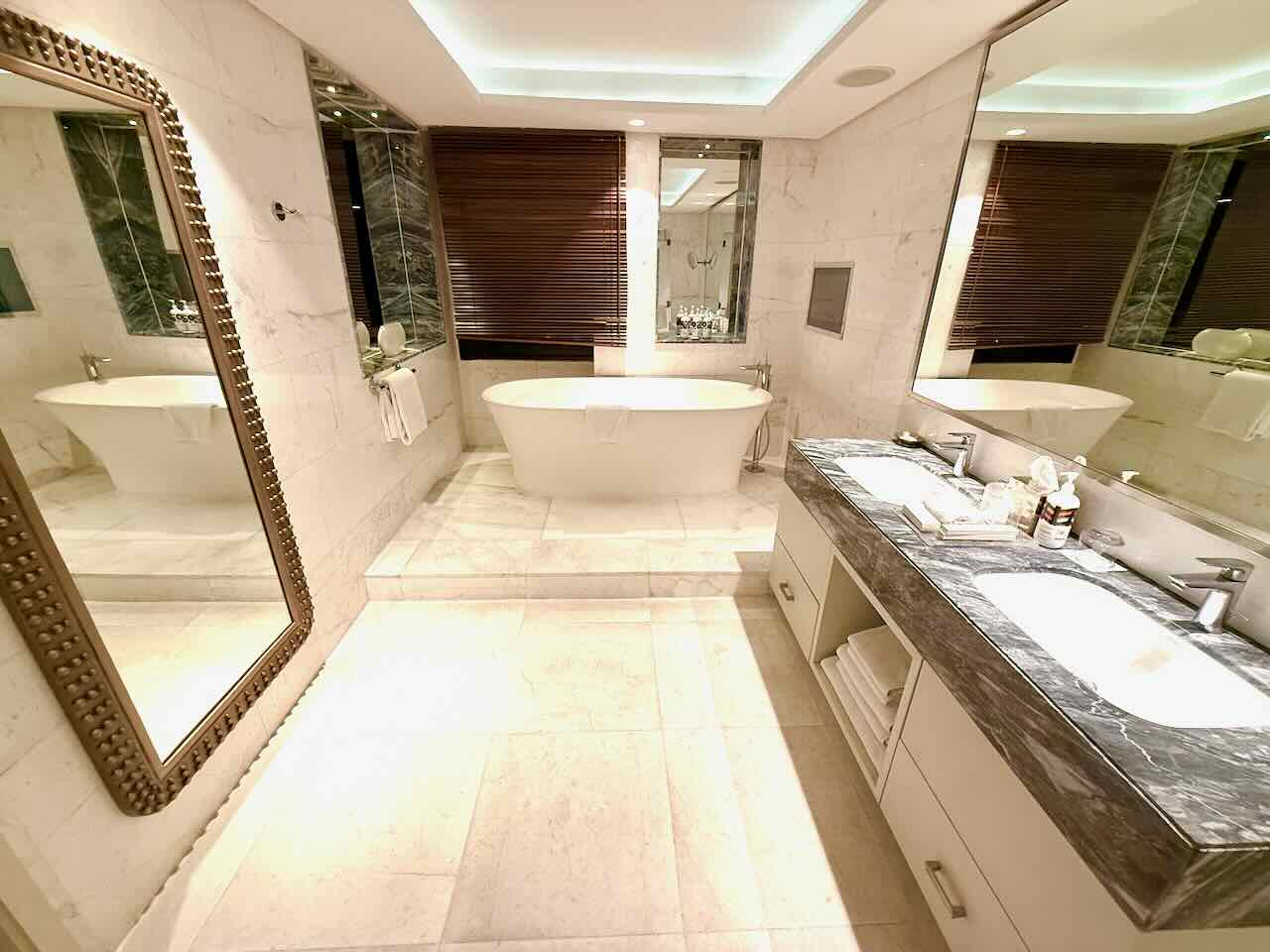
I like to stay at nice places.
As noted, I have stayed at my share of Hyatt properties and specifically Hyatt Regency hotels. The Hyatt Regency in Addis Ababa was as nice as any Hyatt Regency I have ever stayed in and maybe nicer. My suite was large and comfortable. It came with a bathtub that could’ve accommodated Kareem Abdul-Jabbar.
I’m on vacation and only responsible for myself.
On my first morning in Ethiopia, I slept late and missed breakfast, but the hotel concierge recommended a nearby authentic Ethiopian lunch spot.
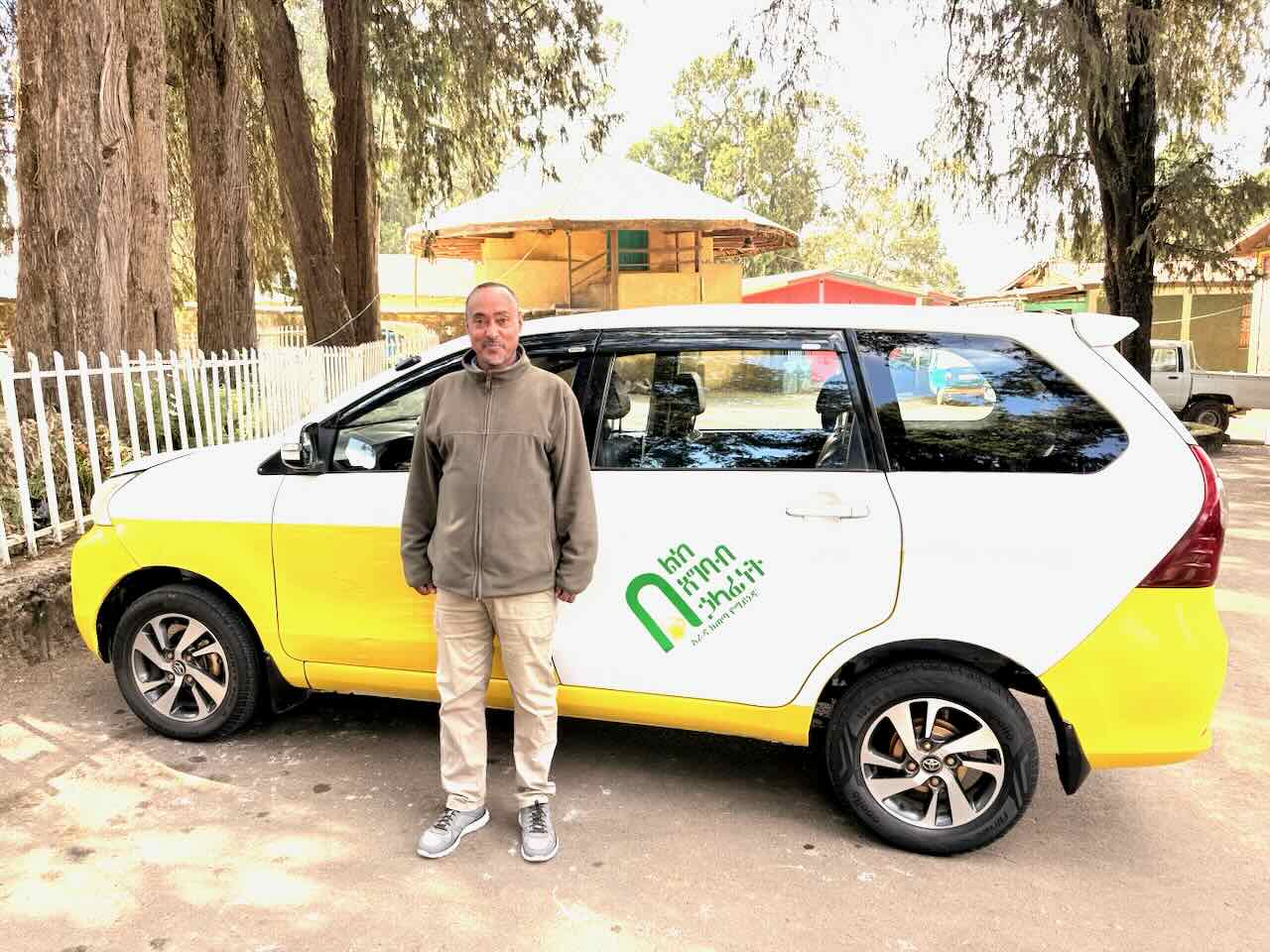
My first introduction to Ermias.
I grabbed a taxi from the hotel to the restaurant. My driver, Ermias, spoke English well and seemed like a responsible guy. Our taxi ride took 10-15 minutes. When we got to the restaurant, Ermias told me he could wait and take me back to the hotel whenever I was finished. I had thought about walking back to the hotel for a cultural experience. The walk would’ve been a little bit more than a mile. Ermias recommended against it for my personal security, and for a taxi fare of just five dollars each way, I agreed with them.

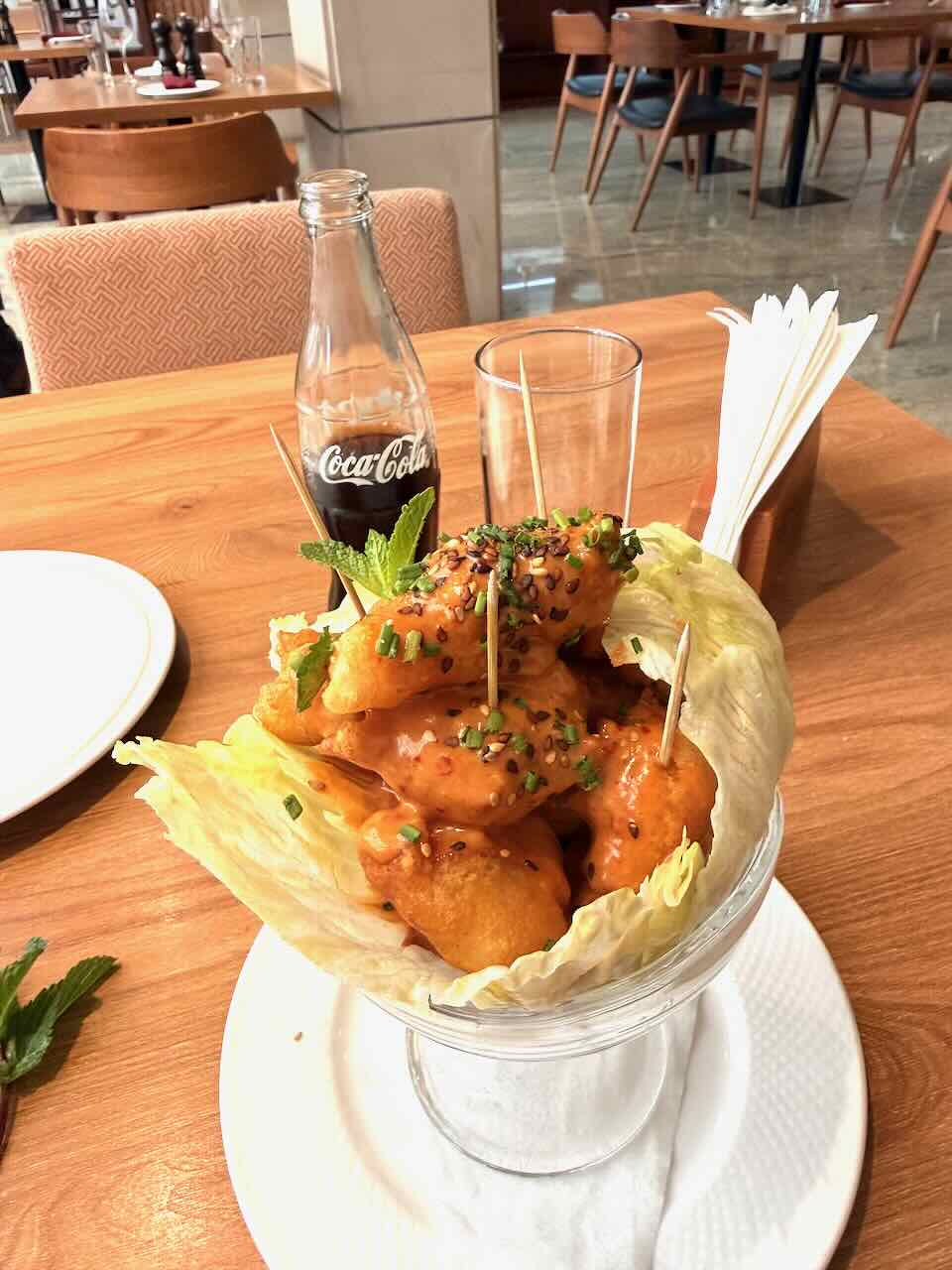
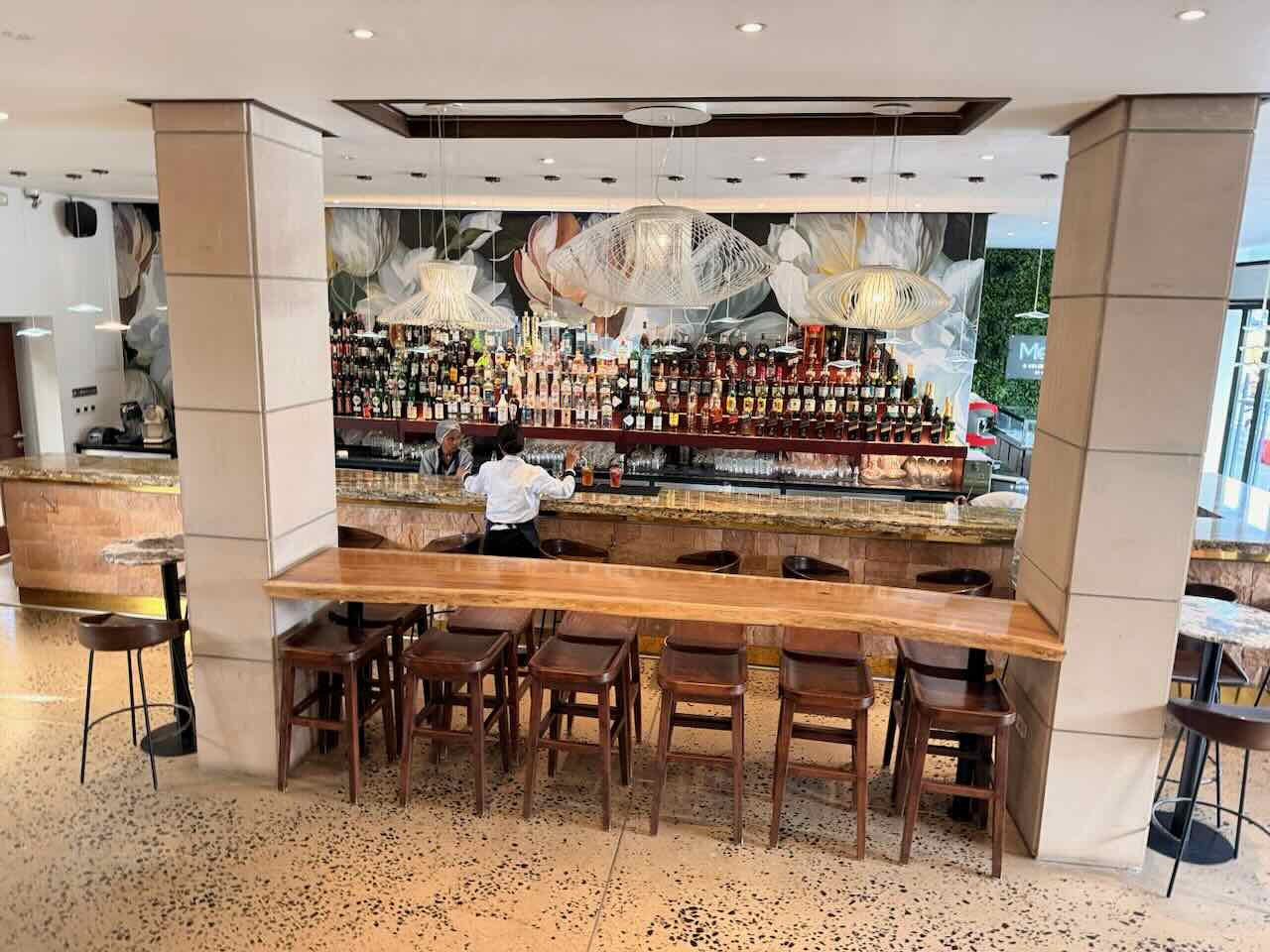
Ethiopia may be a poor country, but you wouldn’t know that from this experience.
Lunch was lovely. I had a Mai Tai, Coke Zero, shrimp bites, and pasta, all served in an upscale atmosphere. I might have had dessert as well, but since I didn’t take a photo, I can’t remember for sure. Was I eating a bit much? Hey, I was on vacation!
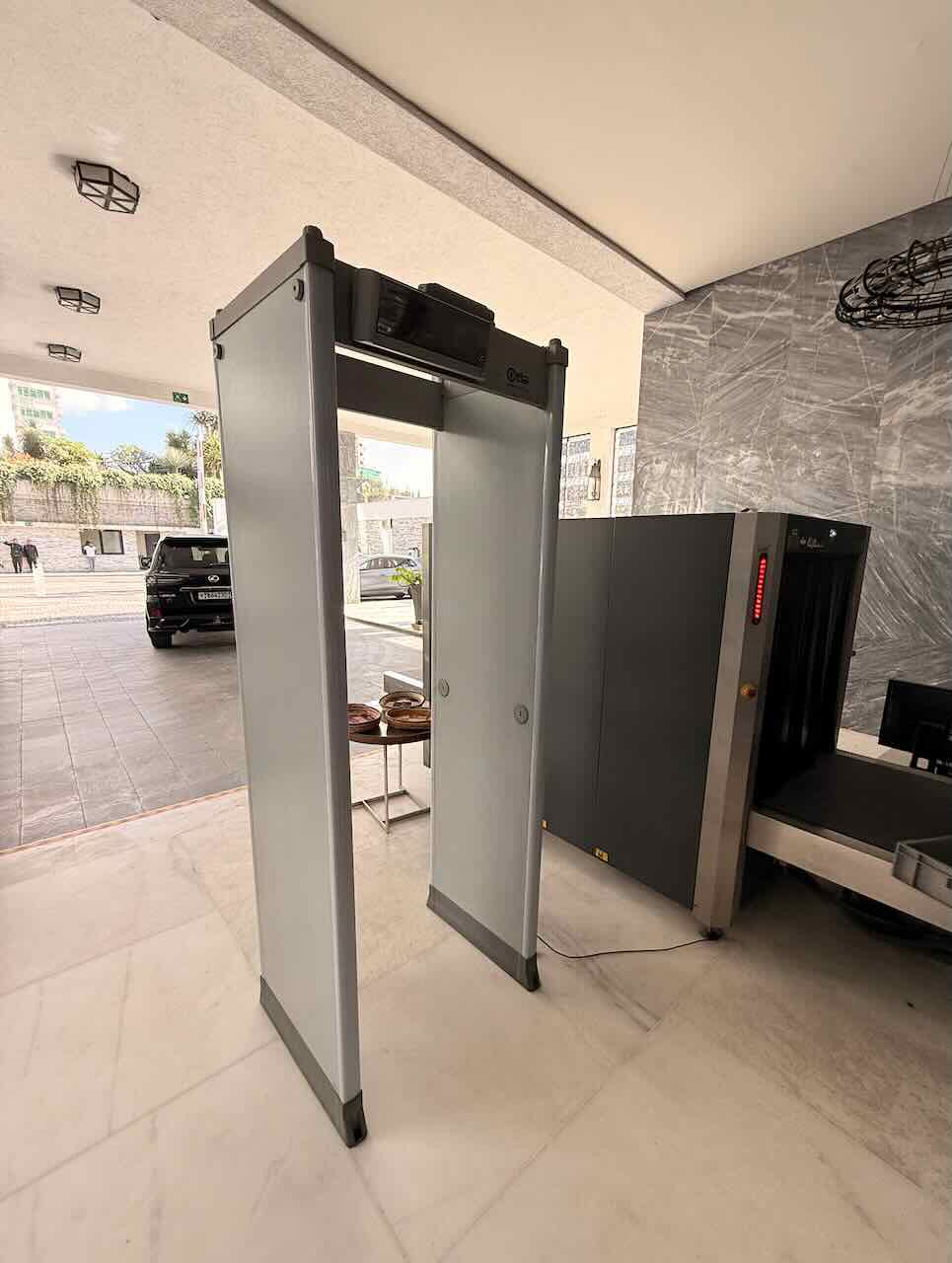
Hotel security.
At many hotels around the world, luckily not in the United States yet, visitors and guests must pass through a metal detector to enter. I needed to put whatever I was carrying through a conveyor belt metal detector, just like you see at airports.
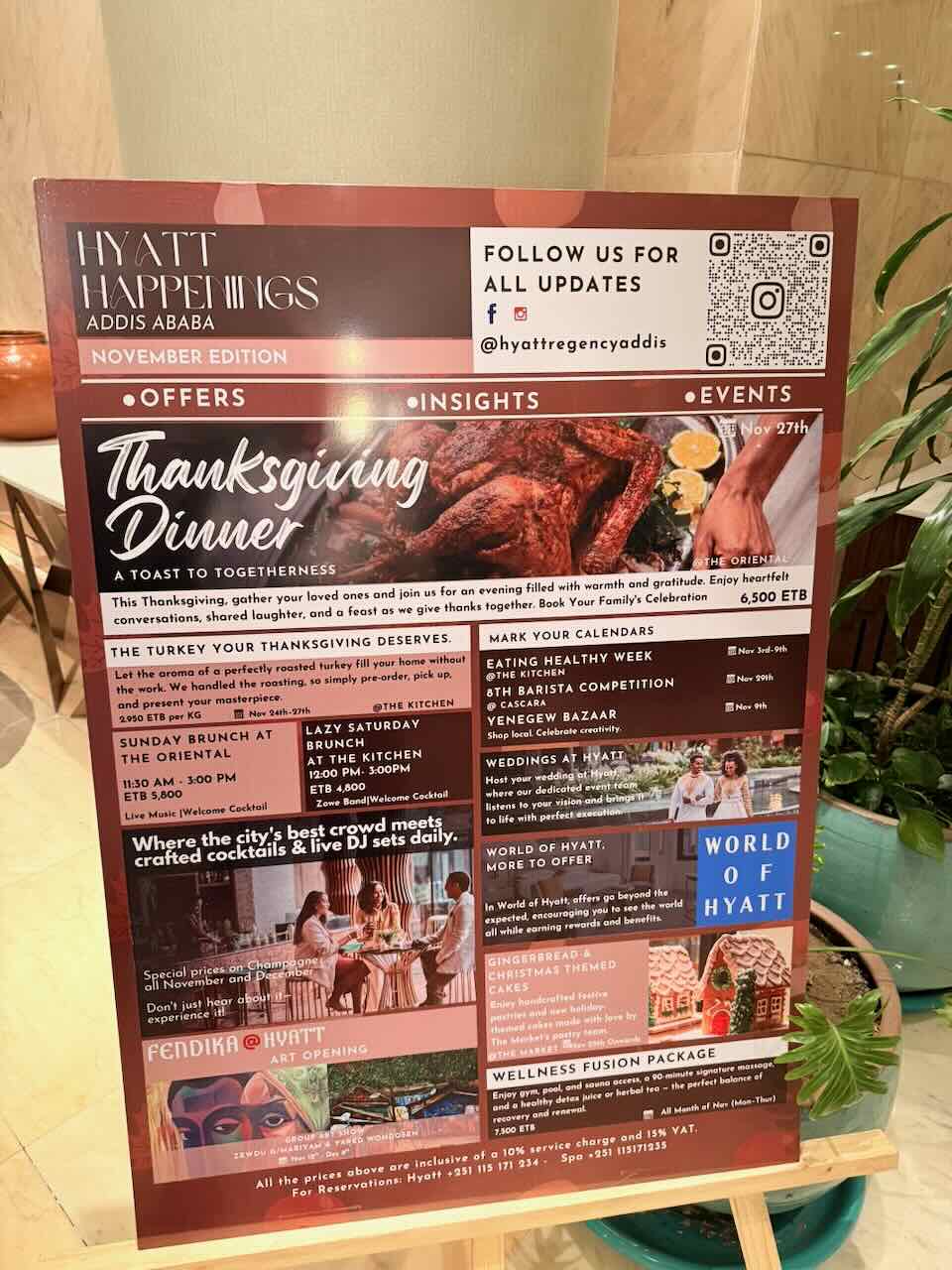
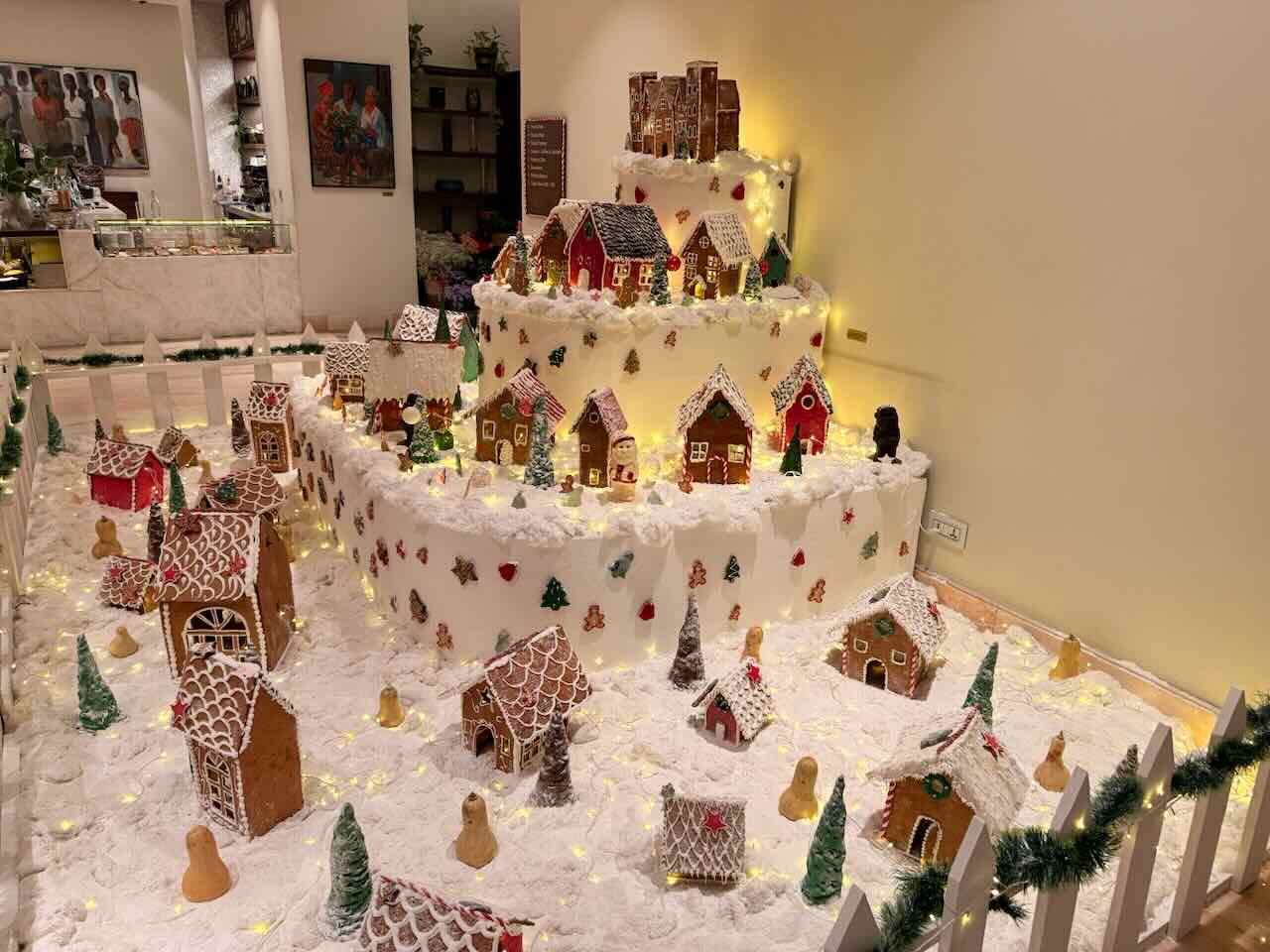
Since this was right around Thanksgiving and Christmas was coming up, the hotel had several large displays presenting its Thanksgiving dinner promotion and a beautiful miniature village Christmas display. Just like America….in Africa!
Speaking English is a valuable skill.
I have learned over time that it is a good idea to have a driver who speaks English and seems responsible. Ermias was that guy. When he returned me to the hotel, I asked him if he might like to be my driver tomorrow and take me on a full tour of wherever I wanted to go in Addis Ababa. He said he thought that was a great idea.
Ermias and I would become business partners.
How much would an all-day tour cost? Ermias threw out the number of $100 for the day. I considered that for a moment. Then I showed him a screenshot of a GetYourGuide all-day tour of the area for $60 US.
I would much rather have a driver who goes where and whenever I want all day long than get on a GetYourGuide-type tour. There’s no comparison. When I showed Ermias that screenshot, he lowered his price to a matching $60, and we had a deal that worked for both of us.
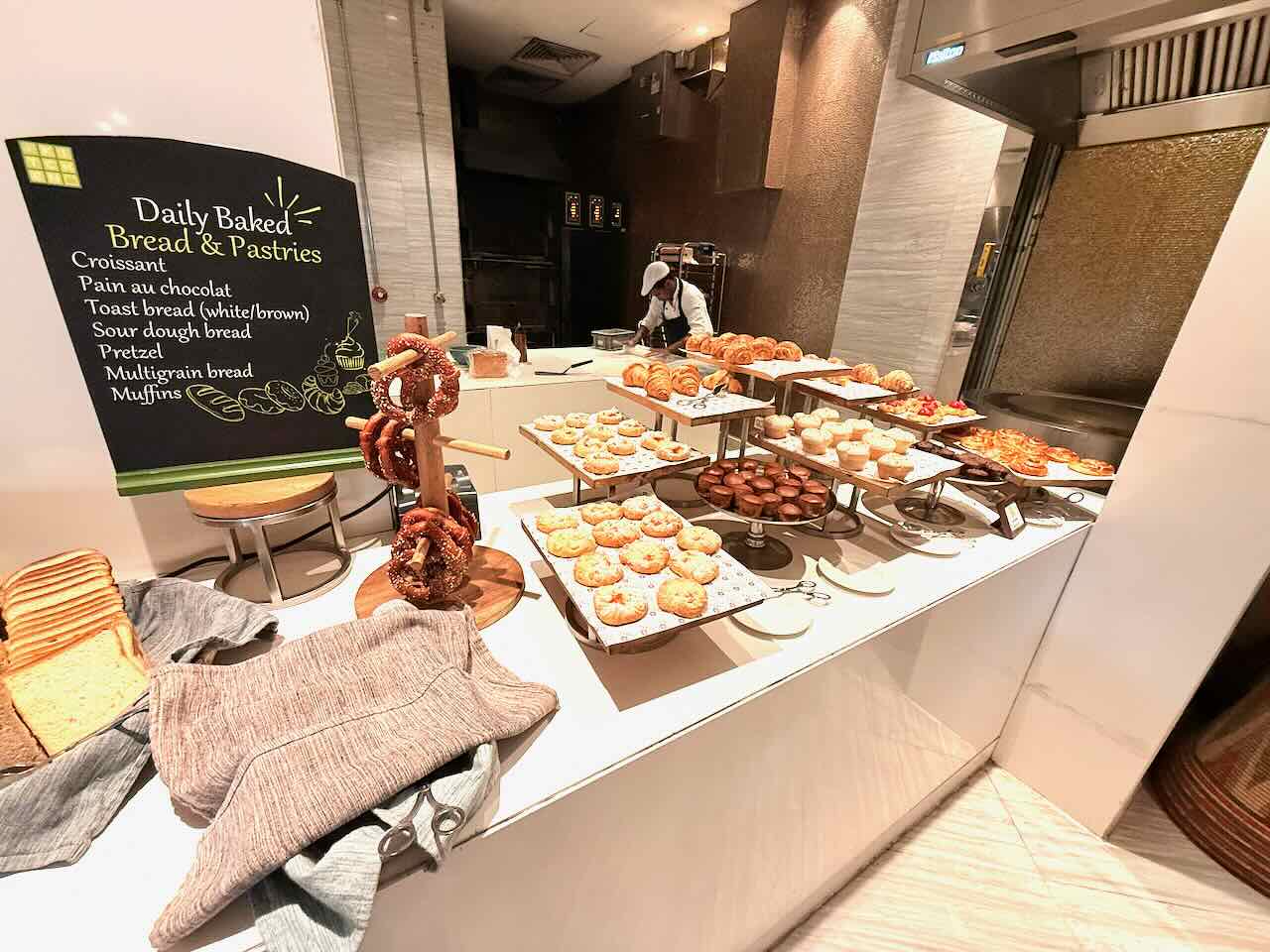
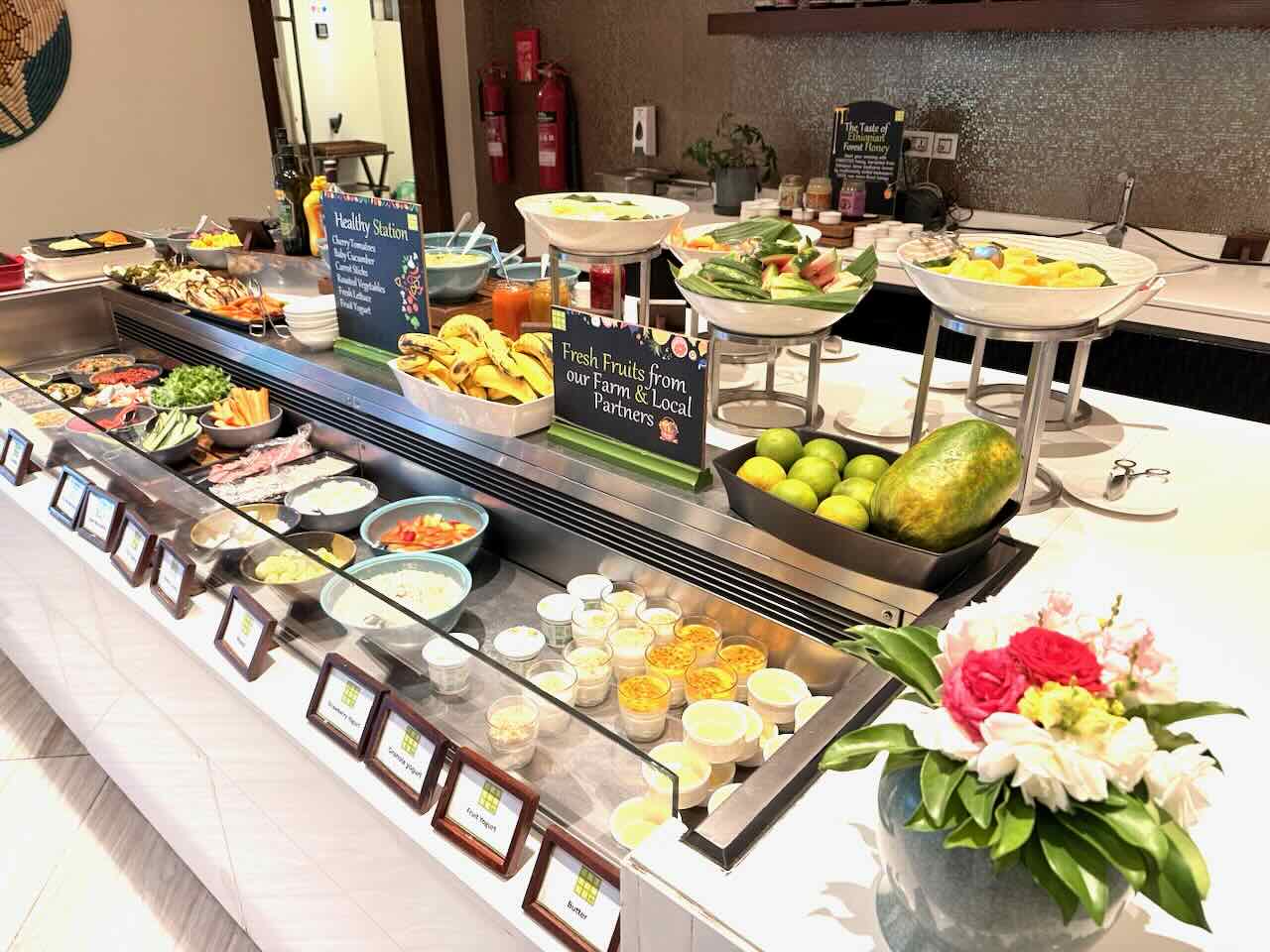
This was a breakfast!
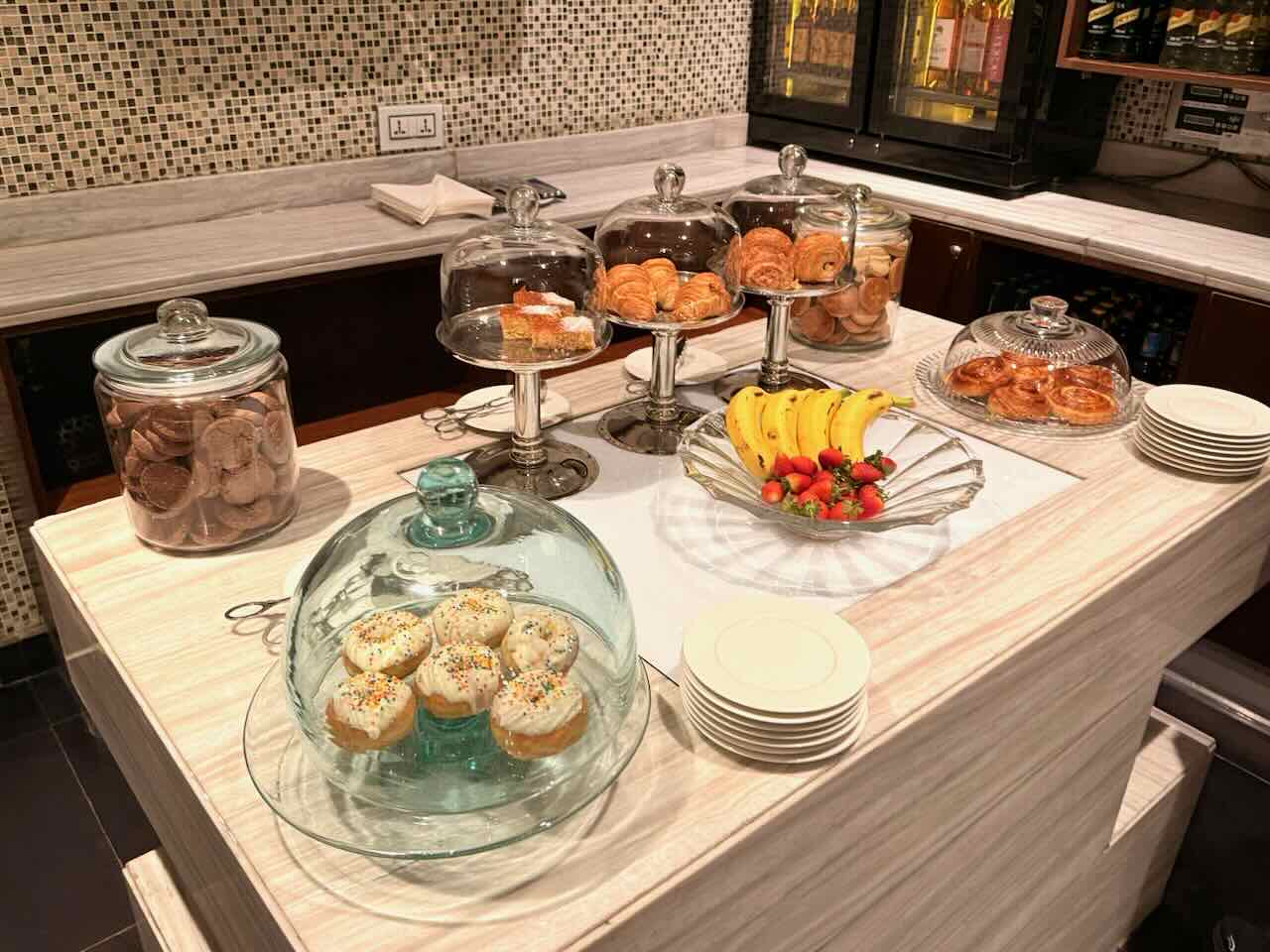
The next morning, I did wake up in time for breakfast. What a spread. The upscale Hyatt hotels really do a great job with breakfast. I didn’t want to eat all that much, but just looking at everything made the complimentary price for Hyatt Globalists a fun thing to do.
Ermias had a nice car.
Ermias met me at the appointed time, and off we went. He had a very modern SUV vehicle, so we were able to drive around in comfort all day.
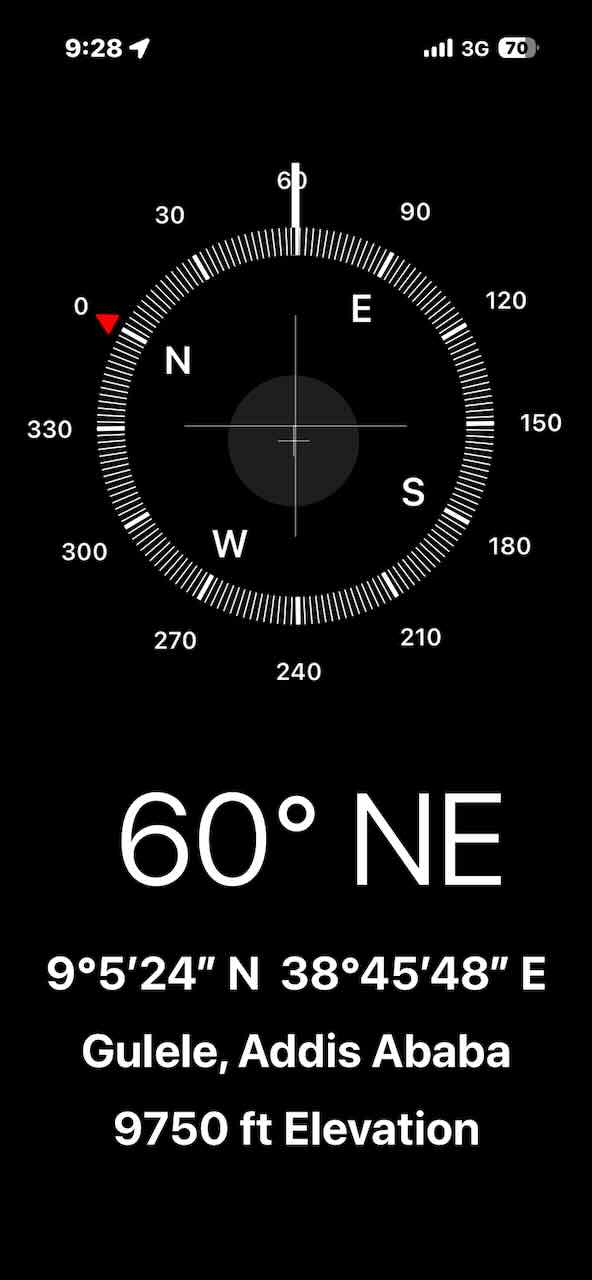
Screenshot
Why did my breathing seem difficult?
I thought I had been having a little difficulty getting my breath when I landed in Addis Ababa. I didn’t know what was causing that. Later, I would learn that the elevation in Addis Ababa, Ethiopia, was nearly 8,000 feet. Our first stop on today’s tour was at a church “on top of the mountain.” The elevation there was 9,750 feet. That’s pretty high. I once saw a race in Bolivia at an elevation of just over 14,000 feet and that WAS up there.
Museums.
I didn’t exactly know what I was seeing. Ermias told me that the church on top of the mountain was a must-see and was very popular with tourists. When I travel, the photos I take are the most important to me.
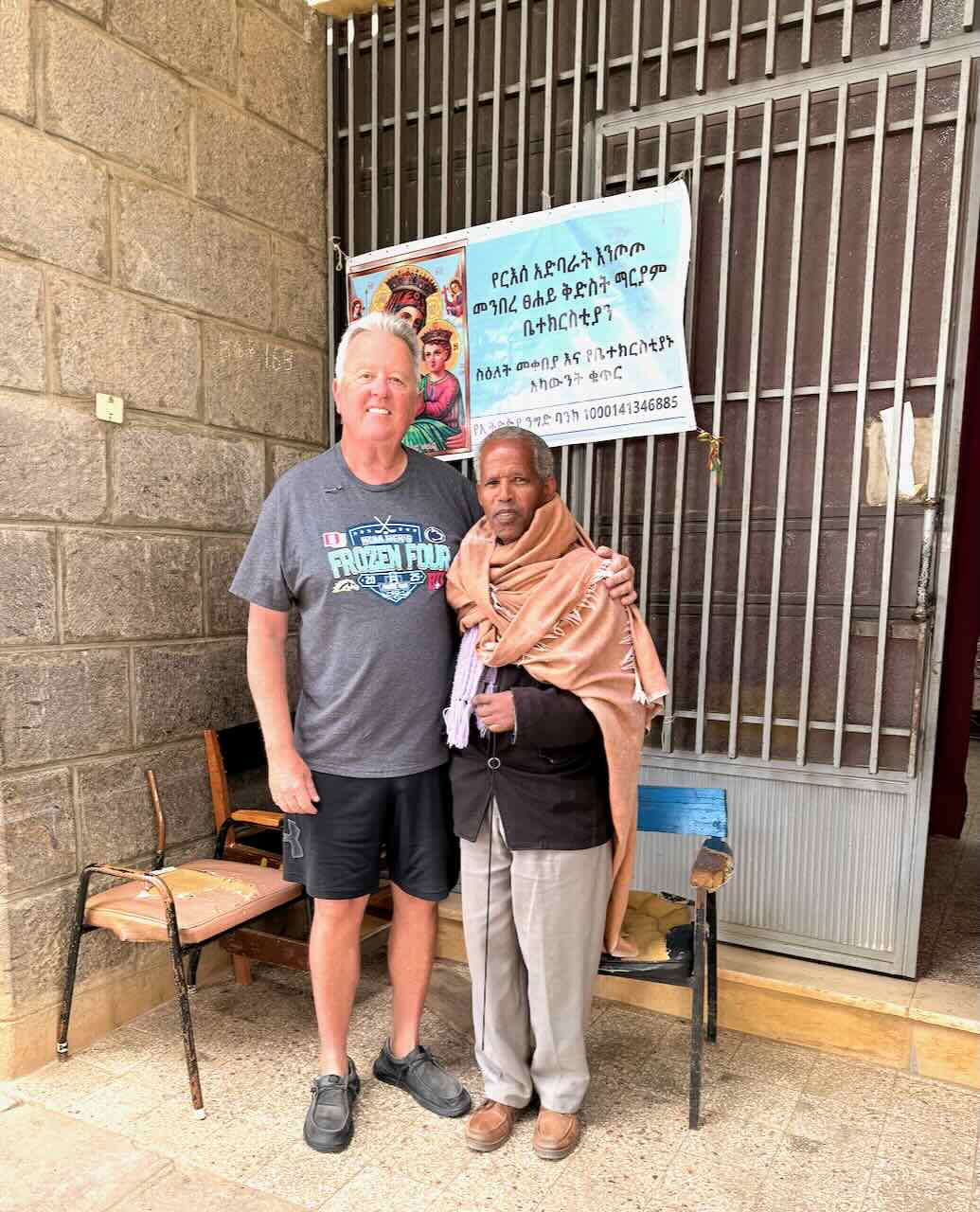
That’s why I was most disappointed with our first tour: no photos were allowed in the museum. This was a guided tour, just me, the guide, and Ermias. No pictures allowed in the museum, but the guide was happy to have his picture taken with me.
This is not my way to visit museums.
I would take two museum-type tours today and discovered that the tour guides wanted to stop at EVERY display in the place and explain it. Oftentimes, I can breeze through a museum that might take some people two hours in 25 minutes. Everyone should enjoy a museum at their own pace.
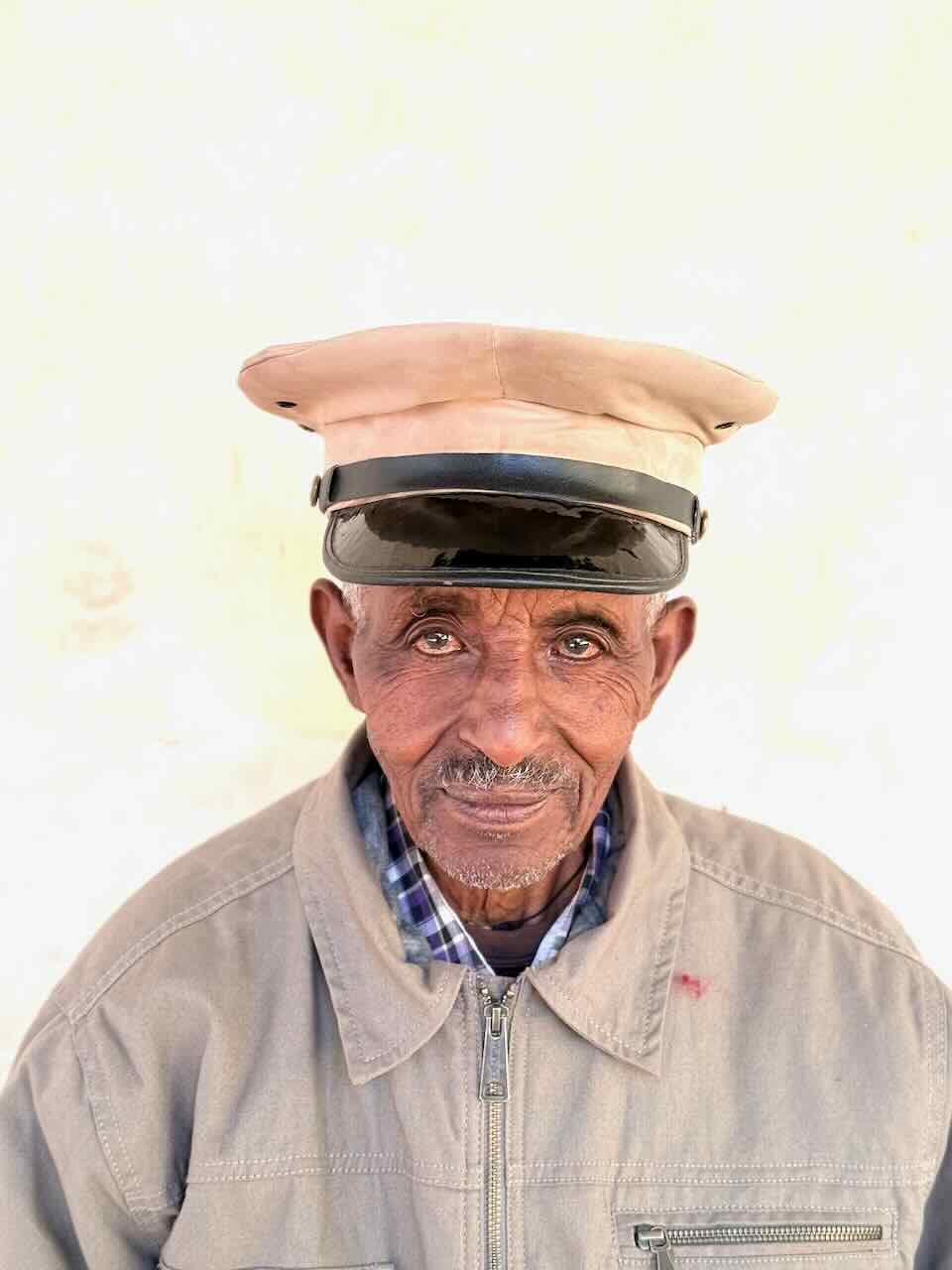
It was interesting seeing everything the church and the grounds had to offer. An 82-year-old man was very proud to show me his area of responsibility. He only spoke Amharic, the official language of Ethiopia.
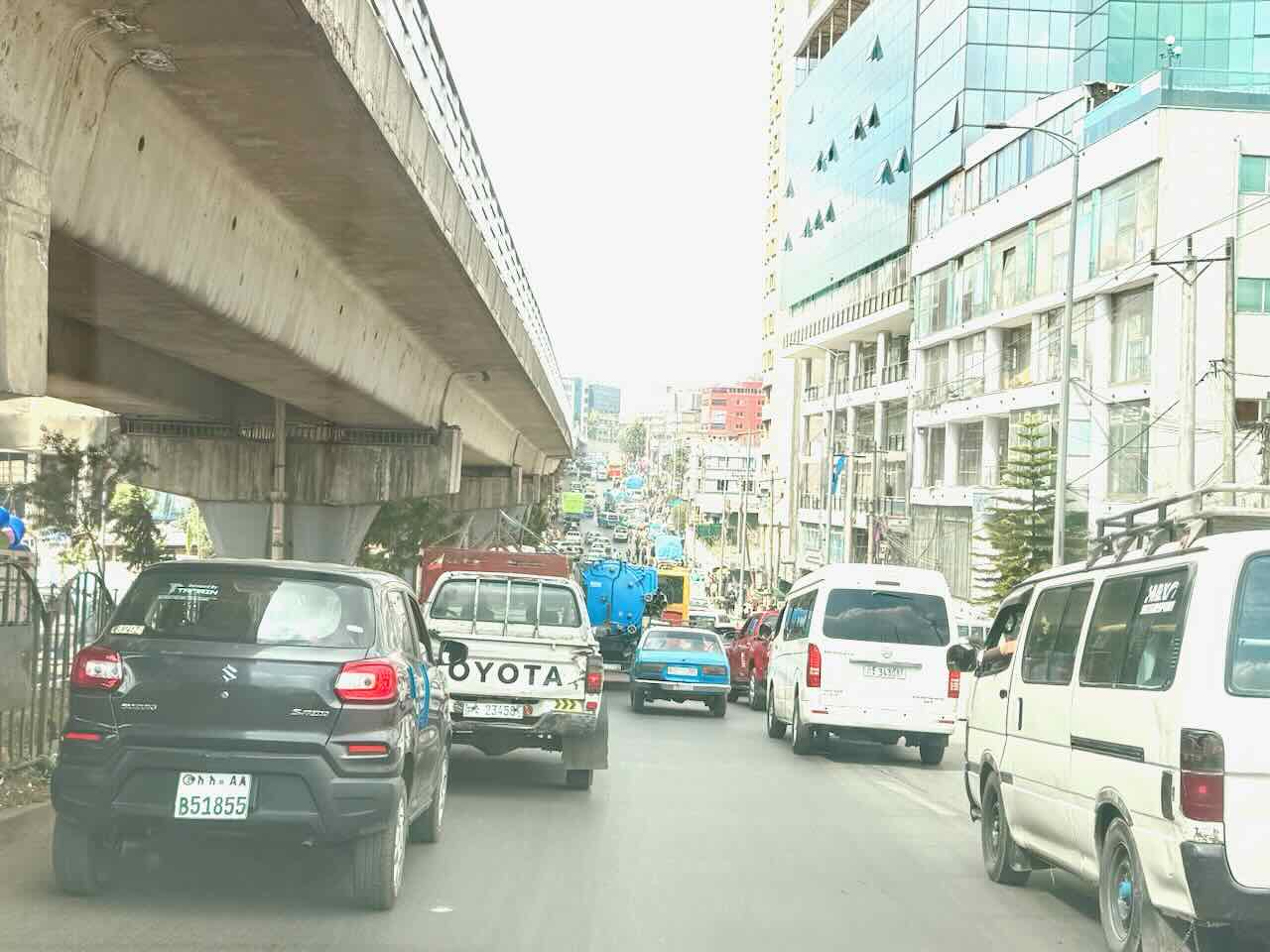
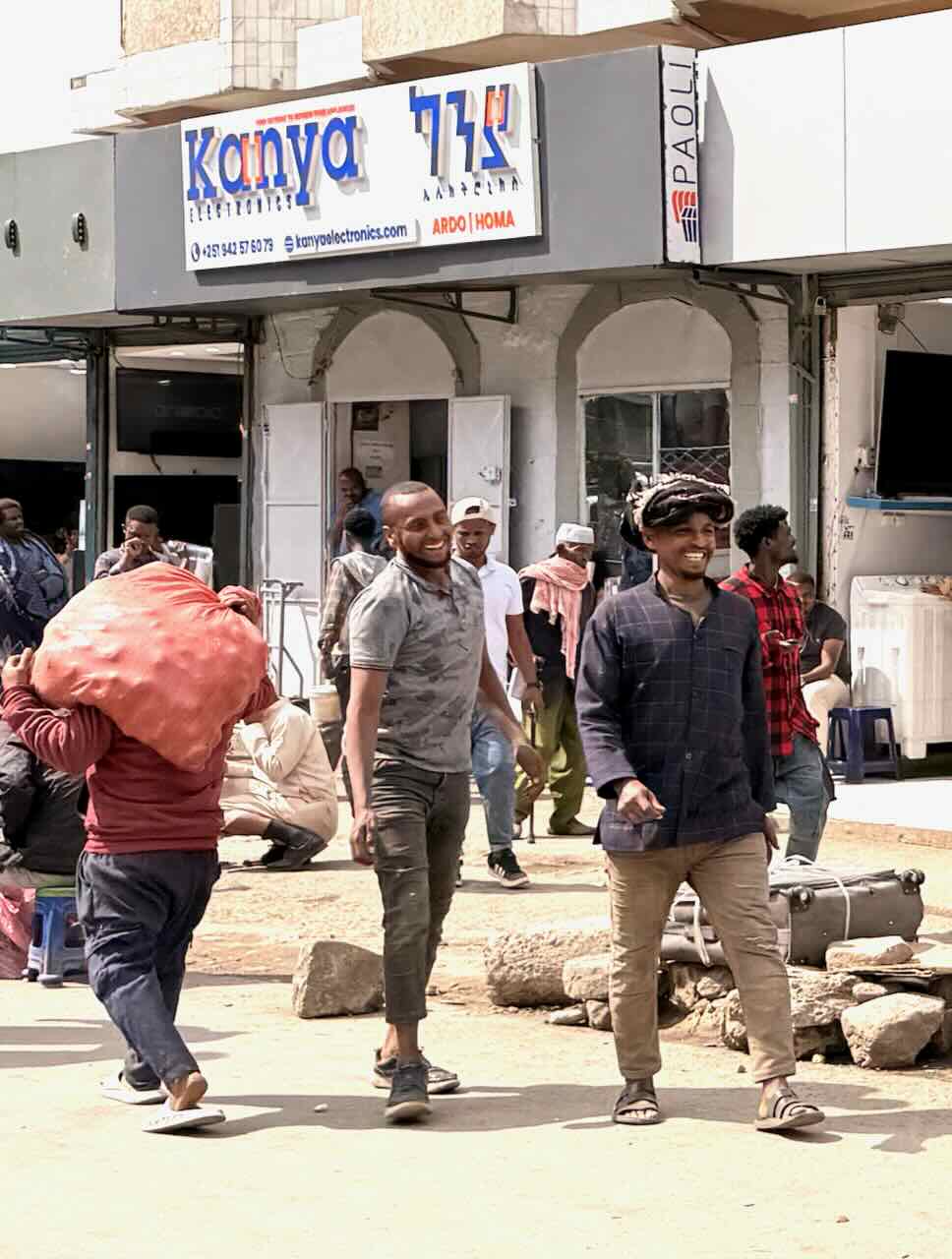
This was an entertaining place to visit.
Next up on our tour was a visit to the Mercato Market. This is the largest open-air market in Africa, covering several square miles and employing more than 13,000 people across more than 7,000 businesses. This was a busy place!
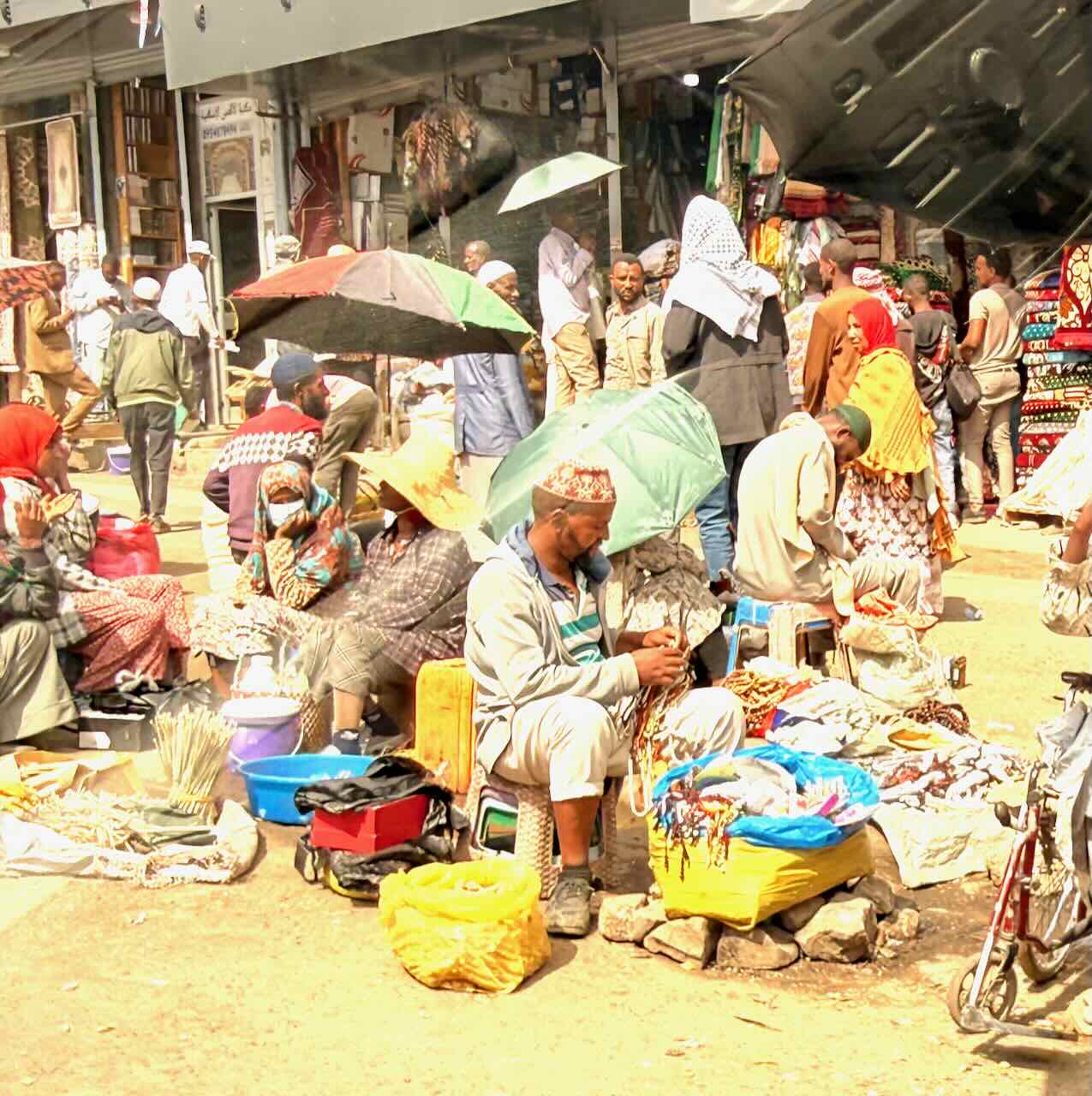
Ermias recommended that we do a driving tour through the Mercato. He didn’t feel it was super safe for a fellow who looked like me, the only fellow who looked like me during all of our touring today, to be outside, checking things out.
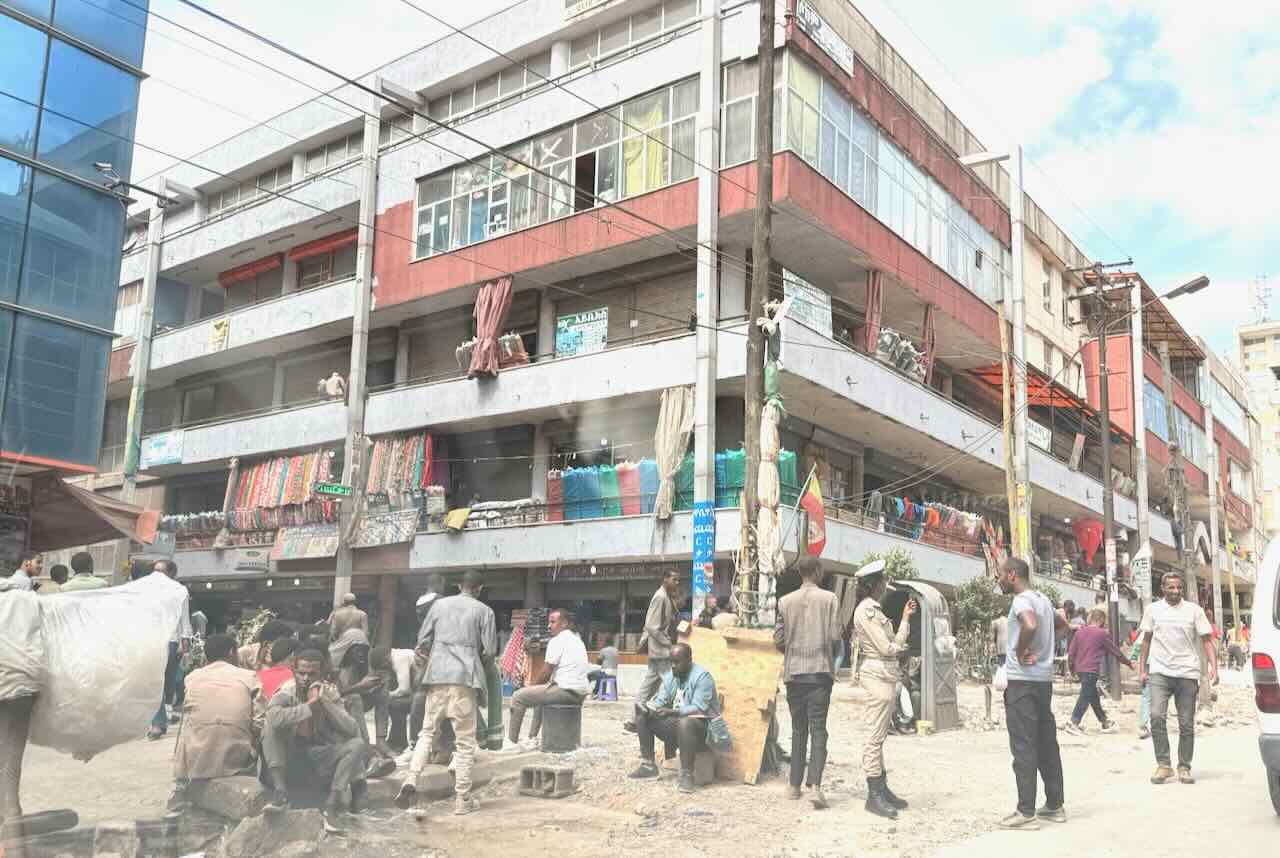
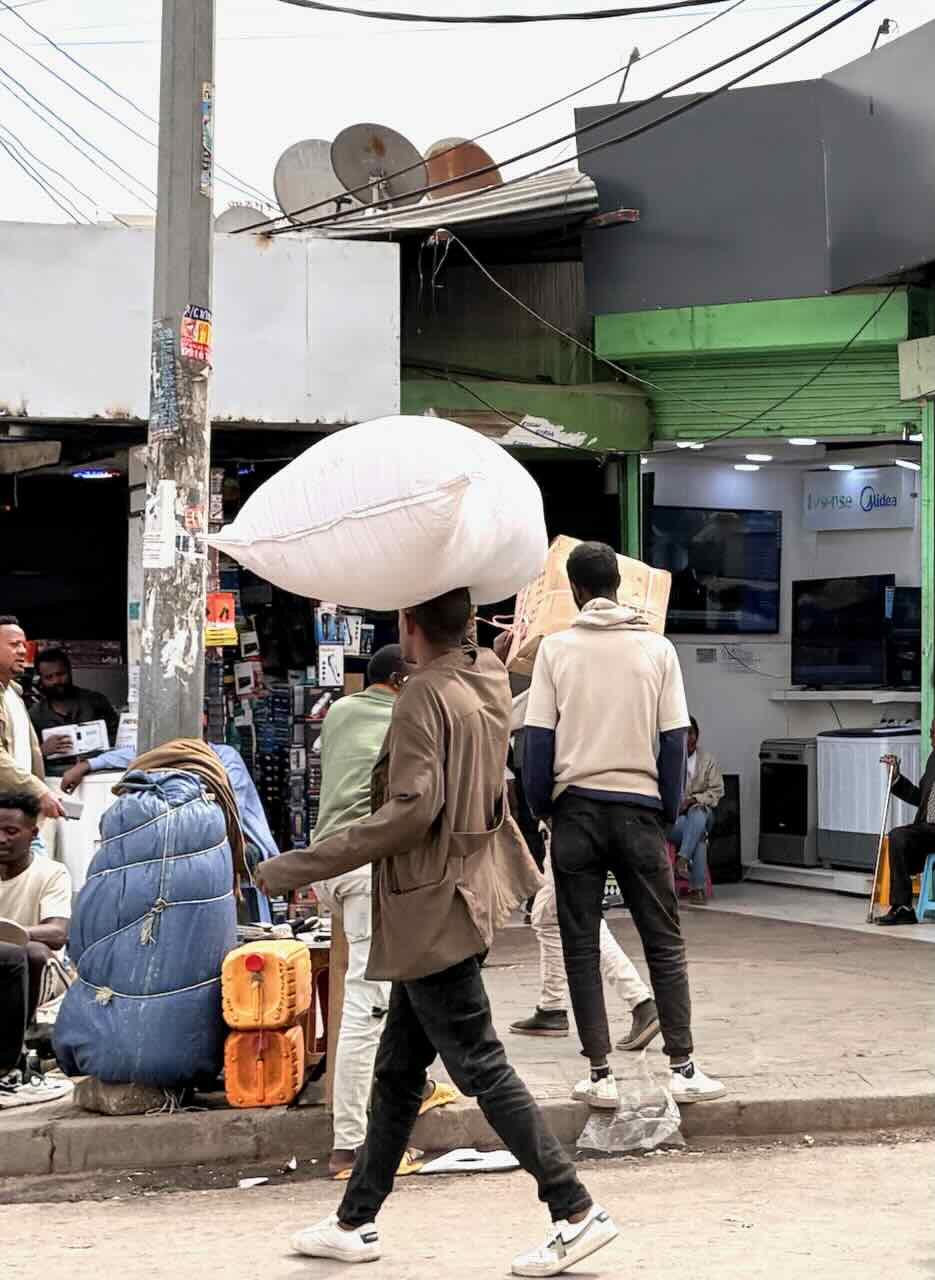
That was a great experience. When I see things like this, it reminds me that I am visiting today, but tomorrow these people will be doing the same things that I am seeing today. Why? Because that’s their everyday life. I often wonder where these people live and what their accommodations and daily routines are like.
Approved by me.
The good thing about hiring a driver is that every place that we visit has to be approved by me. Ermias had a couple of ideas for visiting museums that I turned thumbs down on. I told him in advance that I wasn’t like most tourists he works with. I asked him if there were any car museums. He told me there was a car museum at the palace.
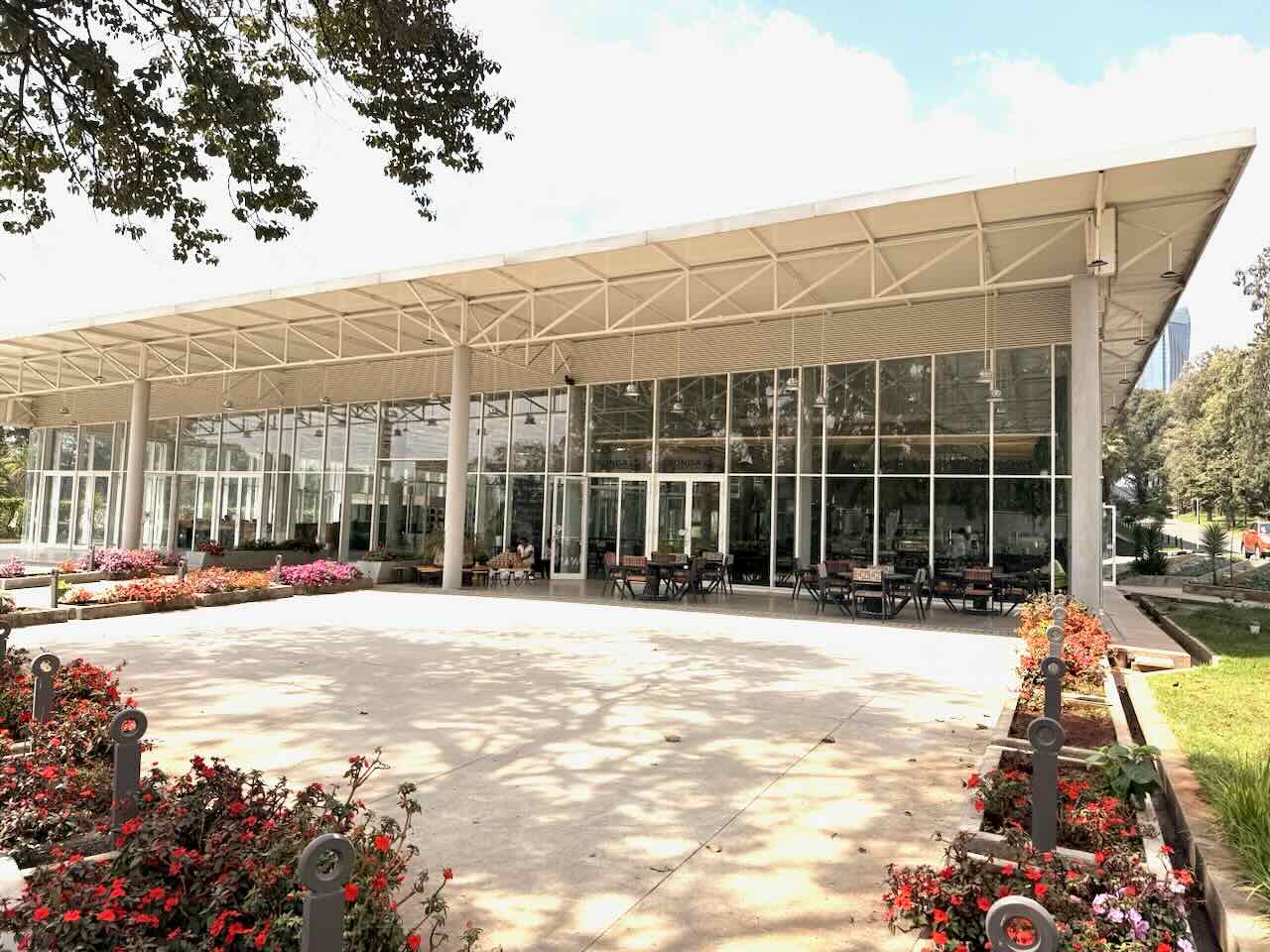
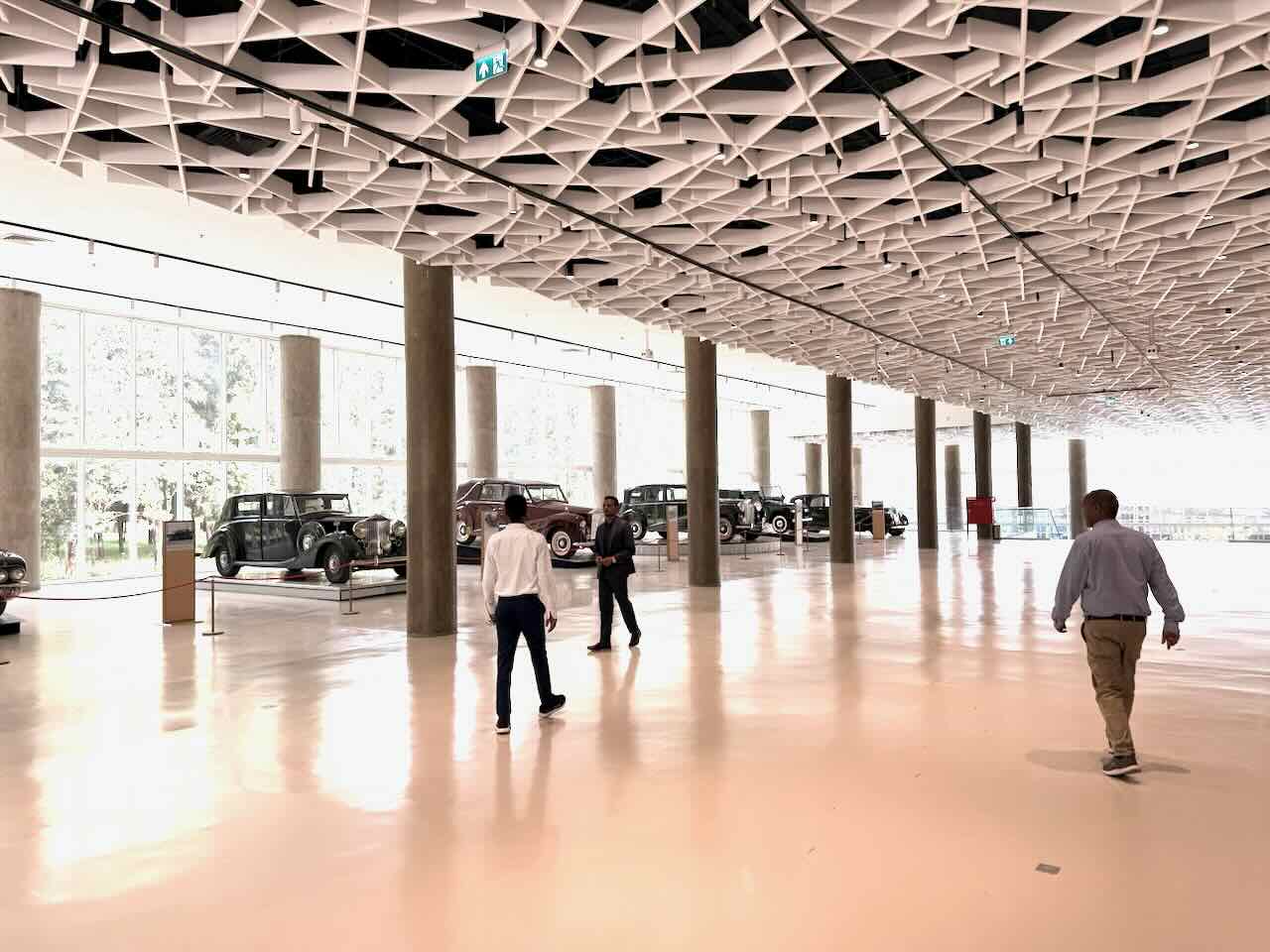
Addis Ababa Palace Car Museum.
That would be our next stop. Not only would we be able to see the Addis Ababa Palace Car Museum, but we would also be able to tour the National Palace, aka the Jubilee Palace, the official residence of the President of Ethiopia.
They charge tourists more to visit the auto museum and the Palace than locals. The fee for me was $35. The fee for locals was seven dollars.
This is how I roll.
As we approached the entrance to the auto museum, Ermias told me he would sit over in the corner. He would wait there for me and meet me when all of my touring was finished. Hold on! I asked him if he had ever visited this place. He had not.
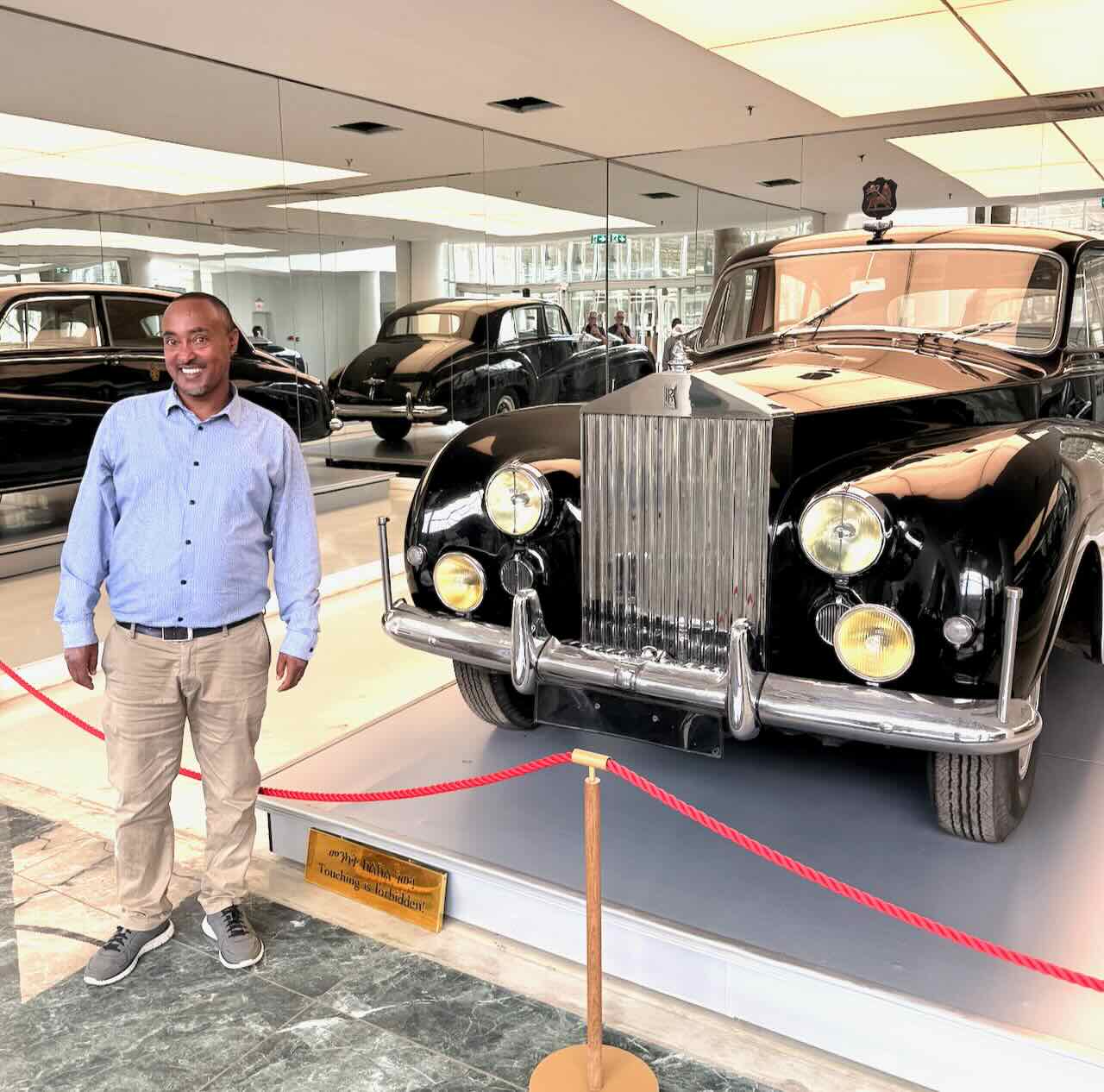
Folks, when I travel with people who work for me in whatever capacity, they will receive the same benefits I do. I told Ermias that he would not be waiting for me, but he would be right beside me for the entire tour. His face turned into a colossal smile. You might have thought he was a six-year-old, getting the biggest Christmas present he had ever had.
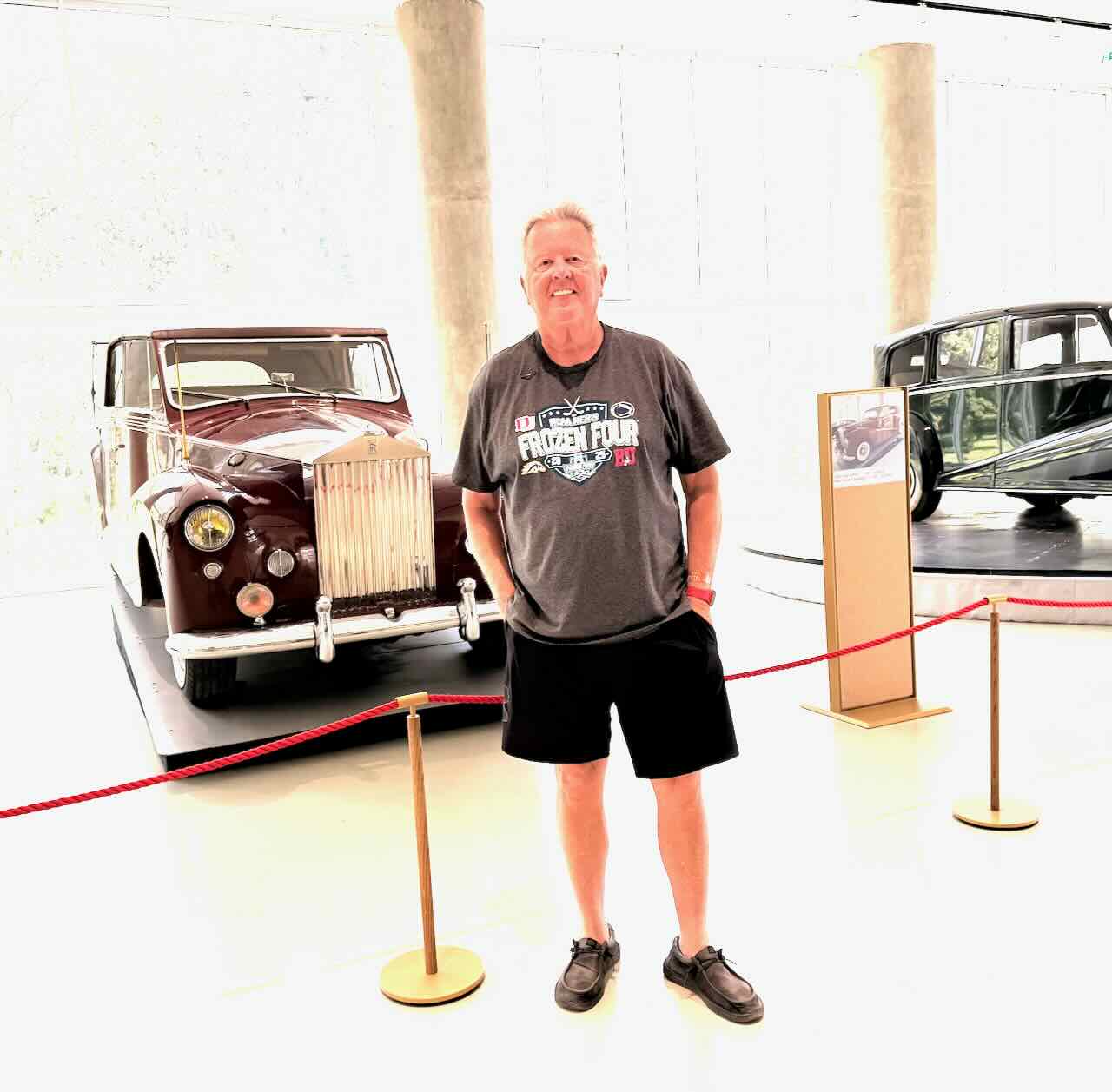
Small, but worth it.
There were only 17 cars in the museum, but the museum itself was palatial. I never pass up a car museum. I’ve seen them all over the world. I have never left any auto museum visit disappointed. You might notice that I am always wearing shorts and a t-shirt. That’s also how I roll. It’s more comfortable that way. I might wear long pants three or four days a year, and certainly not for the entire day!
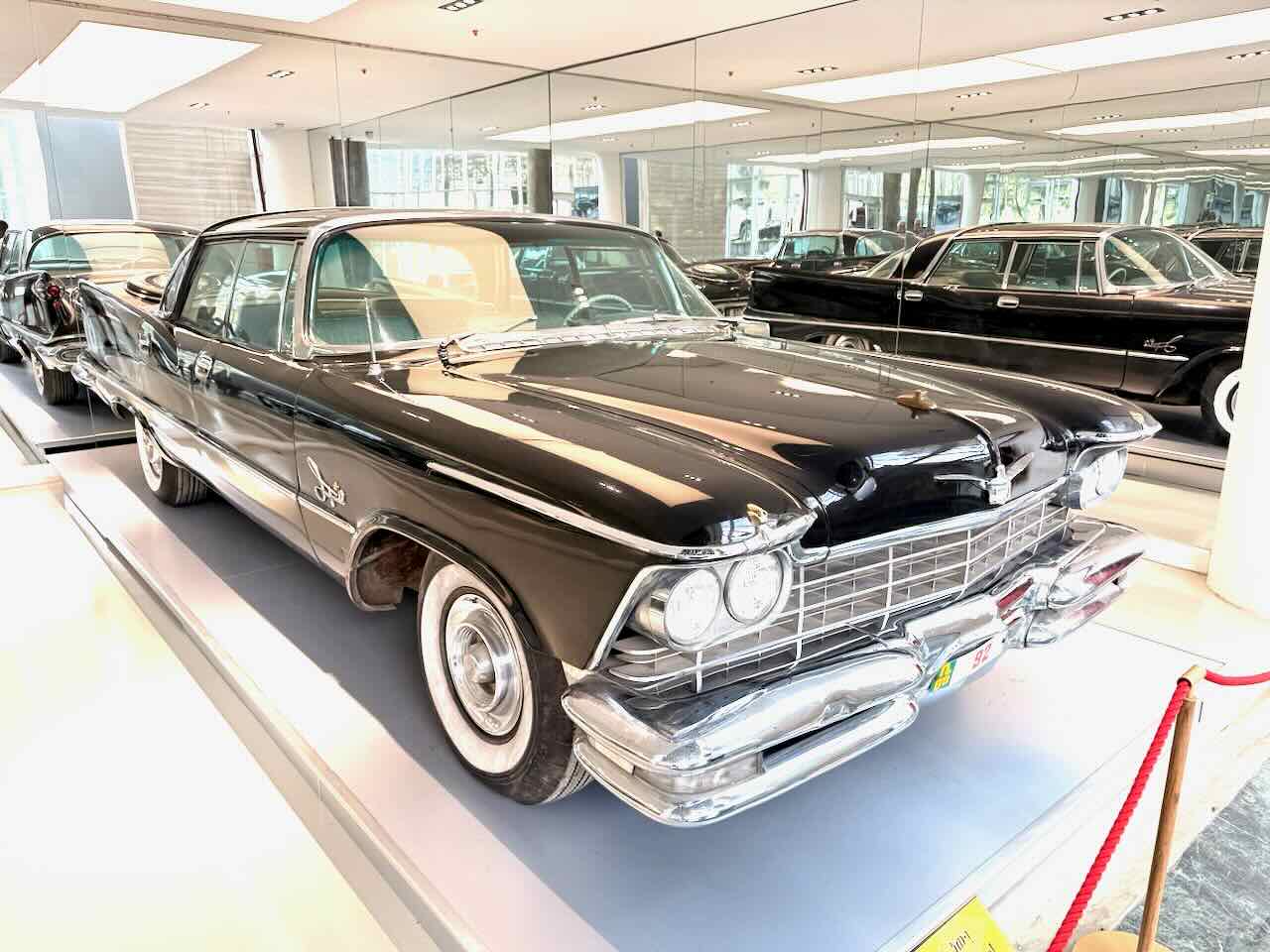
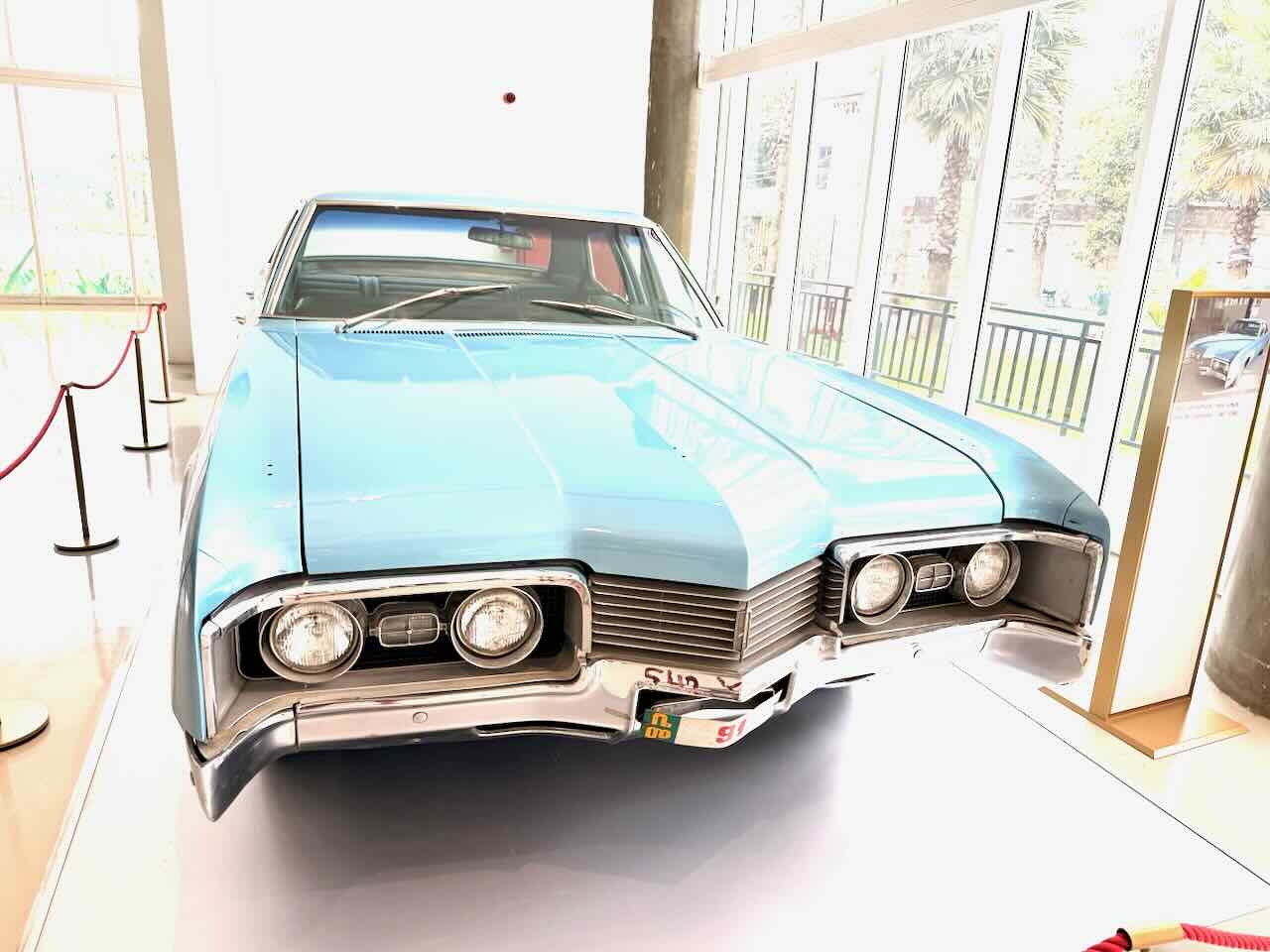
Of course, we had an individual tour guide who stopped at every car and explained its history. I’ve seen the largest car museum in the world, which is in Mulhouse, France, near the French border with Germany. They have about 400 vehicles there. Since I was getting a personal private explanation for each car, I was glad they only had 17 to see today. Oh! They even had an Oldsmobile Delta 88 on display. How did that car get into this museum? The king loved the car, but he was ousted in 1974 during the Ethiopian revolution.
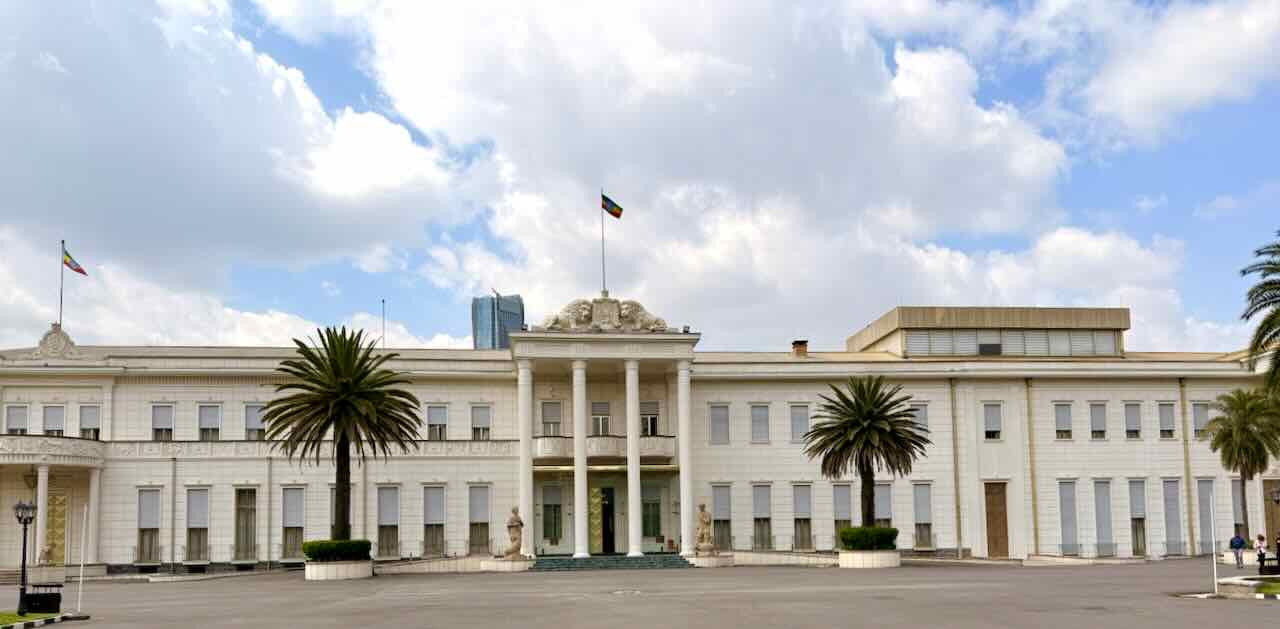
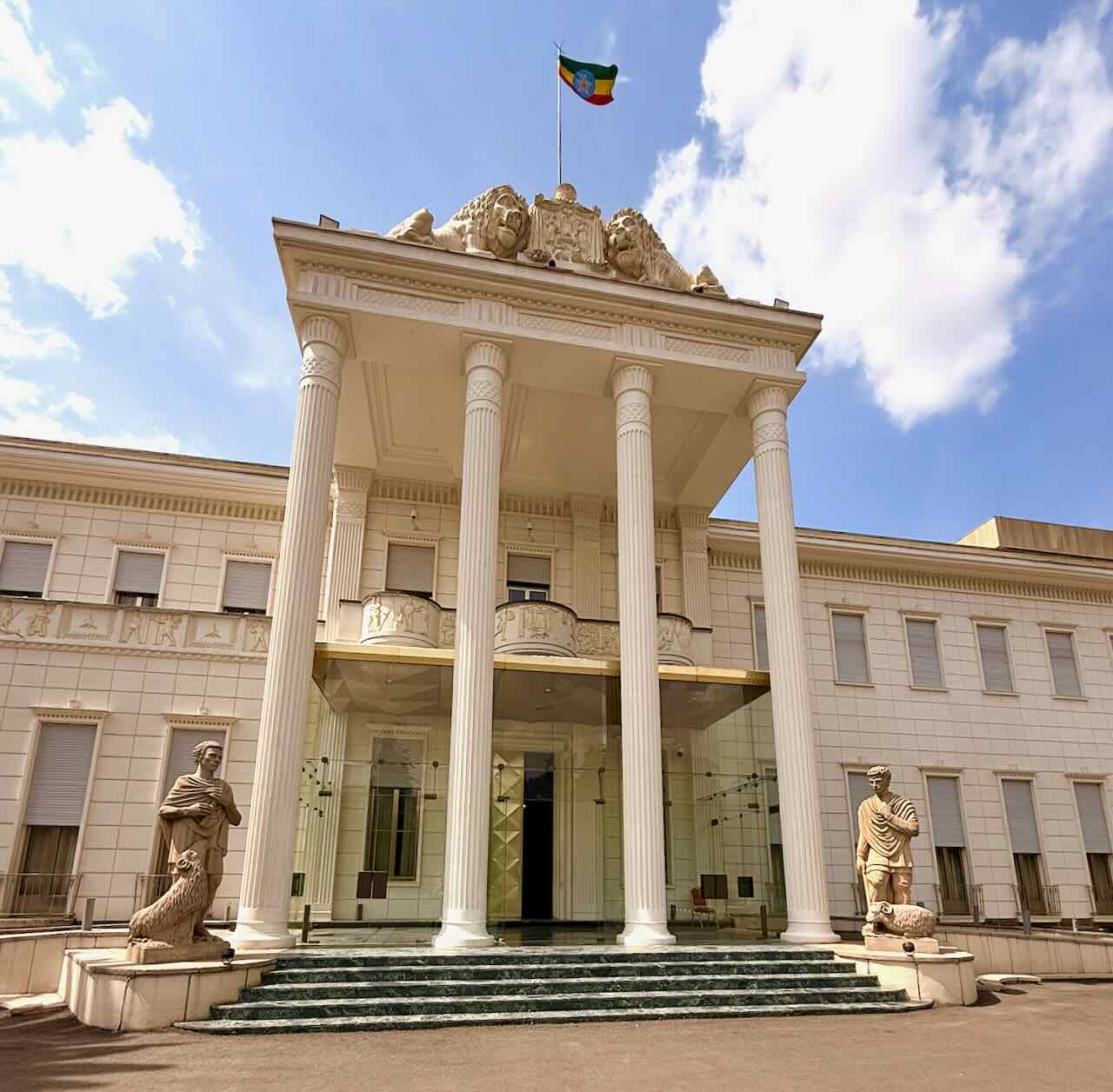
The Presidential Palace!
Then we were escorted into the Palace itself. In the coolest room, no photos were allowed. This is where the Ethiopian president entertained the dignitaries.
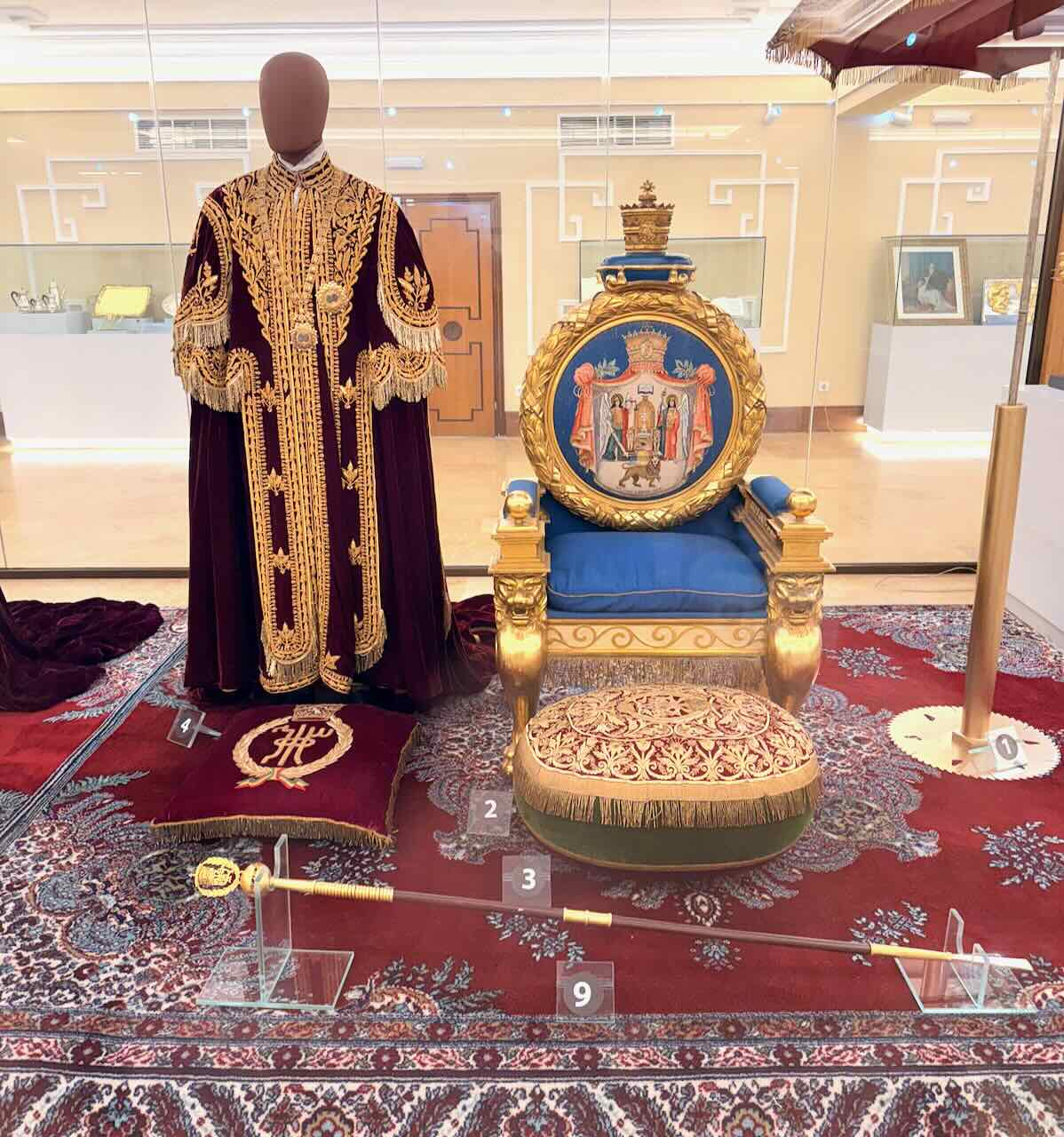
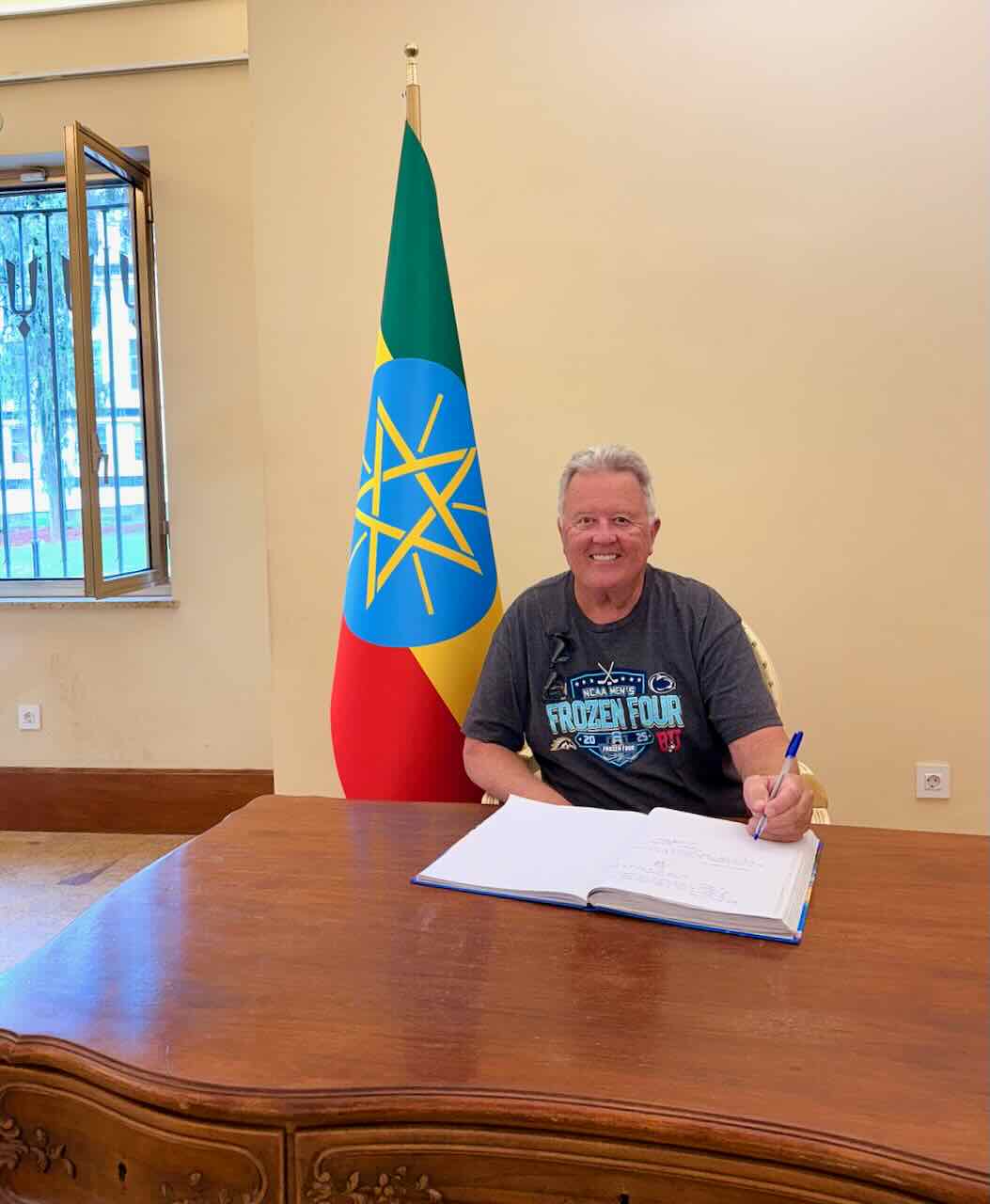
There were large rooms filled with dozens of gifts and memorabilia that other countries had given to Ethiopia. I got a private explanation for every one of those displays. That was a lot! It wasn’t what I bargained for, but there was no way I could get out of it. They even had me sign the guest book on the way out.
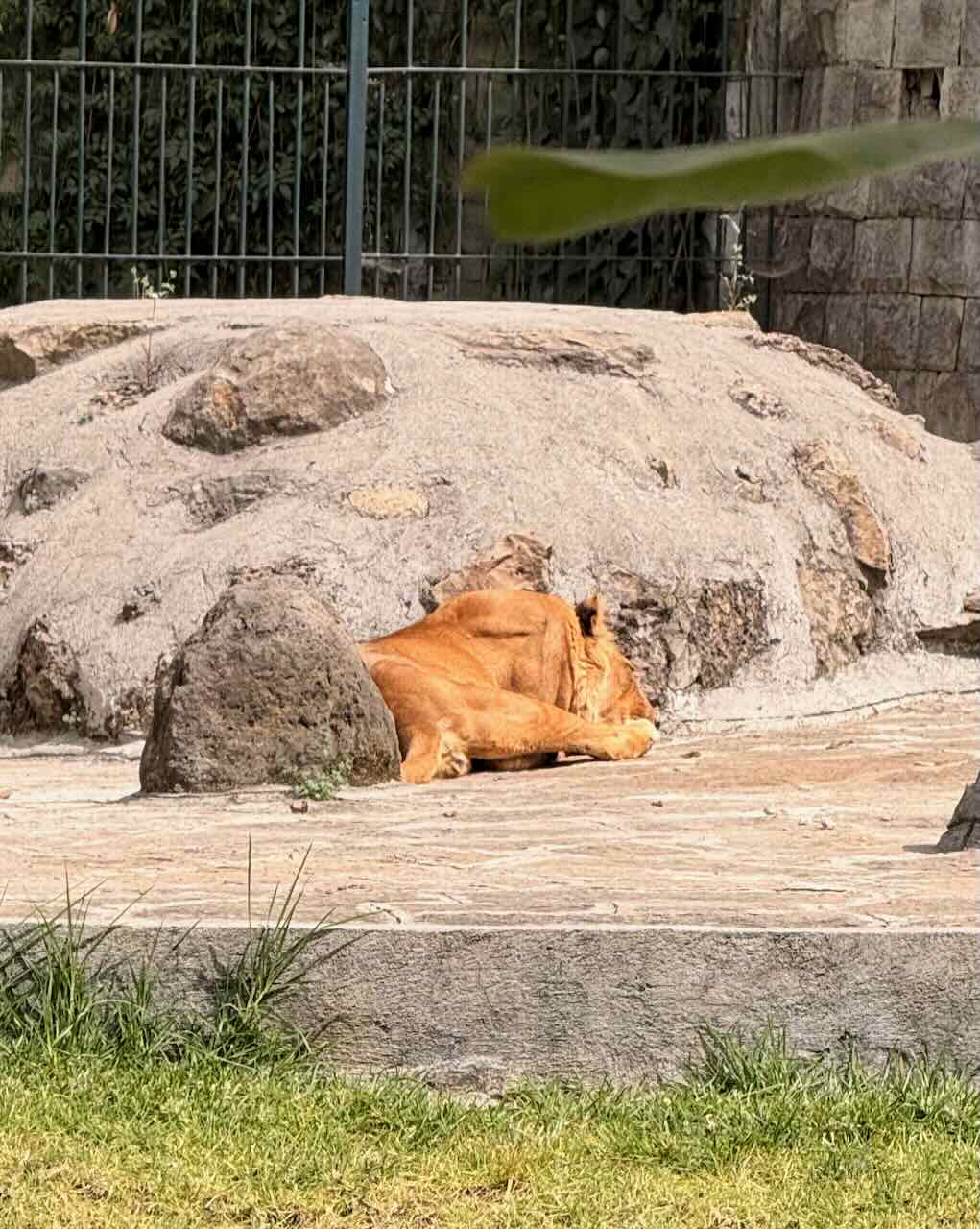
The palace even had its own zoo. In the zoo, they had lions, tigers, and more. Visiting the palace grounds was definitely worth the visit.
My most unusual lunch?
It was getting to be lunchtime. I had researched a YouTube video about dining in Ethiopia before arriving. They talked about the “fasting” meal. That looked like something I might like to try.
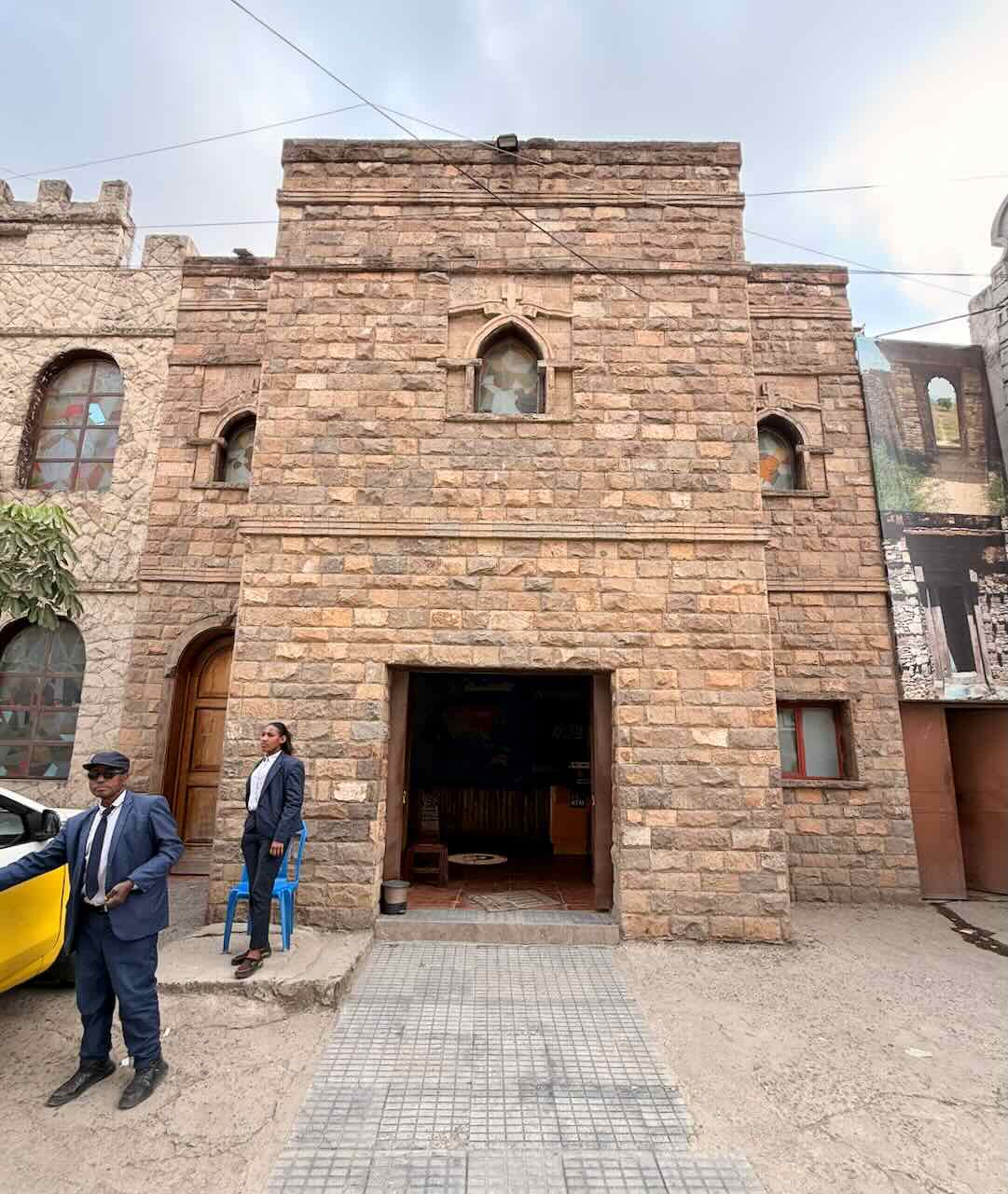
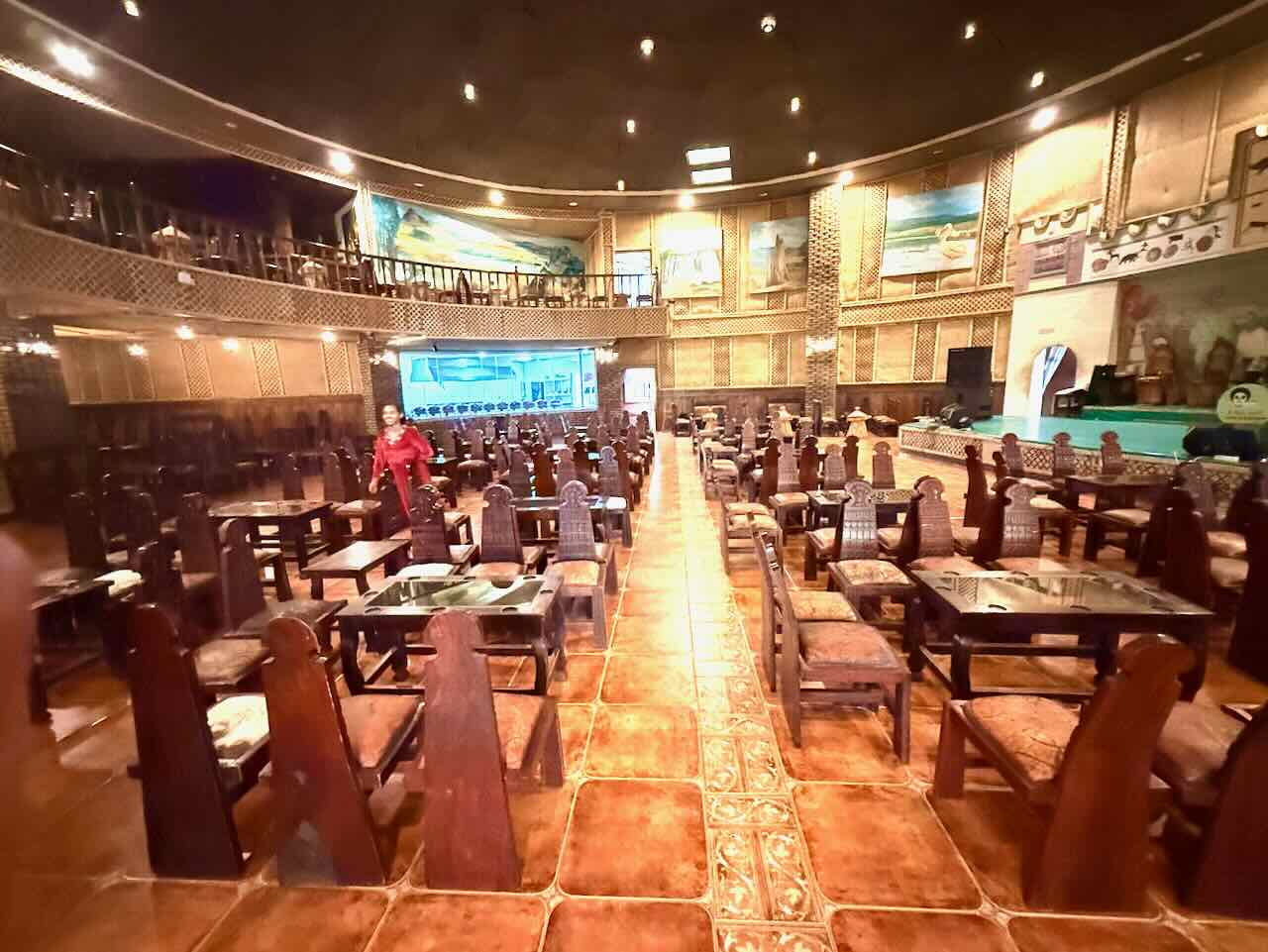
Ermias had a great restaurant in mind for us. We parked at the front door and walked in. This place might have seated well over 100 guests, but we were the only people in there for lunch. Ermias told me this was more of a dinner restaurant.
This dining experience was going to be one of the true highlights of my entire trip to Africa. This was one of the top 5 unique meals I’ve ever eaten, and I don’t even know what the other four were.
Don’t forget to wash your hands.
We began with a handwashing ceremony at the table. One of the servers had a huge teapot, filled with warm water. We washed our hands with the liquid soap to prepare for our meal.
How about the fasting meal?
I told Ermias I might like to try the fasting meal, and he approved. He was just beginning a 45-day meatless fast to support his Ethiopian Orthodox religion.
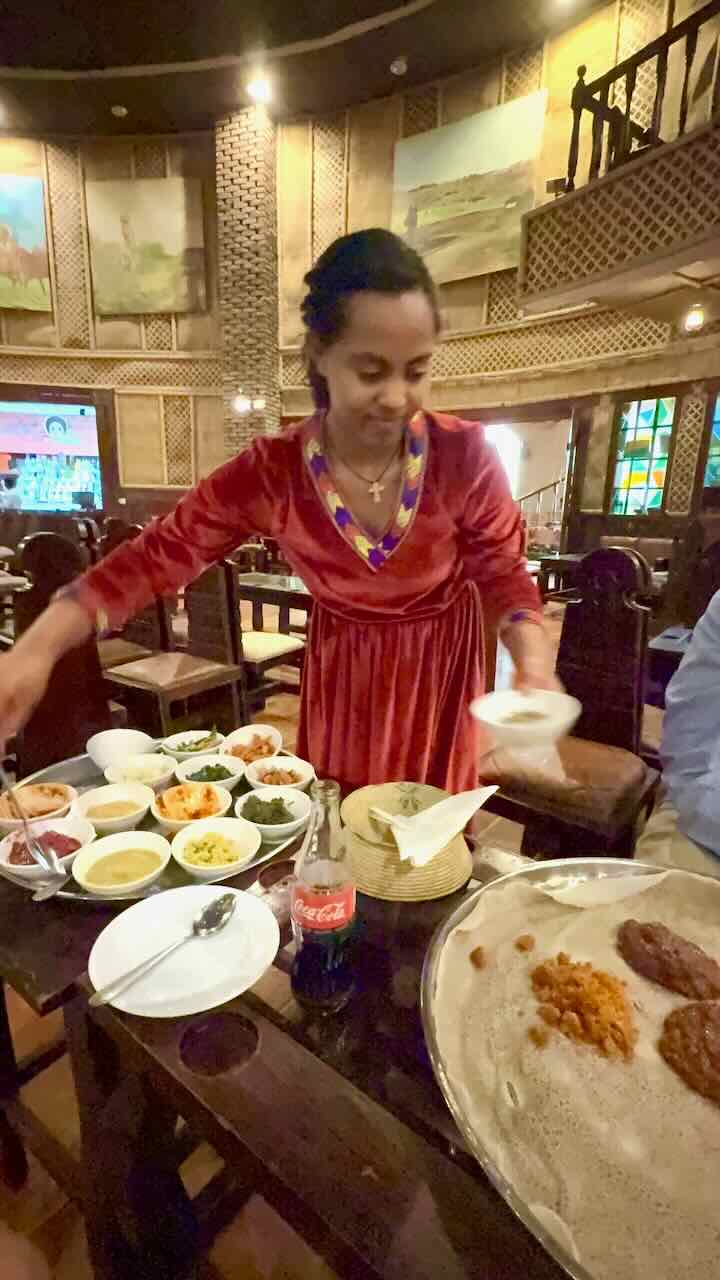
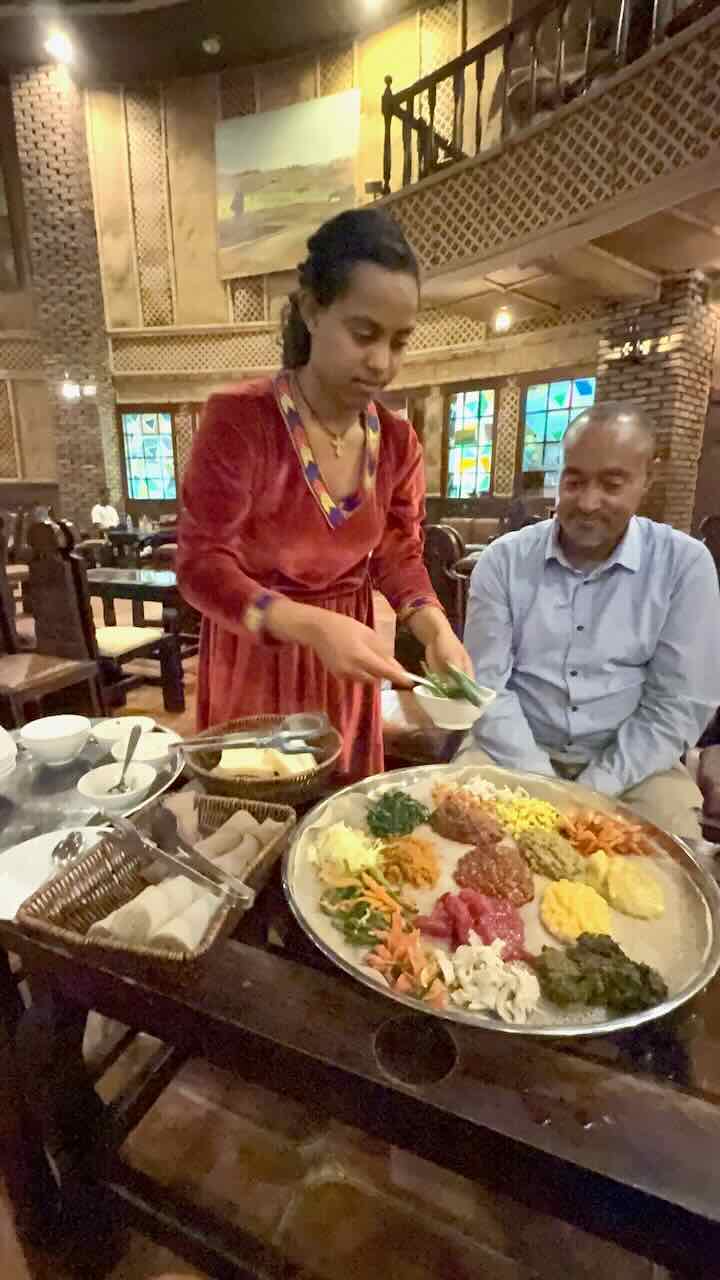
The fasting meal was huge and colorful. It consisted of a large round platter on which the server dispensed about a dozen different vegetarian sauces.
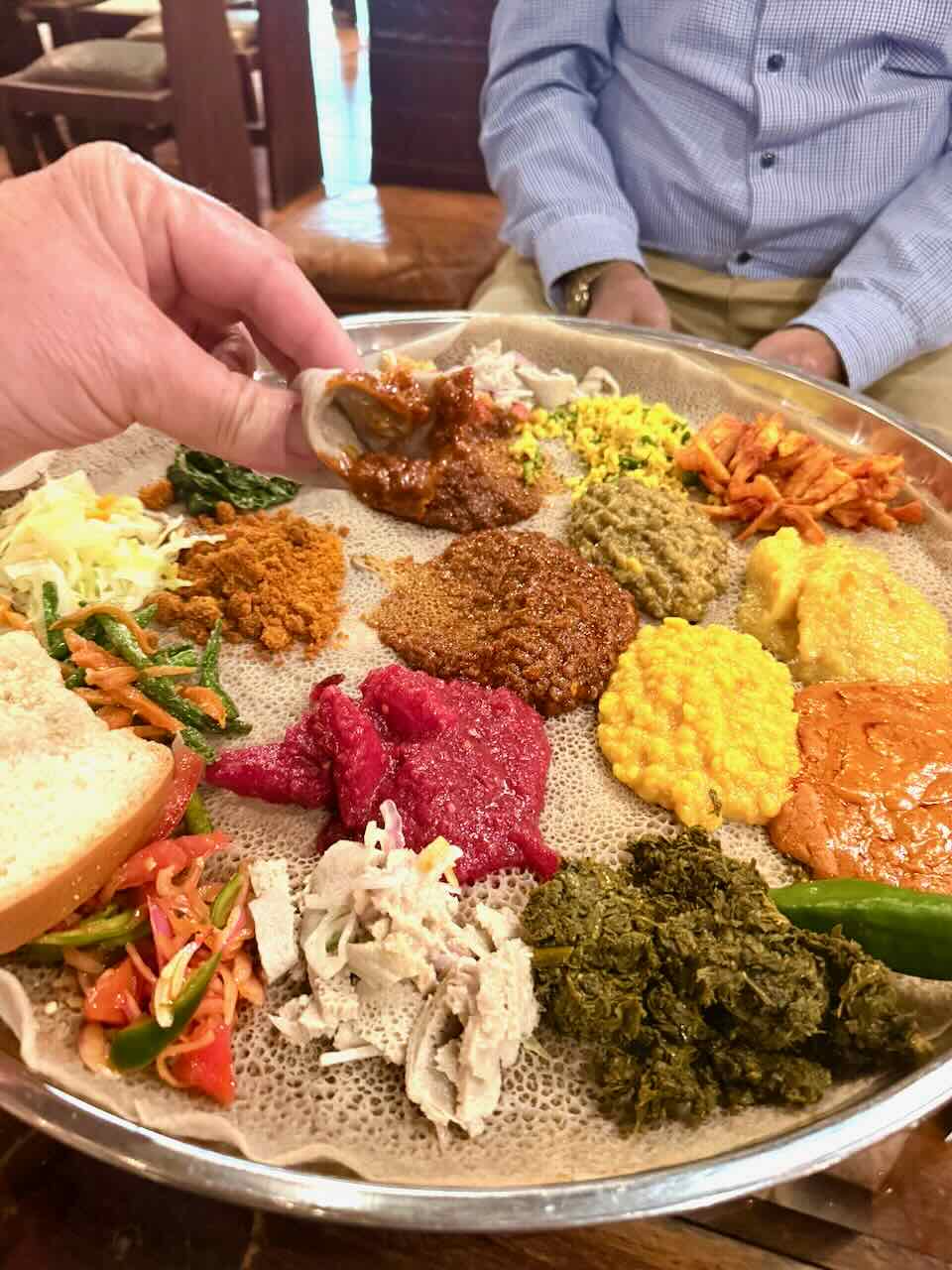
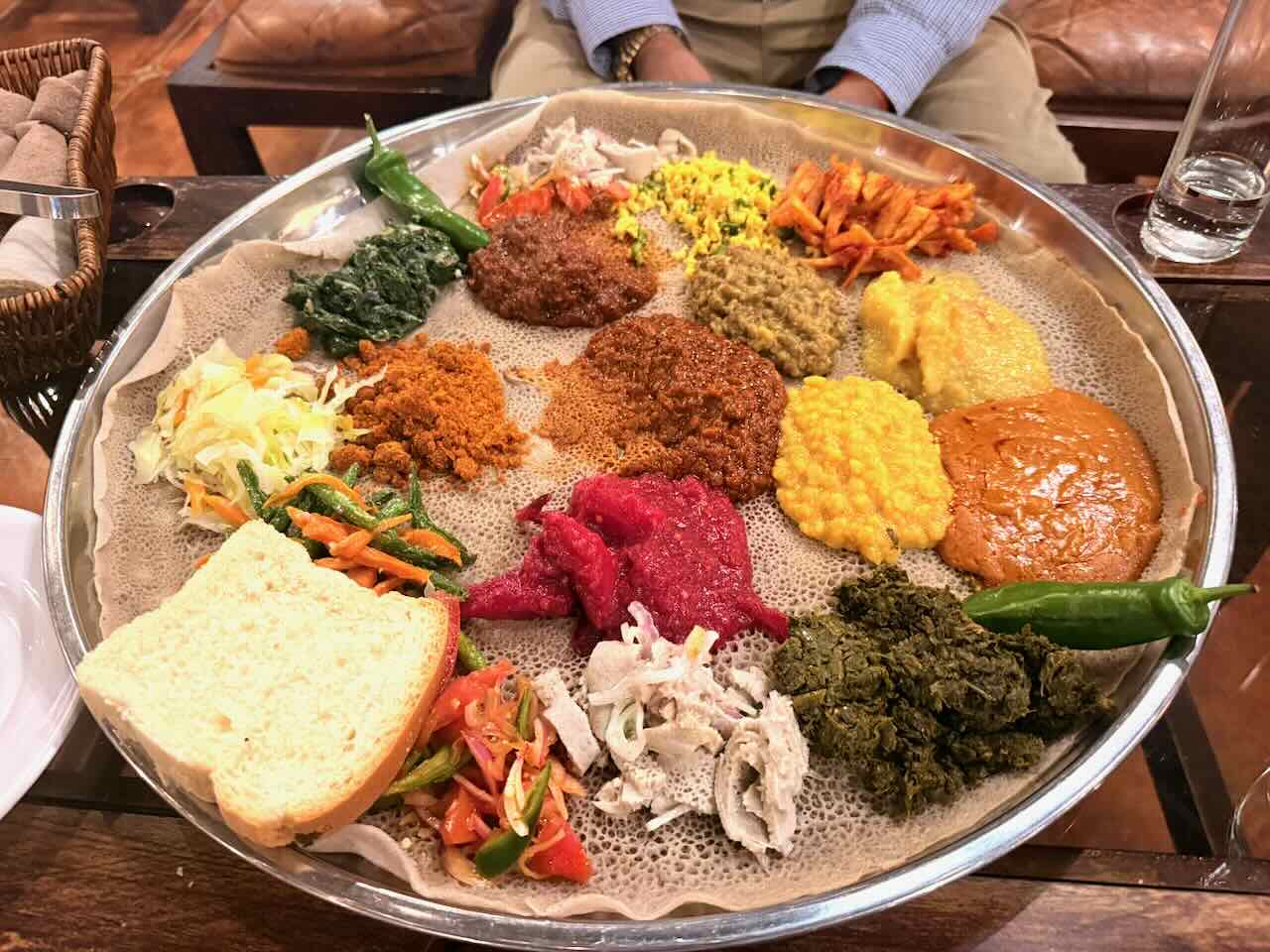
The way this worked was we took pieces of moist bread, which reminded me of Mexican tortillas, and dipped them in the sauces. This was community dining, so Ermias and I grabbed our bread and began dipping.
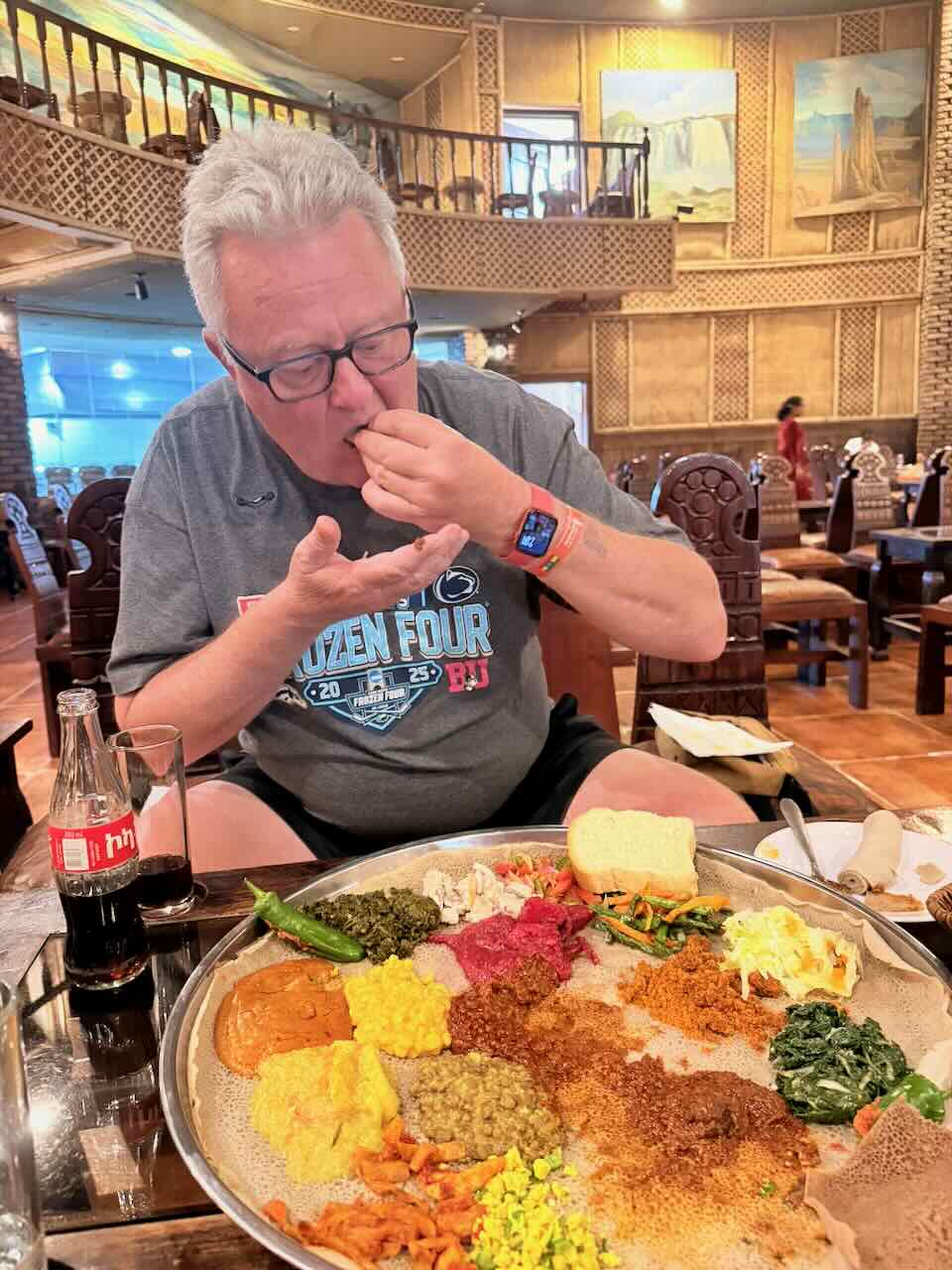
Although I enjoy all kinds of ethnic foods, except sushi, I am a little bit of a picky eater. I was probably better off not knowing what made up several of these concoctions. Why don’t I like sushi? I don’t think they cook it enough.
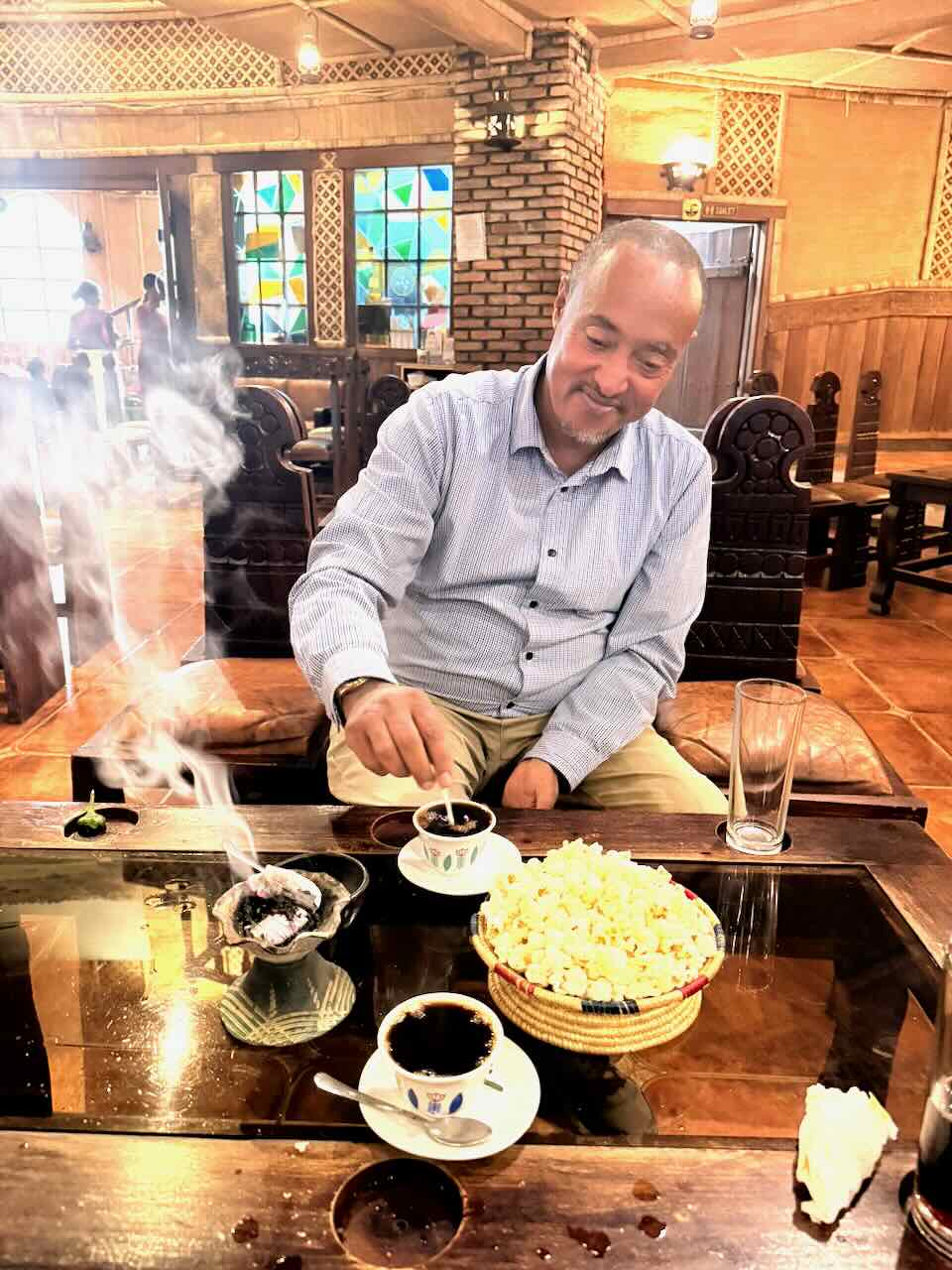
Ethiopia is famous for its coffee. Some say coffee drinking started in Ethiopia. I don’t drink coffee, but if I were here, I’d have to have a cup. I asked for the strongest coffee they had. I had a couple of sips. I don’t know enough about coffee to tell one from the other. Of course, the coffee was served with popcorn and burning charcoal…just because.
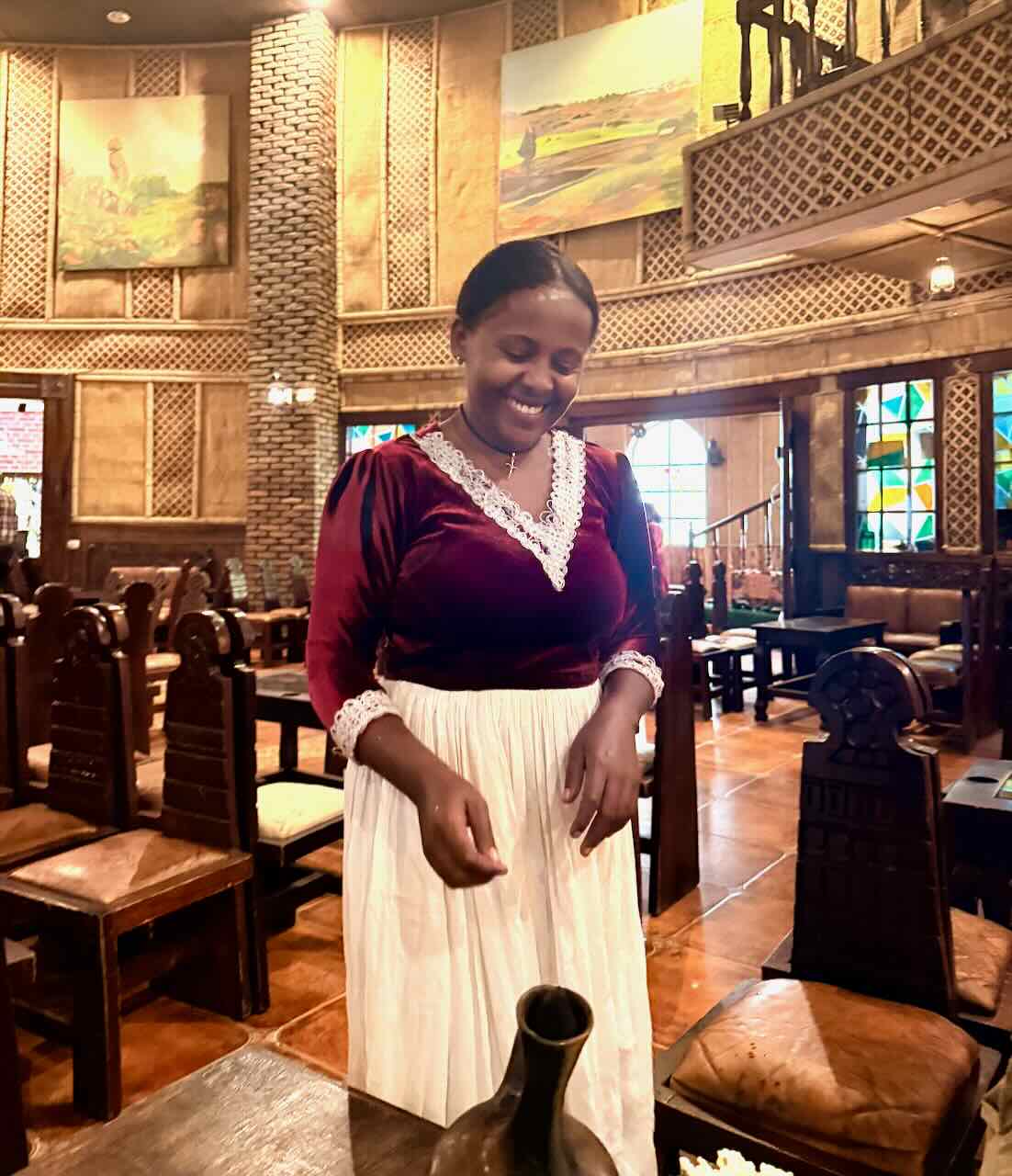
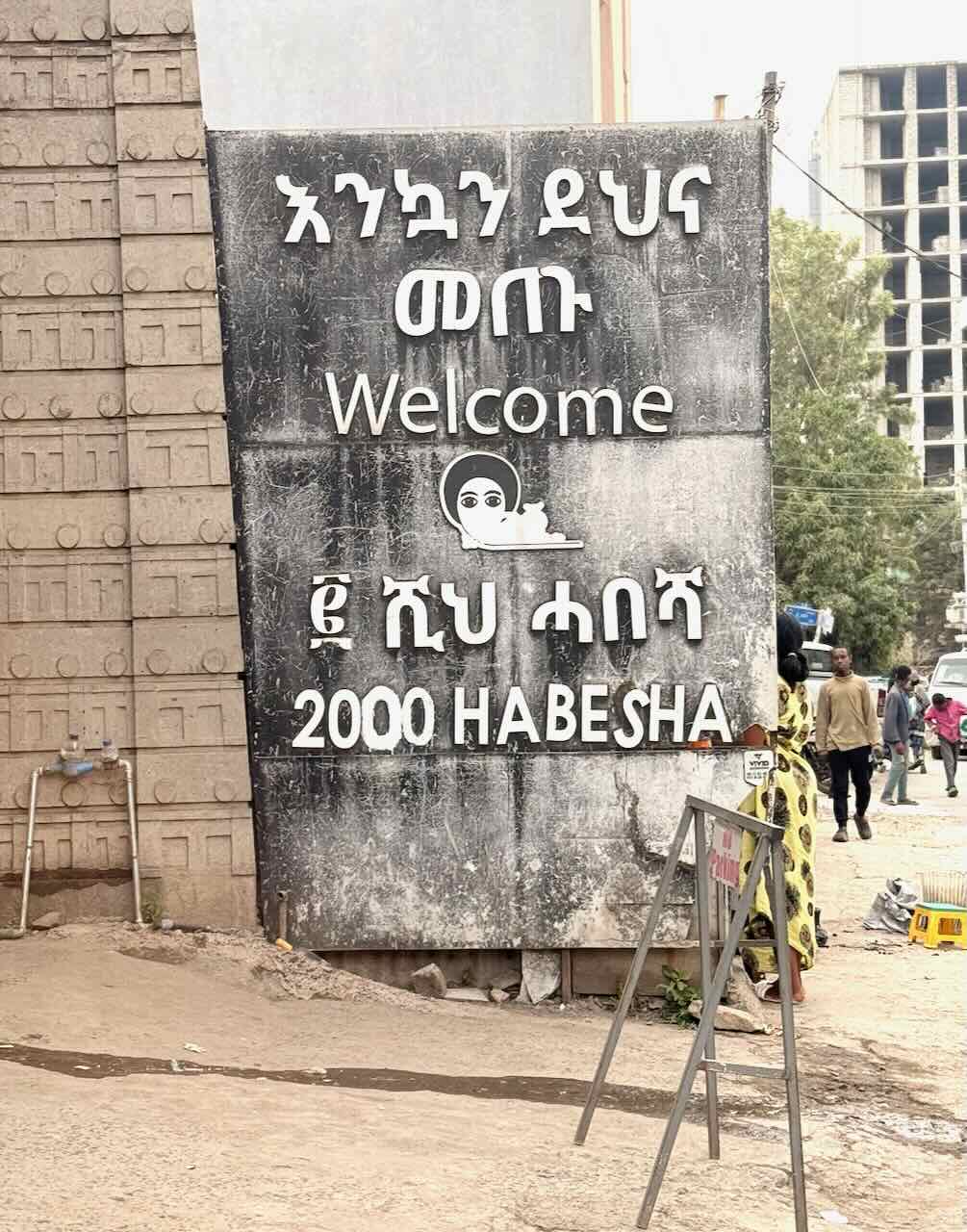
Lunch at the 2000 Habesha restaurant was definitely a cultural experience. The service was great. If you go to Addis Ababa, don’t miss this place.
Say Addis Ababa three times really fast.
Addis Ababa is a very modern city, plus I just like saying, “Addis Ababa!” It was as modern as any American city that you might imagine. There was a lot of traffic.
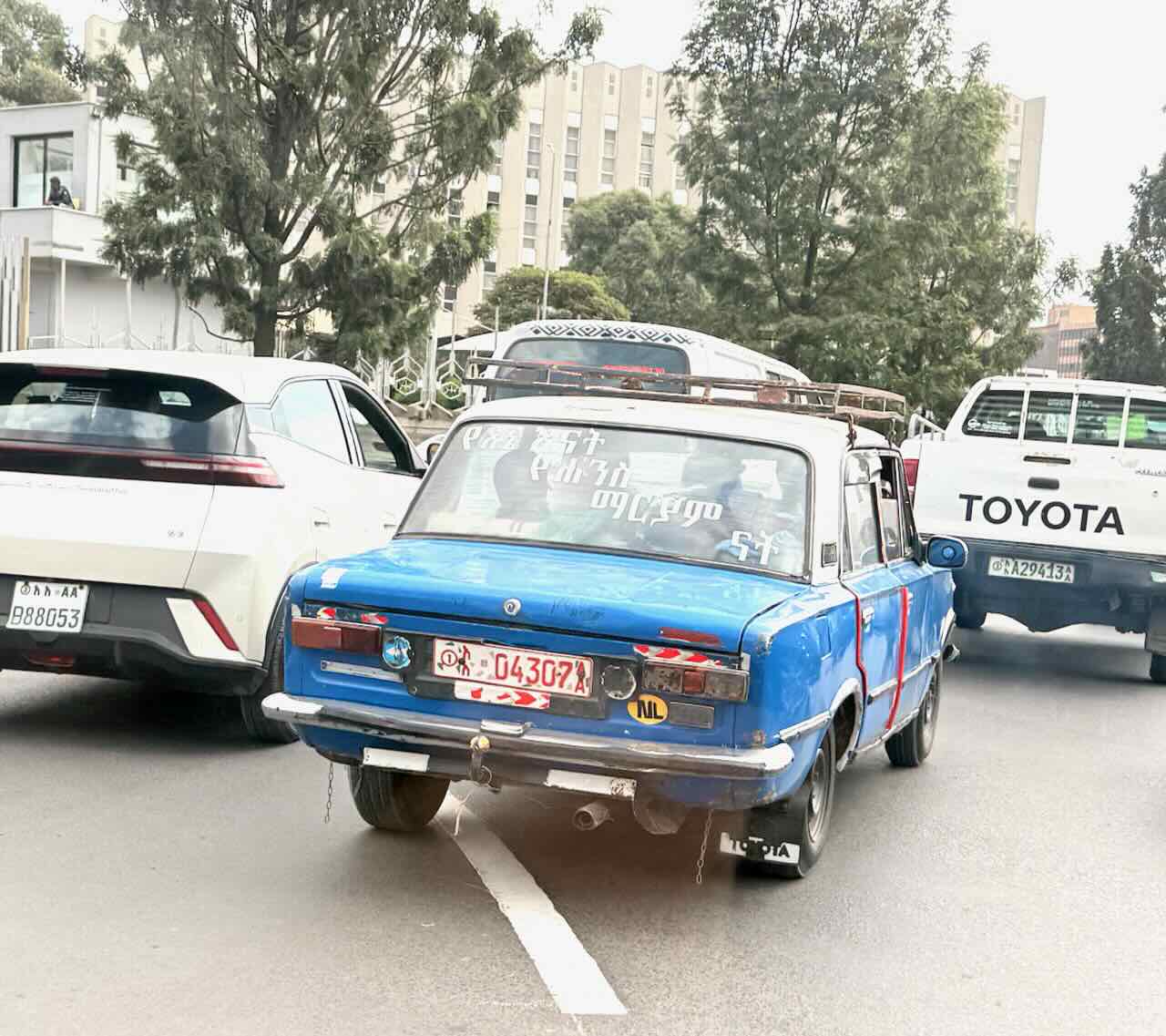
We saw several Russian Ladas on the road. The Lada came onto the market in 1973. It was aimed at the budget market. To this day, the Russian Lada is the best-selling car in Russia, and I see them all over the world. I’ve even seen Ladas competing on the race tracks I visit.
How about some souvenirs?
Ermias asked me if I might like to buy some souvenirs. I didn’t have much room to carry anything home, but I had to get Carol an African souvenir.
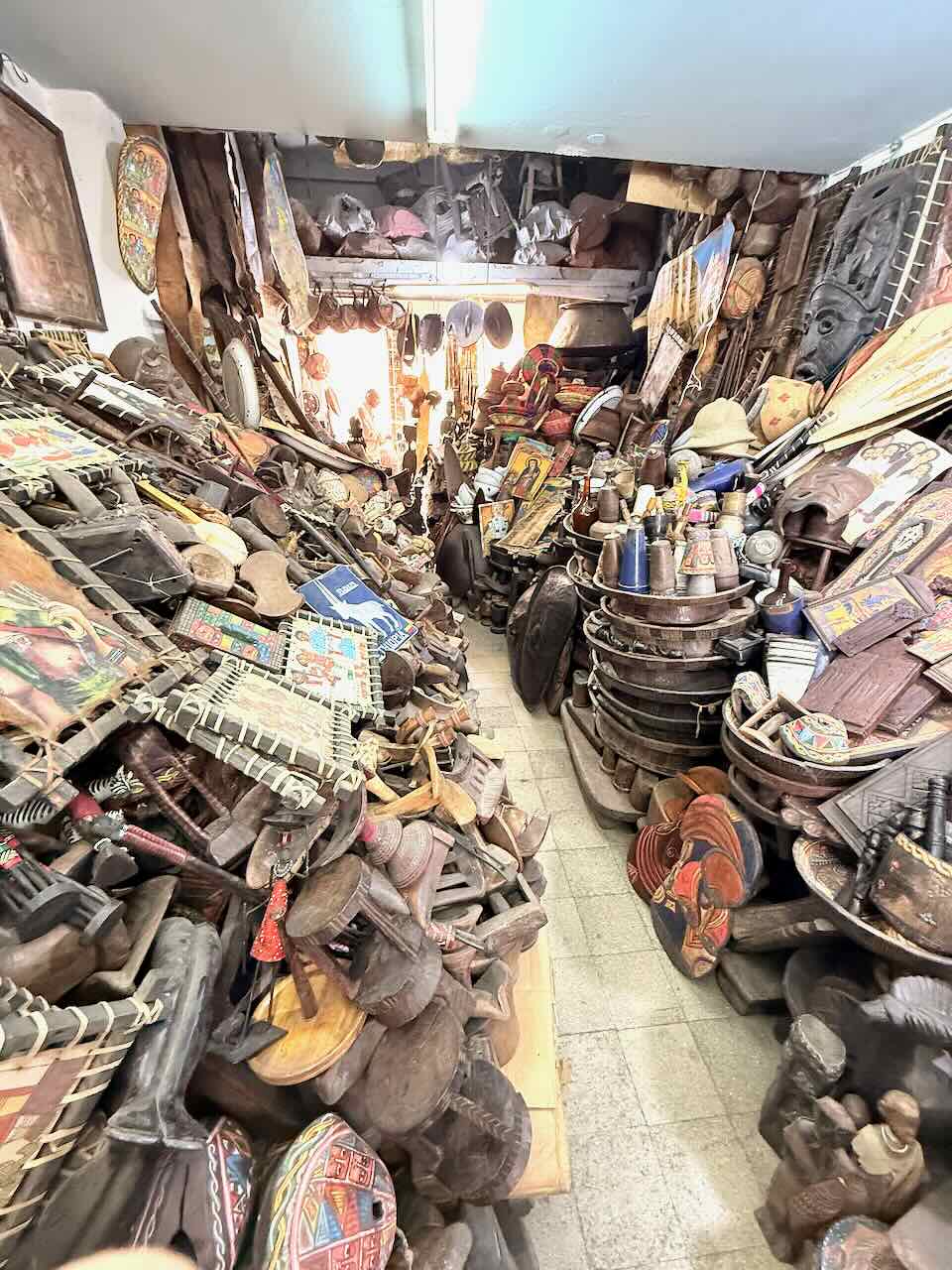
Ermias drove me over to a strip shopping center of sorts. He introduced me to a man who had two large rooms absolutely stuffed from floor to ceiling with African artifacts and souvenirs. These were not things made cheaply and available everywhere. Everything looked like it was 300 years old!
The merchant spoke English well, looked like he had been doing this for a while, and was friendly. He asked me to take a look at all of his stuff. In his two rooms, he had literally thousands of pieces.
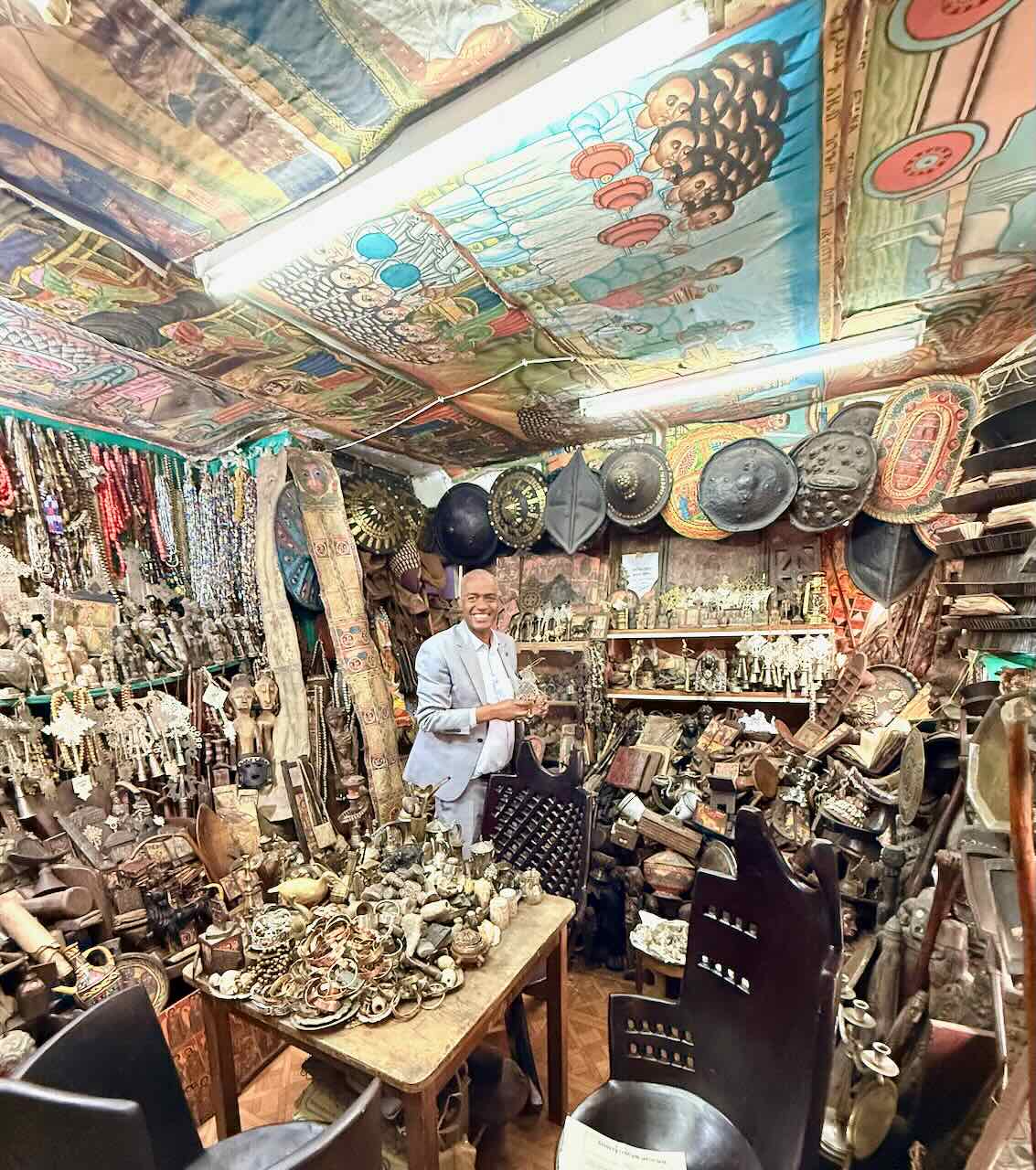
Do you like this?
As I walked through, he kept asking me, “Do you like this? Do you like that?” I ended up picking out five small items. The largest of the five was an African mask that might have been 15 inches tall.
How much?
When we got to the end, I asked him what those five pieces would cost. I wanted to hear the price, then pick a couple of items and move on.
So, we had five African items, from a small Bible about 4 inches tall to that 15-inch African mask. What was the price for these five pieces?
Er?….are you frigging serious?
How does $1,200 US sound? It sounded pretty out of the ballpark to me. TWELVE HUNDRED U.S. DOLLARS!
I am pretty good at negotiating prices. I’ve done it all over the world, and I enjoy it. Some people don’t like that scene. I don’t mind telling sellers they are full of shit in a nice way. I’m always telling Carol that people need feedback! After I picked myself up off the floor, laughing at his price offer, he asked me what I thought I should pay for these items.
I never want to insult anyone.
I told him that I didn’t want to insult him with an offer. I always like to say that. It is that comment that gets people to “bid against themselves.” I must admit he was pretty much just like me. Not much insults me, and he told me that whatever offer I provided would not insult him. Fair enough. Let’s continue the dance.
I couldn’t stop smiling. $1200 for these garage sale items? To show you that I have some cojones, I gave him a counteroffer to his $1200. I suspect that many tourists who don’t have much experience negotiating might think they would have to offer a relatively high counteroffer to a $1200 offer. Maybe $500 or whatever? Me? I wasn’t intimidated in the least.
The low-ball offer.
By the way, years ago, I was negotiating to buy a house. I am the king of low-ball offers. When I made a low-ball offer to my realtor, he said, “I don’t think I would be comfortable submitting that offer.” Hmm. My instant reply was, “Do you know a realtor who would be comfortable presenting that offer?” He submitted that offer, but he didn’t want to. When that deal was settled, we never spoke again… until years later, when he moved in next door to us. Yes, awkward.
I’ll take three of the five items, and I’ll pay you….
Today in Ethiopia, I told the antique dealer I would take three of the five items for….20 bucks. I thought he would laugh that offer off, but he was not insulted. He came back with $100. I told him, “No, $20.” He lowered his offer to $50. I increased my offer to $30 and told him that was my final offer. He said he couldn’t do the deal. I told him no problem and walked out.
When they let you walk away.
How do you know when you have reached someone’s bottom-line price? When they let you walk away, you have reached your adversary’s bottom-line price.
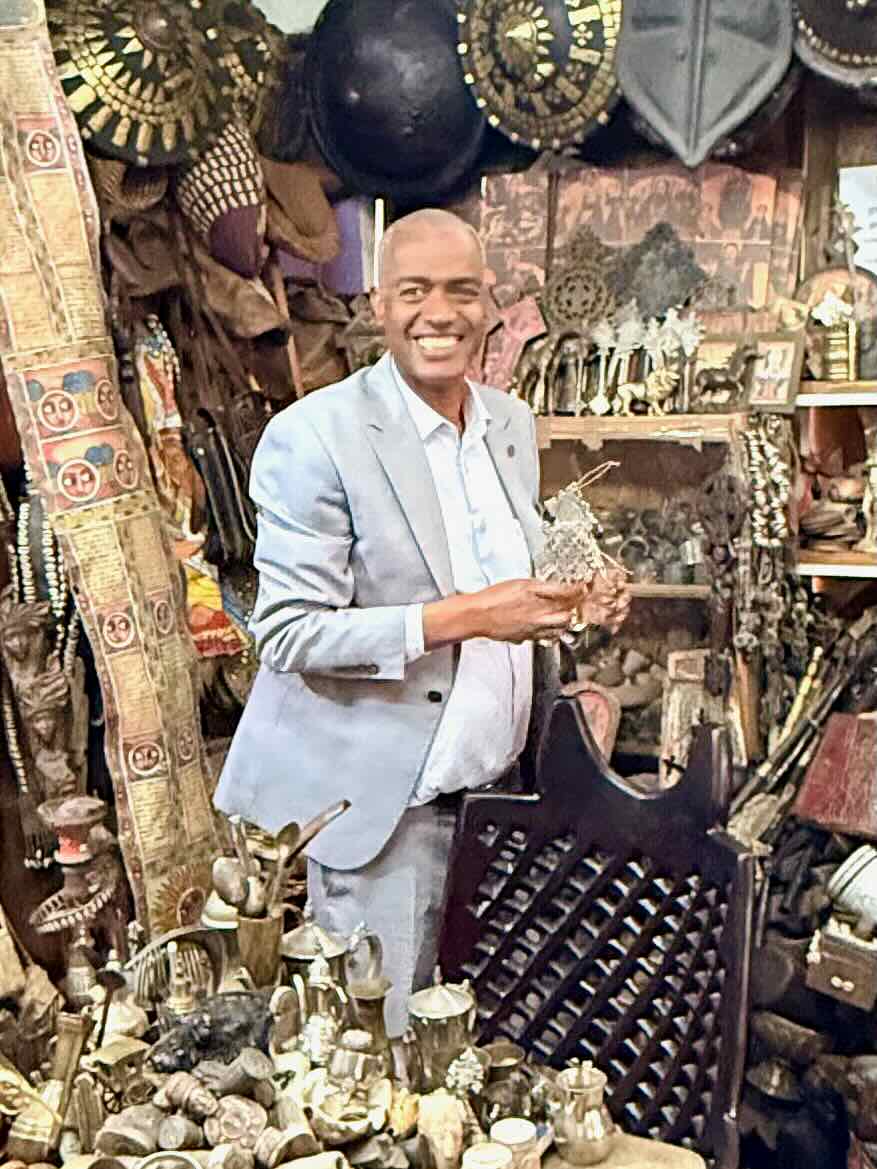
As I walked away, I soon learned I had NOT reached this fellow’s bottom line. I ain’t gonna lie, there was a song in my heart when I heard the seller say, “Sir, sir, let’s do this for $40.” I told him that my final offer was 30 bucks. He accepted.
A teaching point.
What can we learn from this? When someone offers you something for $1,200, you’re gonna have to have the guts to counter with “20 bucks.” If and when you do, you absolutely know that this deal, if it’s going to be made, will be priced between $20 and $1,200. In negotiating, that’s called “bracketing.” Carol loved everything I bought her in Ethiopia. I loved the story I got from making this deal.

Too poor to pay attention.
I grew up poor in Central Illinois. Everybody on my block worked in the factory at the Caterpillar Tractor Company around Peoria, Illinois.
The factories were about 3 miles from our neighborhood. People would form a carpool of sorts, with four or five workers riding in one car to the factory to save money. Several of the fathers in my neighborhood were “riders” who paid a small fee to the driver to get those rides.
I remember one of the fathers wouldn’t use his car radio because he feared it would run down the car’s battery. Getting an “option” on a car often meant adding seatbelts. My parents were both heavy smokers. I’ve ridden in cars for thousands of hours as a child with the two adults in the front seat, smoking a cigarette every few minutes, and so far, I have lived to tell about it.
We never ever went on a vacation. My grandfather was a bowler. He would invite me to come and watch him bowl two nights a week. I lived for those invitations and never turned one down.
Just before we entered the bowling alley, he would give me $0.50. Yes, an actual 50-cent piece. I knew exactly how I would spend that money. A hot dog was $.25, a soda, usually a grape soda, was $.10, a Milky Way candy bar with a nickel, and one game of pinball was another dime. I spent that money that way every time I went with him, and I never ever asked for more. I tell people I grew up in a bowling alley, and when I wasn’t with him, I was bowling myself.
If you don’t ask, you don’t get.
Later in life, I was with my two brothers-in-law on New Year’s Eve. We were snowed in while traveling in Casper, Wyoming. We found a bowling alley and ended up bowling 69 games between us. The person who finished third in each “line,” the bowling term for a game, had to buy those three lines. When it came time to pay, we had about six large pages of score sheets. I asked the owner, “Since we are such big-spending customers, maybe you should give us a discount?” He smiled and threw two of the score sheets in the trash. If you don’t ask, you don’t get.
Lessons learned with a positive attitude.
Being poor is only a problem if you see other people who have a lot more. It doesn’t cost much to shoot a basketball for hours every day in your driveway until the seams on the basketball wear away, and the bulge of the inner lining breaks through. Then you learn how to dribble away from the bulge!
Where I grew up, nobody had anything of real value. That way, nobody, including me, ever really realized they were poor. Despite my modest upbringing, I never ever felt disadvantaged.
Going back to my roots…sort of.
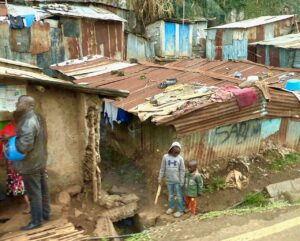
When I have a driver, and I go on these self-guided tours, I always ask to be taken to the poorest part of town, the biggest slum. I’ve seen some pretty wild places in Indonesia, South Africa, and lots of other places around the world. The photo above is from Nairobi, Kenya.
Today, I asked Ermias to take me through the lowest-income places in Addis Ababa, Ethiopia. I told him in advance that some of the places I was going to ask him to take me to were not on the traditional tourist route. Ermias thought that was a little unusual, but he understood, and he agreed.
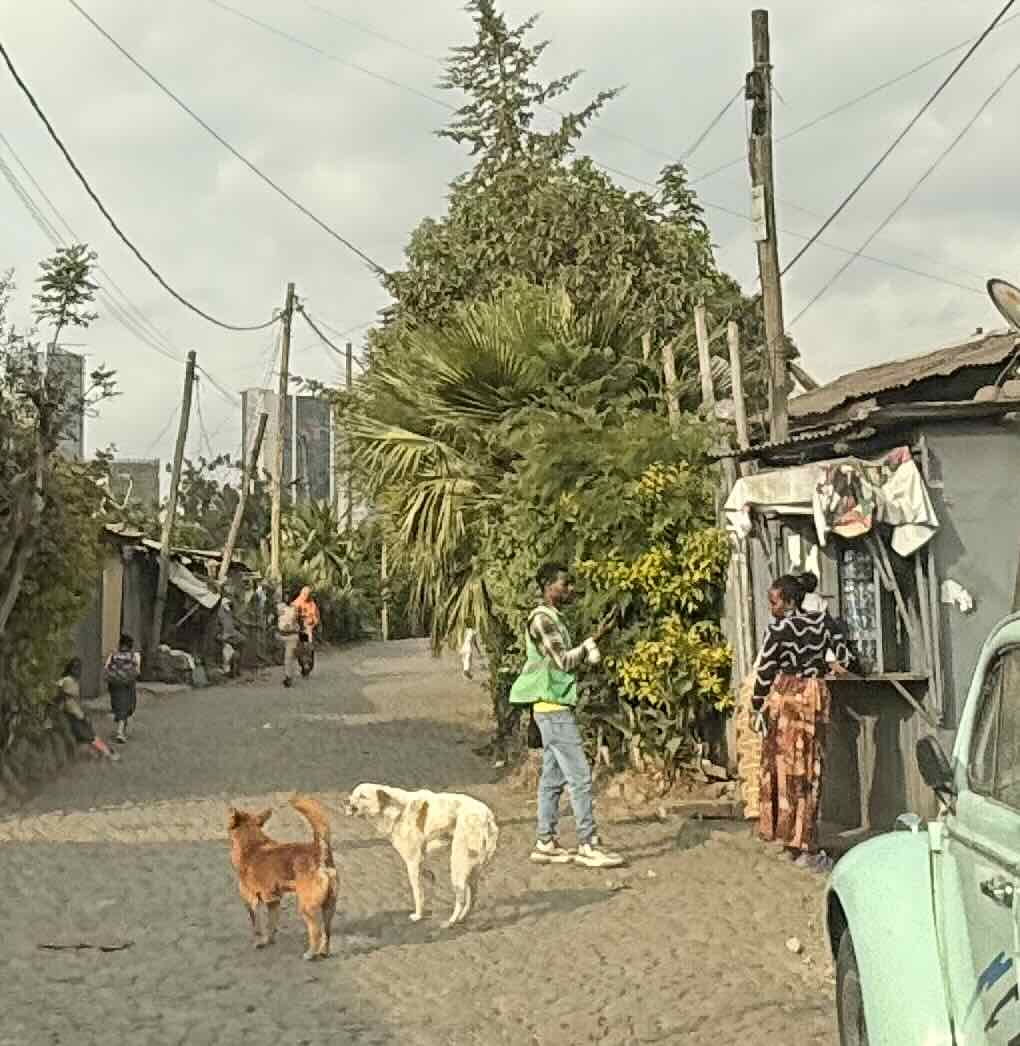
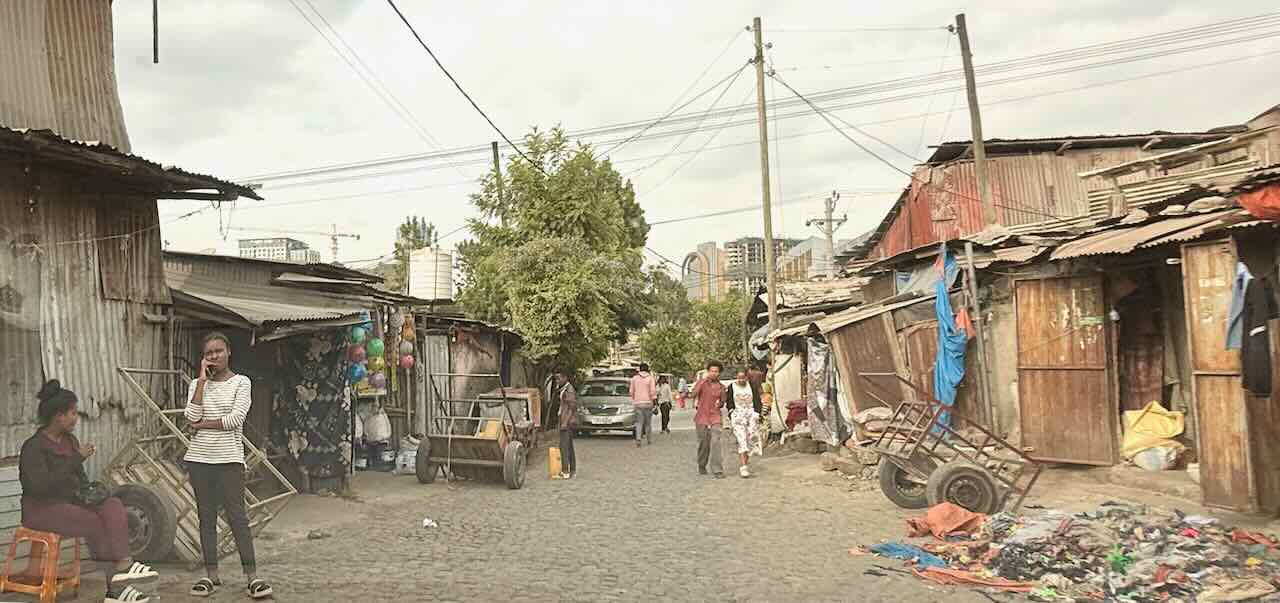
For the next hour or so, we exited the upscale part of Addis Ababa and went through the neighborhoods, often on rough dirt roads. People living in this part of the city had next to nothing, like where I grew up, but not really.
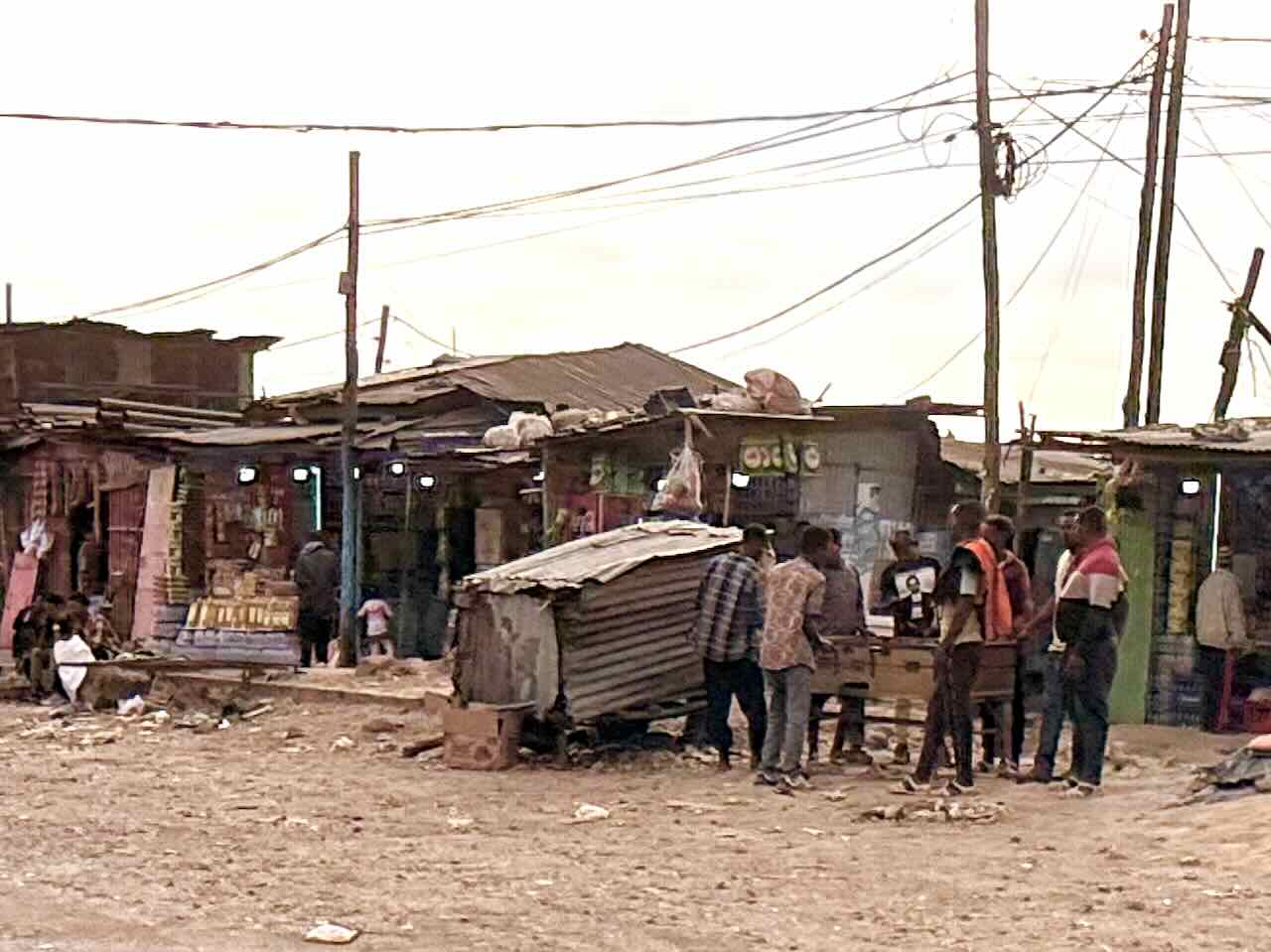
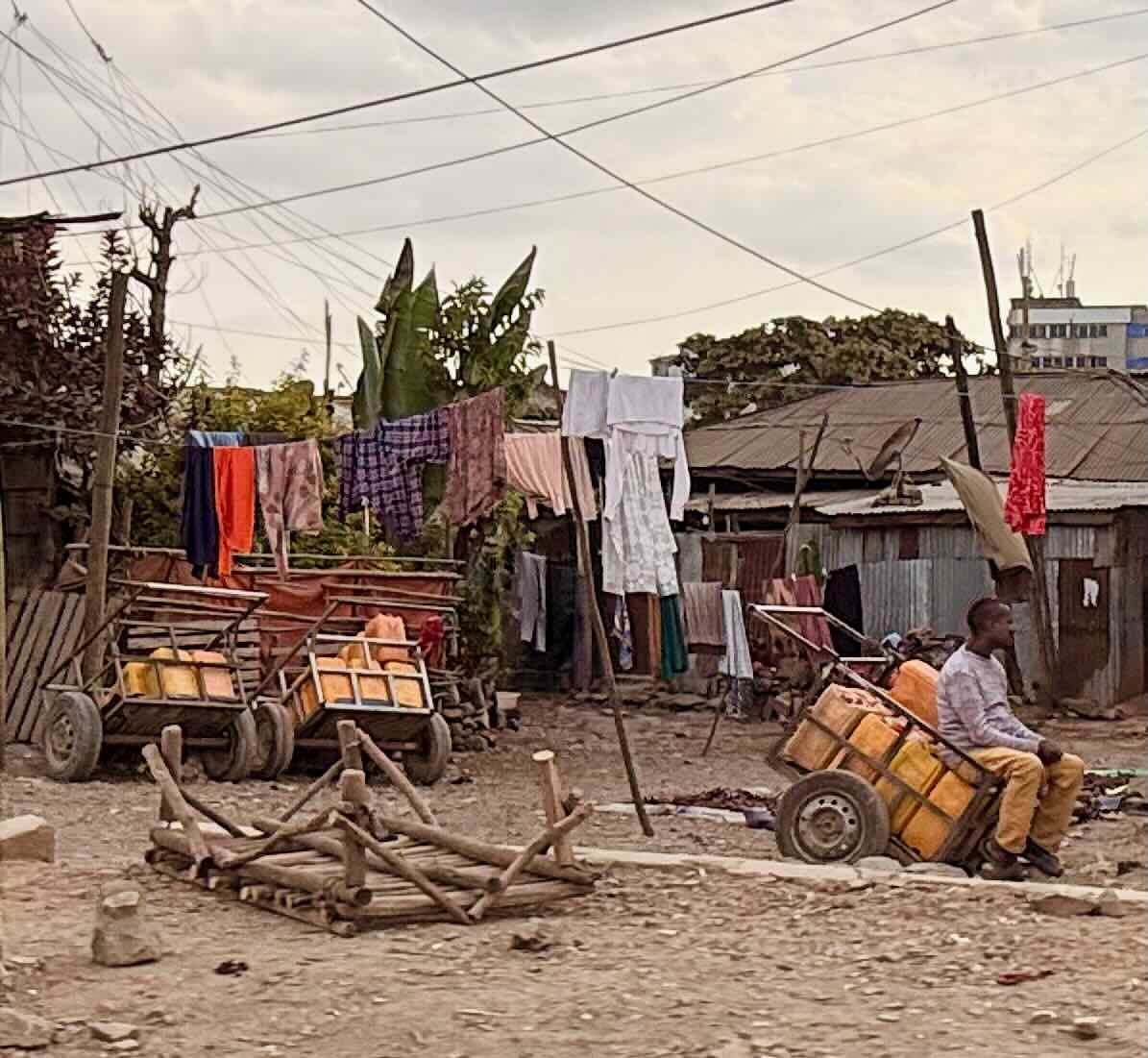
I don’t imagine that most of these people, especially the children, had ever seen a person who looked like me. I hope they weren’t disappointed! I enjoyed the tour and everything we did today. I took a lot of pictures.
See you tomorrow.
When we finished our touring today, Ermias and I agreed that he would pick me up tomorrow morning and take me back to the airport for my trip to Senegal. I paid him in full for his tour and the ride to the airport tomorrow. I knew he would come back. I’m a good judge of people.
No. Don’t do that.
Once back at the hotel, I thought it might be a good idea to go outside and take a walk. It was now dark. I mentioned this to the hotel concierge. He recommended against that walk for safety reasons. Here I was in a super modern, ultra deluxe hotel, and I was being advised not to walk outside at night. I took his advice.
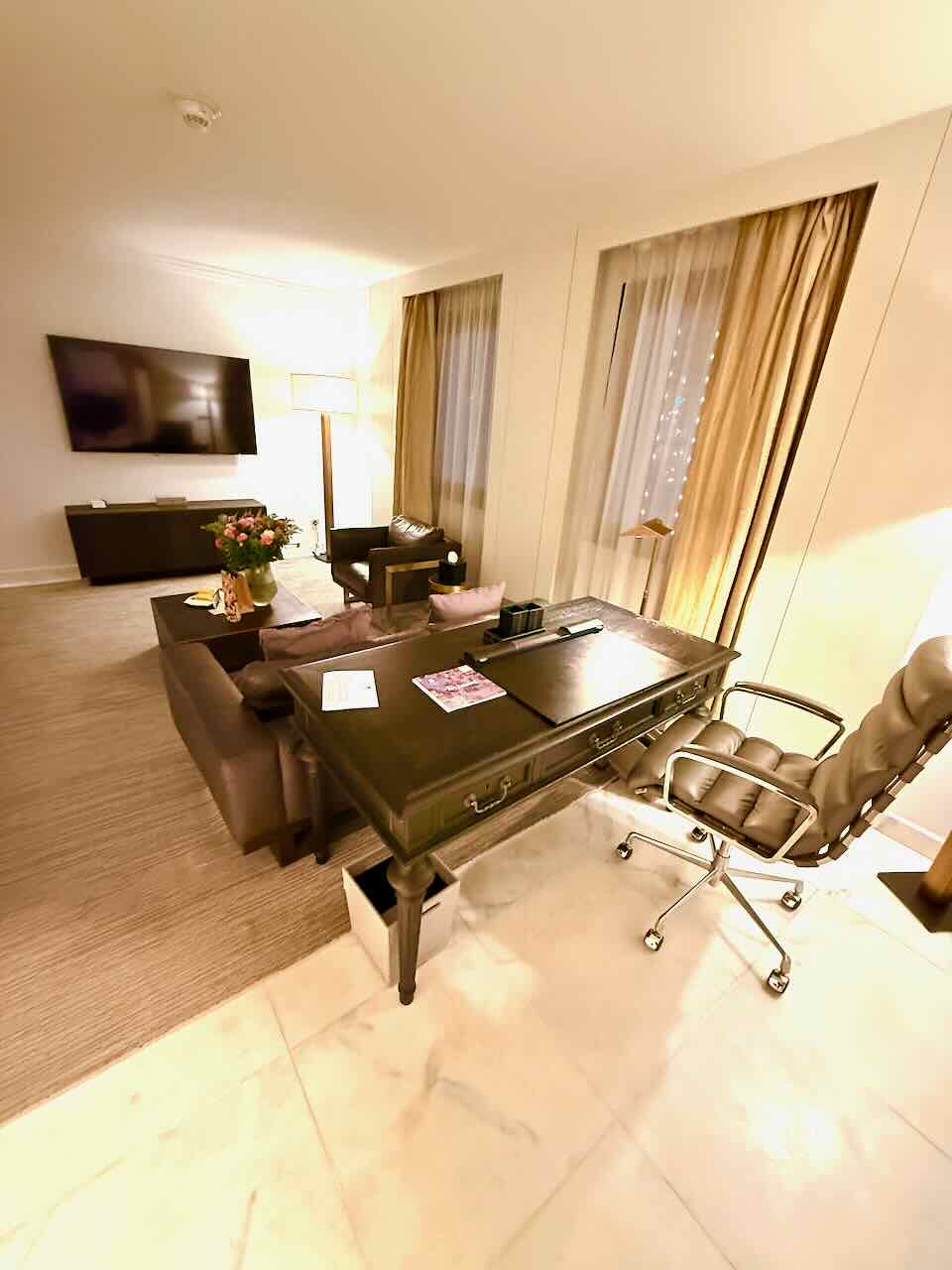
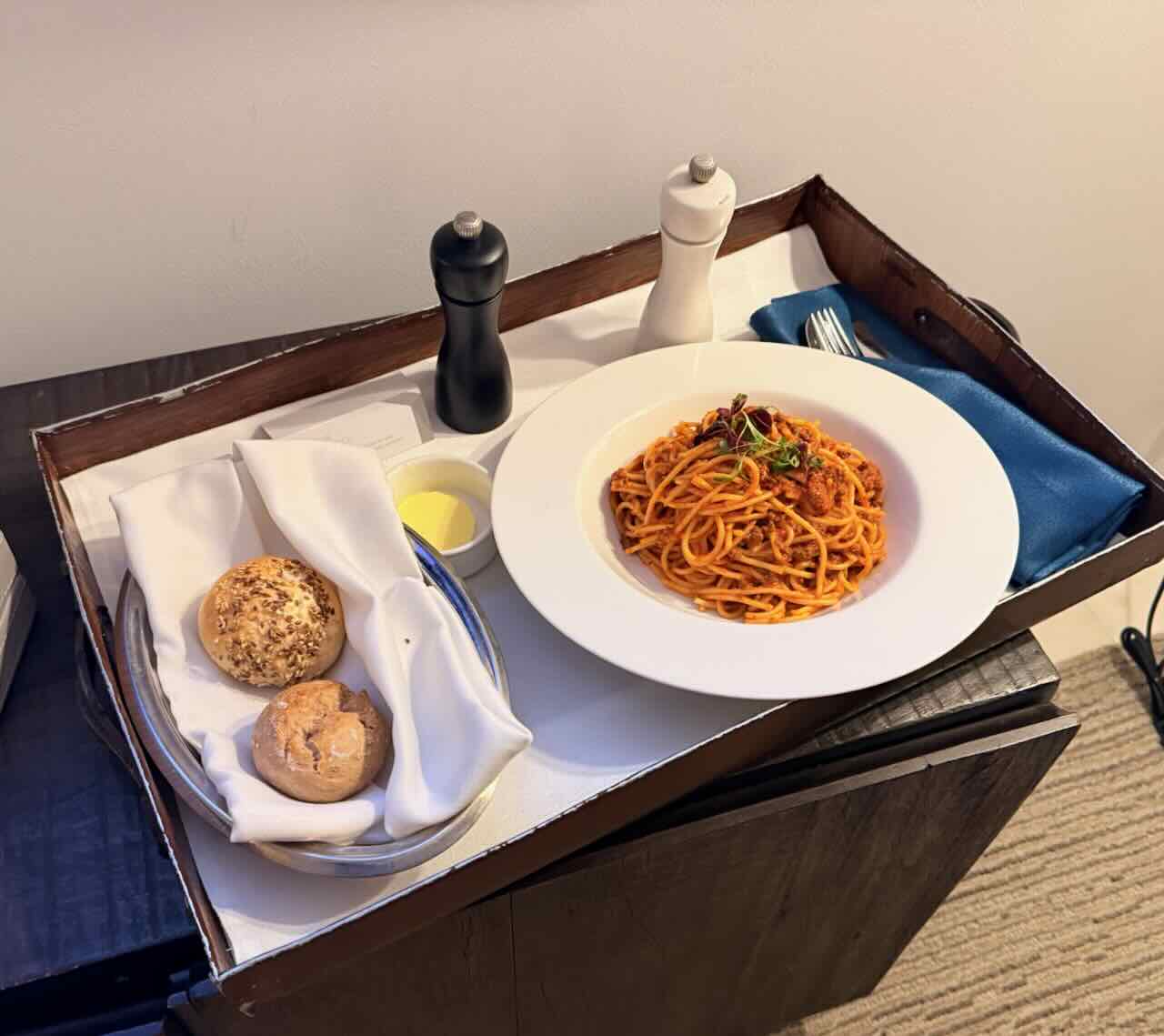
When I returned, I rode the elevator up to my huge Hyatt Regency suite and ordered room service. I’m not poor anymore. I used to be poor. Honestly, I don’t feel any different today than when I was 10 years old riding around in smoked field cars without a seatbelt. I’m happy I feel that way.
Last day on the quick trip to Togo….no, Ethiopia.
The next morning, Ermias arrived on time and drove me to the airport. It had been a pleasure meeting him. He had never been able to visit the Palace Auto Museum and told me he didn’t really eat at the restaurant he took me to. I was just happy I could make a new friend. He enriched my vacation with all the things we saw and did during our tour. Maybe I enriched his life a little bit as well. I hope so.
Off to Senegal via Mali.
Soon, I was off to Senegal, with a stop in Mali. Once again, I would have to wrestle with the idea of whether stopping in Mali and not getting off the plane was a new country “visit” or not. Of course, this was not a Mali visit! Yes, these are the first-world problems that dominate my life.
See you in Senegal.
Randy