


This is the only newsletter in the world that covers “life on the road,” with my trackchasing hobby, travel tips, and financial planning as I follow the “Die with Zero” life philosophy.

Sweden 2026.

I wanna optimize.
When I travel, I want to optimize. What do I want to optimize for? I want to optimize for value. That simply means getting a quality product at a price that delivers great value. Of course, I also want to optimize for happiness, among other things.

Nicklas!
A few years ago, I met a fellow named Nicklas Åkerlund. Nicklas resides in Sweden. I’m not exactly sure how we met. I suspect that we met on Facebook after Nicklas noticed I was a racing fan. I meet a lot of folks that way through my nearly 3,000 FB friends, almost all of whom I have never met.
My newsletter readers already know that I am a trackchaser. As a trackchaser, I try to see auto racing at as many different tracks all around the world as I possibly can.

Planning the trips is what I live for.
I think I have the best time planning trips to see races outside the United States. Why? I know those trips will offer racing, but they’ll also challenge me to optimize every aspect of the trip.
For the past several summers, Nicklas has volunteered his time and expertise. He has developed racing itineraries for my summer trackchasing adventures in Sweden.

Six trips to Sweden.
This is my 6th trip to Sweden. Two of those were during the winter, when I saw ice racing in Sweden and Finland. The rest of those trips were during the summer, when the sun in Sweden rises at about 3 o’clock in the morning and doesn’t set until nearly 11 p.m. I remember making an all-night drive on one of these trips from Sweden to Finland. There was really only one hour of darkness during that drive. When it got dark, I pulled over to the side of the road in a parking area and slept for that one hour.
Carol says I enjoy planning these trips as much as, or more than, I enjoy the trip itself. I think that is probably true. I will sit at my computer for hours and hours trying to make that perfect plan.
So what did I want to do?
For this trip, Nicklas asked me several months ago which of two types of trips I might prefer. I could do a trip with more track visits and more driving miles, or something less aggressive. I told him I wanted to see as many tracks as I could in the time I had. It didn’t matter to me how many miles I had to drive to do it. Folks, we were talking about driving at least 300 miles every day of this outing. I wanted to optimize for seeing the most tracks!
Advance planning is what I do.
Three main things have to be planned in advance to make one of these trips a success. I’m talking about airfare, hotels, and rental cars.
I have to match hotel locations with racing locations. I have to match up the departure times with whatever trip I am just finishing up (I am always just finishing up a trip). I have to figure out what needs to be done to start an international multi-week trip (this entire trip turned out to be five weeks). The same thing goes for returning to the United States.

I don’t pay retail. Often I don’t pay anything!
I try to use frequent flyer points and miles for international airfare. A standard round-trip international flight in coach class costs around $1,000. Business class would likely cost $5,000 and up, round-trip, to just about anywhere in the world.
Since COVID, United States domestic airlines have allowed customers to book frequent-mileage trips that are fully refundable. That lets me pick an itinerary and point usage, make the reservation, and, if something better comes along later, change it. That’s what I did on this trip.
Don’t miss this opportunity.
There’s a really good airline points-and-miles travel website called seats.aero.com. I can plug in the destination and the travel dates, and this site shows me the points I will need to make one of these trips. They don’t just show options with domestic airlines; they show airlines headquartered all over the world.

I have a lot of frequent flyer miles. I don’t have as many miles as I did when I was working. I have earned more than six million FF miles on American Airlines alone. No, I don’t have as many miles as I used to have, but I have enough. FF miles fold into my overarching personal philosophy of “Die with Zero.” There’s no need to hoard miles. Miles are for spending.
When a better idea comes along, I drop the old “best idea” like a hot potato.
Just a couple of days before we were ready to depart, I found a better miles offer. The original plan had us going from Los Angeles to Chicago, then to Helsinki, then to Stockholm. The new, better plan had only one stop: Los Angeles to Amsterdam to Stockholm. Both cost about the same in miles, so the change was a no-brainer.

Hotels!
The hotel situation for this trip was just a little bit different. I like to stay in Hyatt Hotels. It’s mid-July, and I’ve already been credited 97 Hyatt night stays. That guarantees me Globalist status with Hyatt into early 2028! Of all the various airline and hotel statuses, Hyatt’s Globalist is rated to be the most valuable.
I like to optimize for everything that I do in life. I think of it as a game. I try to put the right amount of time and mental energy into optimizing. Once I think I have found the best solution, I don’t think about it again.
Chase Bank. Great promotion.
Chase Bank ran a special promotion. You could buy things from places like Hotels.com and earn 10 times the points. If I spent $100, I earned 1000 points. That was an outstanding deal. It was almost too good to be true.
How about a short digression?
Wait. Let me digress for a brief moment. It is true that managing all these points-and-miles situations saves me tens of thousands of dollars every year. Some folks say, “I already have enough money. I don’t need any points and miles. I’ll just take the money from my investments to pay my travel expenses.”
All of the above can certainly be true. However, if points and miles save you $10,000 or $50,000 or more, then you don’t have to raid your investment accounts. You can spend that money elsewhere to enrich your life or others.

Credit card arbitrage.
Is practicing credit card arbitrage to earn millions of points and miles difficult? Well…I can do it. I guess it’s not that hard!
For Sweden, for almost all of the 12-day visit, we were going to need a different hotel every night. It’s not exactly how we like to travel, changing hotels every day, but we are following the Swedish trackchasing trail and the tracks on this trip are located pretty far apart.

Not many Hyatts outside of Stockholm.
I used Hotels.com to find hotel options in every city along our route. I used Google Maps on my MacBook Pro to find the race tracks. That helped me decide where to stay for convenience.
Our trip would begin on July 16. I made 12 nights of hotel reservations one day at a time. I tried to avoid the hotels that were $300 or more. I also didn’t consider any hotels with a consumer satisfaction rating below 9 on a 10-point scale. There are always lots of hotels that fit those parameters.

Yep. I was pretty happy with myself.
After I finished booking all those reservations, I felt pretty satisfied with myself. I was going to earn about 15,000 Hyatt points using the Chase Bank/Hotels.com promotion. How valuable are those 15,000 points? I could redeem them for nights at a Hyatt hotel. Those stays would cost about $500-$600 in total. Of course, if I were paying $600, I would have to take $900 from my investment account to clear $600 in cash. Yes, all of the points and miles awards are tax-free!

I did most of this more than a month before the trip. On June 16, a full month before our trip to Sweden would begin, I got an email from Hotels.com. They asked how my check-in went on that day for the first of our Sweden-booked hotels. How did our check-in go? We weren’t going to Sweden for another month!

At this point I was less proud of myself.
A little investigation told me that for four of the hotel reservation nights, I had mistakenly reserved things for June rather than July. That was not only dumb, but it was a problem. No, as life reminds me from time to time, I am not the sharpest tool in the shed.
I went back and checked all of my reservations. It was already the day AFTER I was supposed to have checked in on that first reservation. I didn’t have time for all of this, but I had to make time to fix my errors.
The clawback.
It wasn’t easy to “clawback” the cash spent on nonrefundable reservations after the original reservation date, or at any point in time.
Long story short, I got the money back for all four days of mistaken reservations. For one night, when the hotel wouldn’t cooperate, Hotels.com gave me a credit for what I had spent on that hotel. A couple of hotels refunded me, and one agreed to let us stay for free in July after they recorded me as a no-show in June.
I wasn’t very happy about making this mistake. I guess it just added one more element of difficulty to the game that I play to get everything corrected without any financial downside.

AutoEurope.
I use the AutoEurope car rental website for many of my rentals in Europe. At a minimum, I’ll check their site, and it will identify which brands offer the best cars at the best prices. Sometimes I’ll just book directly with AutoEurope. Other times, I’ll book directly with the car rental company itself. I have found AutoEurope to be one of the most valuable international trip planning tools I use.
This strategy works.
Usually, I try to rent a car in one of the lower, less expensive classes. Then, when I show up at the rental counter, they often upgrade me for free or upgrade me to a much better car at a good price. That’s what I did for this trip.

More credit card arbitrage.
In the past two years, Carol and I have had 30 different credit cards. They come and go. They stay as long as they are worthwhile and as soon as they’re not, they are kicked to the curb.
One of the cards (AMEX Platinum) offered me 300,000 points to sign up. Those 300,000 points are worth about $9,000 to me, and those are after-tax dollars.
When you spend money, it can make you money.
That card comes with an $895 annual fee. Think that’s a lot? I don’t know any credit card that charges more! I have friends who have several AMEX Platinum cards, all with an $895 annual fee.

Some people absolutely cannot fathom having a credit card with a high fee. I couldn’t care less about the annual fee. I never ask what the annual fee is when I apply for a new credit card. I ask what the annual reward is. If the reward exceeds the fee by an acceptable margin, I apply. Folks, you gotta spend money to make money. Remember, these are “pearls” and available to you free for the taking.
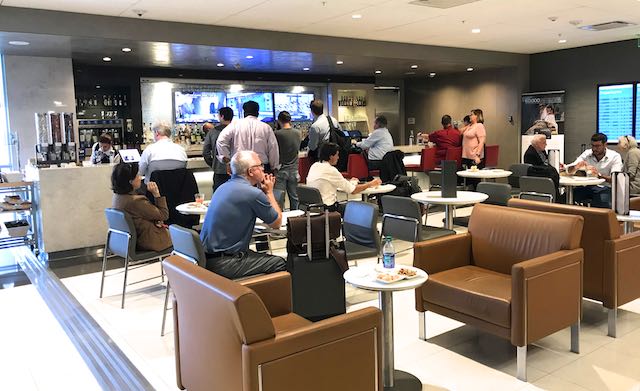
I have a card that gives me unlimited visits with a guest to the American Airlines Admirals Club and all Alaska Airlines lounges in the country. That card has an annual fee of $595. Currently, an individual membership to the Admirals Club sells for $1,400.
I’m in an Admirals Club nearly once a week. I might have a quest with me 20 times a year. I consider the food and alcoholic drinks they offer to be a value of $30 or more when I’m visiting an airport. With 40-60 total visits, the fee is easily covered by 2X or 3X. Plus, being able to relax in a nice airline club is a great idea.
Credit card arbitrage is pretty simple. Before you open up a new credit card, you wait until they are willing to give you a nice “sign-up bonus.” A typical sign-up bonus might be 100,000 points, but when I signed up for the AMEX Platinum card, which has an $895 fee, the sign-up bonus was 300,000 points. Those points are probably worth 6-8 one-way airfare trips to Europe.
All the credit card companies expect you to do to earn that sign-up bonus is spend maybe 3,000-5,000 in 3-6 months.
That’s not a problem for me. I’m never going to buy anything with a credit card that I wouldn’t have needed anyway. I’m really just spending the money I would’ve spent, and they’re giving me all of these benefits.

I’m not afraid to discontinue credit cards.
At the end of the first year, credit card companies don’t offer a sign-up bonus for year two. At that point I have some options. First, I can simply discontinue the card. I’ve discontinued five or six cards in the last several months.
Some people think that if you discontinue a credit card, that’s going to negatively affect your credit rating. In more than 95% of the cases, that’s not true. The total sum of all my credit limits for the cards I currently carry is a little more than $500,000.
If I could anticipate the date of my death, I could simply max out each one of these credit cards. Then my heirs could walk away with $500,000 worth of stuff. That probably won’t work out. But I have given the idea some thought! That would be an example of extreme optimization, wouldn’t it?

Retention offer? What’s that?
Like I say, if I’m not gonna use the card in year two, I discontinue it. If I do plan on using the card in year two, I will call the credit card company and threaten to cancel. That’s what I did with my American Admirals credit card from Citibank. Of course, I’m not the first person to think of trying to cancel a card unless there is some sort of retention offer.
I threatened to quit. They would not let me quit without more discussion. Not a problem for me. I had a couple of minutes.
I asked them for reasons to keep the $595 fee card, which offered me unlimited Admirals Club visits for another year.
O.K. This was a good benefit.
This is when they explained an offer I wasn’t aware of. I would get a $120 credit on the card if I spent $120 with Avis or Budget Rental Car. I use National Car Rental almost exclusively, but for 120 bucks I could pick up an Avis Rental sometime this year.
I’ve just explained most of the preliminary planning necessary for extreme optimization. Most people wouldn’t go to the length that I do for that type of optimization. However, this stuff isn’t as time-consuming or intensive for me because I have a lot of experience with it.

Time to go to the airport!
Carol and I headed to Los Angeles International Airport. Normally, I would drive my Tesla Model X for a trip like this. Today, I was driving Carol’s Toyota Camry. Why? Because at the end of the trip, Carol will fly back to Los Angeles and I will fly to Chicago. When I get to Chicago, I will continue my trip for another week with my grandson from Texas. Then I will continue my adventure for another two weeks by myself.
Carol doesn’t drive my Tesla, by her own choice. Since she was returning to Los Angeles by herself, she needed to have her car at the LAX parking garage.

Carol can get it done.
By the way, can I tell you that I am very proud of Carol? She’s a woman who can show up in a place like the Stockholm airport and get herself back to our modest seaside cottage all by her lonesome. I find that impressive, and it’s not something everyone can do, no matter their age.
I have lots of benefits at LAX.
Of course, we stopped at the Admirals Club to have a late lunch, a Bloody Mary, and a screwdriver. No charge for any of that.


Then I walked over to a place called the Gameway. Gameway is a video game store in the airport that offers snacks and drinks…and of course, video games. They are part of the Priority Pass program, and I am as well.
I picked up six drinks and six snacks, and at LAX’s overinflated prices, the total came to about $90. No charge at all for me. I do that about every time I come into or out of LAX. This is another example of extreme value optimization.
Off we went to Sweden.
The entire travel time from Los Angeles to Stockholm via Amsterdam was only 14 hours and 30 minutes. Since there are no nonstop flights to Sweden from Los Angeles, that’s about as good as you can do.
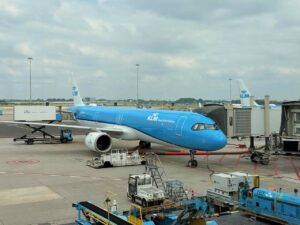
We flew in coach on KLM Airlines. We like to have what we call “opposite aisles.” I have flown in business class or first class more times than just about anybody reading this newsletter. However, to the best of my remembrance, I have never ever paid for long-haul business or first class. I think paying to fly upfront is a terrible value.
I was using frequent flyer points to pay for this trip. However, if I had paid cash, it would’ve been $1,000 or maybe a little more. A business class ticket for the same round-trip itinerary would be $4,000-$ 5,000 or more. That’s nearly $10,000 for two people!
The worst value of anything I might buy?
The non-stop flying time from Los Angeles to Europe is 10-12 hours. If I were staying in some of the finest hotels in the United States, I would have absolutely no interest in paying $10,000 for Carol and me to stay in the hotel for 10-12 hours. Coach is just fine for me. I’ll take the money that I wouldn’t spend on business class and enjoy it in another way.

We made it. Stockholm, Sweden.
When we landed in Stockholm, we took the bus over to the rental car center. Because I’ve been to Sweden so many times, that process is about as simple as picking up a rental car in Dallas or Chicago.
Now another type of “dance” was about to begin.
When I got to the Avis Rental Car counter, they told me what kind of car I had reserved on the autoeurope.com website. I immediately asked if there were any other upgrade options. I had paid $700 for 10 days of a midsize SUV. That’s 70 bucks a day. I commonly pay nearly $100 a day, and sometimes more, for a car in the United States.

The offer.
At one point I had the entire staff working on my “deal!” Finally, my guy told me he had the biggest SUV they offered, a Peugeot 5008, and that I’d be the second person ever to rent that car. That seemed like a good deal. How much was this upgrade going to cost?
In U.S. dollars, the guy punched a few numbers into his calculator and showed me the number instead of saying it. I guess he didn’t want to involve all the other customers hanging around the desk.

No!!
That number was $600 for the upgrade, or an additional $60 for each day. I’ve had my share of negotiating classes and training. I’ve learned so much. One major element of negotiating is something called the “explosive no.”
When you’re negotiating, and someone gives you an offer that you think is totally unacceptable, you need to make it very clear that that’s never going to work. That is the “explosive no.” Of course, I couldn’t yell, “No!” in the rental car office. I couldn’t say, “Are you out of your freaking mind?”
I did tell him there was no way I would pay $600 as an upgrade fee. I offered $300. A little while later, he came back at $450, and I reiterated that $300 was my best and final offer. He told me he would “meet me in the middle” at $350 for an upgrade.
I might point out that no matter what the guy’s initial upgrade offer was, I would have reacted to his offer as if I were heavily offended. Why? I just like playing the game.
O.K. I could do that.
At that point, things sounded reasonable. I’d be in my rental car for $1,050 for 10 days, with an outstanding, brand-new huge SUV, so all those driving miles would be in comfort. The fee was just a little bit more than $100 each day, and I liked that price for what I was getting.
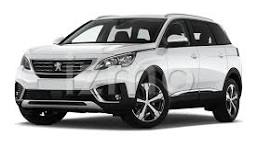
What? This car wasn’t going to work.
When we went outside to pick up the car, we found a beautiful seven-seat Peugeot 5008 SUV. The problem was that we couldn’t fold down the rear seats in the back row. That would be a problem for storing our luggage. I don’t have any mechanical skills. I feared I couldn’t figure out how to fix it.
I brought the Avis guy out. He couldn’t fix it either. That made me sort of happy that the problem wasn’t something I didn’t understand.
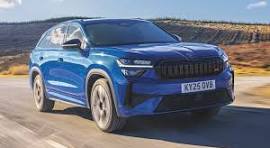
We agreed that he would move us over to a Skoda Kodiaq SUV. The Skoda was only 2 inches shorter than the Peugeot, and given the circumstances, that would work out just fine.

Apple CarPlay is a must.
I won’t rent a car unless it has Apple CarPlay, a software feature that lets me link my phone to the car’s audio and video system. I use Google Maps. I used to use Waze. I’ve used Apple Maps a little, but right now Google Maps is my favorite.
Off we went to our big Swedish adventure, heading northward on the E4 highway.
Roads are good in Sweden. Traffic is light.
Sweden has an interesting road system. First, the roads are in great shape, considering they get a lot of winter weather.
In the United States, if you were on the interstate system, you would see two lanes going in each direction at a minimum. In California, we have our share of 16-lane freeways.
In Sweden, these roads have three lanes. You travel in your direction in two lanes for 3-5 km. Then the road switches and you’re driving in one lane, while everyone coming in the opposite direction has two lanes. The road switches back and forth like this for hours.

Much of Sweden is very rural. The roads don’t have that much traffic, so the engineer who came up with this idea of having a country full of three-lane roads rather than four-lane interstates probably saved the country a good deal of money.

The meaning of the European time zone change.
Sweden’s time zone is nine hours ahead of Los Angeles. I walk more than 4 miles every day. I’ve been doing this for a decade or probably more.
I use my Apple iPhone to record my walking distances. My iPhone calculates how much and how far I walked in the local time zone of wherever I am in the world. However, when I get back to California, it converts all of those walking distances and times back to California time.
So, I might’ve been in Uzbekistan and walked 4 miles each day. But when I get back to California, the data might show me walking 6 miles one day and 2 miles the next. I can’t have that.
I travel internationally often, more than 100 days a year. I make sure I walk 4 miles or more according to “California time.” In Sweden, that meant I needed to walk my four-mile distance from 9 a.m. to 9 a.m., which is midnight to midnight in California. Can you spell anal?
Trackchasing brought us to Sweden.
I am known as the World’s #1 Trackchaser because I have seen auto racing in 93 countries. Carol is known as the World’s #2 Trackchaser because she has seen racing in 53 countries, just one country ahead of the guy in third place.

Often, we don’t travel together.
Most married couples normally go on every trip that they take during their married life together. That’s not exactly the case with Carol and me. Why? I go on a trip of a lifetime every month, and some kind of trip every week, and I’ve done that for decades.
Carol isn’t exactly wired for that kind of travel, but she still travels 60-70 nights every year and has visited about 75 countries. That’s good enough for her, and that’s good enough for me.
They say opposites attract.
Carol and I are within weeks of each other in age. As a child, I enjoyed toys by simply looking at them, picking them up, and enjoying them from there. I don’t think Carol operated that way as a child.
Although I didn’t meet her until she was 19 years old, I suspect that as a youngster she would look at a toy, pick it up, try to disassemble it, reassemble it, and question why the engineers did it this way or that way, and walk away somewhat disgruntled, knowing that she could’ve made it better.
Her childhood traits have carried into adulthood when she examines our hotel rooms. I walk in, and if it’s late at night, I lie down in the bed, shut my eyes, and go to sleep.
Carol has a slightly different approach. She will press every button, turn on every light, flush every toilet, and then make a complete evaluation as to how the Hyatt engineers or whatever brand we might be using don’t ever stay in a hotel, and if they did, they would’ve arranged it the way she would like it. I simply go with the flow. I enjoy Carol‘s critique and try to move on down the road.
Having a good rental car was important.
Our Avis rental car seems to be good so far. It has a driving range of 1,000 km or about 625 miles. That’s impressive.
When I turned on cruise control, it offered a benefit I have never experienced in any car I’ve ever driven. If the speed limit is 100 km, the cruise control goes to 100 km. If, while we are driving, the speed limit changes to 80 or 60 or whatever, the cruise control adapts and changes to the new speed limit.

I prefer Google Maps.
We’re using Google Maps on this trip. Google Maps gives us an audio message every time we approach a speed camera, and so far we have passed a lot of them. I hope Google Maps and the car’s adaptive cruise control system are good enough to keep me from getting any expensive European speeding tickets. I’ve gotten my share over the years, especially when transiting France.
At this point in the trip, we began visiting Swedish auto racing tracks. I’ll tell you all about that in the next section of our Sweden adventure.