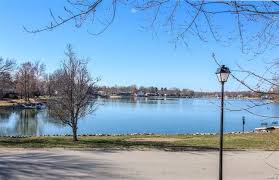
Greetings from Lake Saint Louis, Missouri
.
.
From the travels and adventures of the
“World’s #1 Trackchaser”
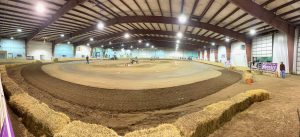
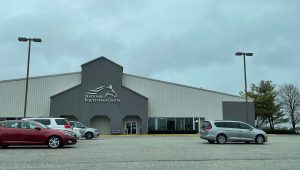
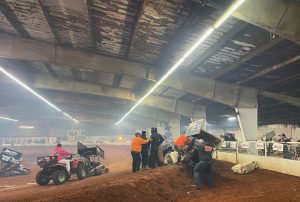
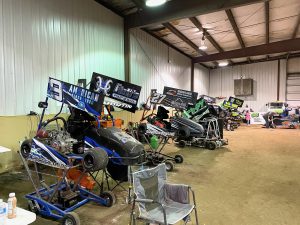
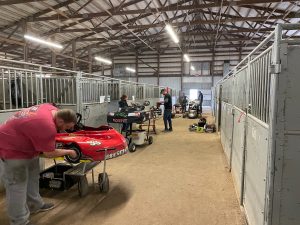
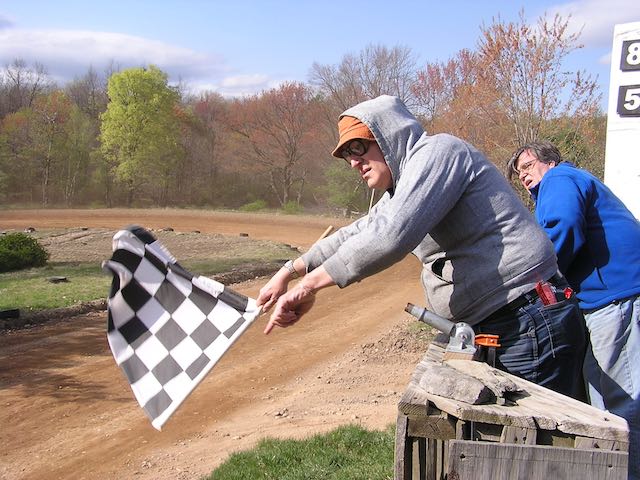
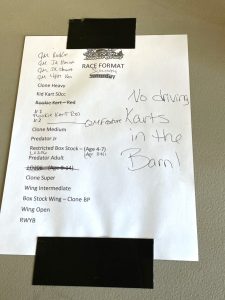
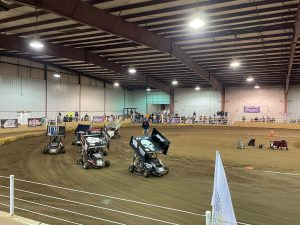
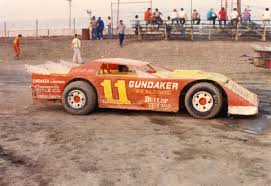
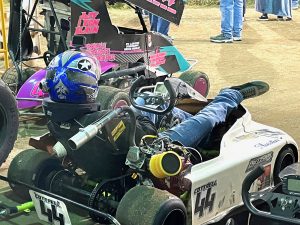
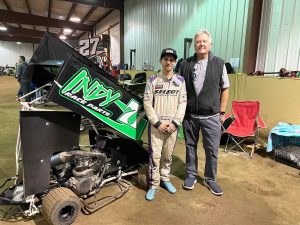
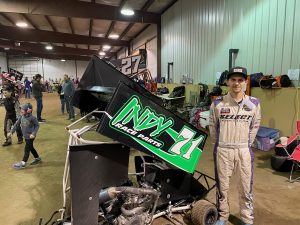
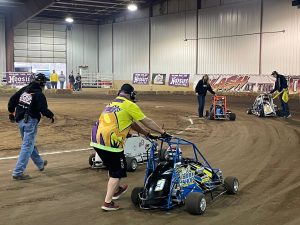
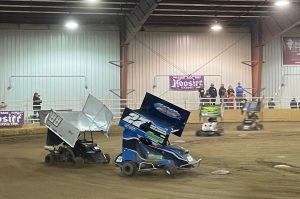
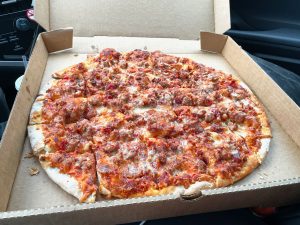
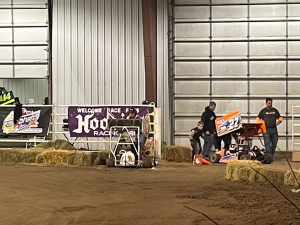
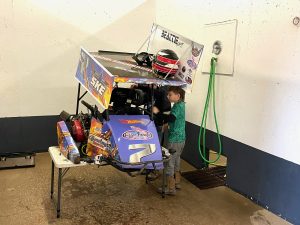
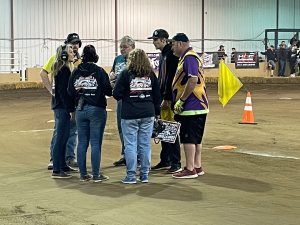
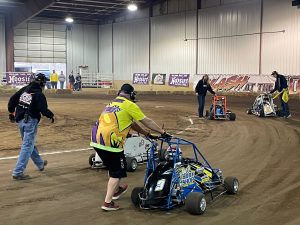
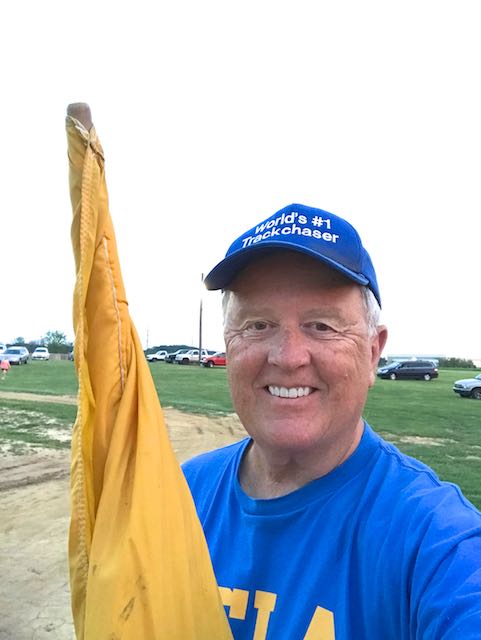
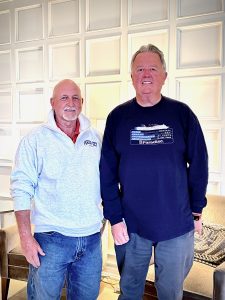
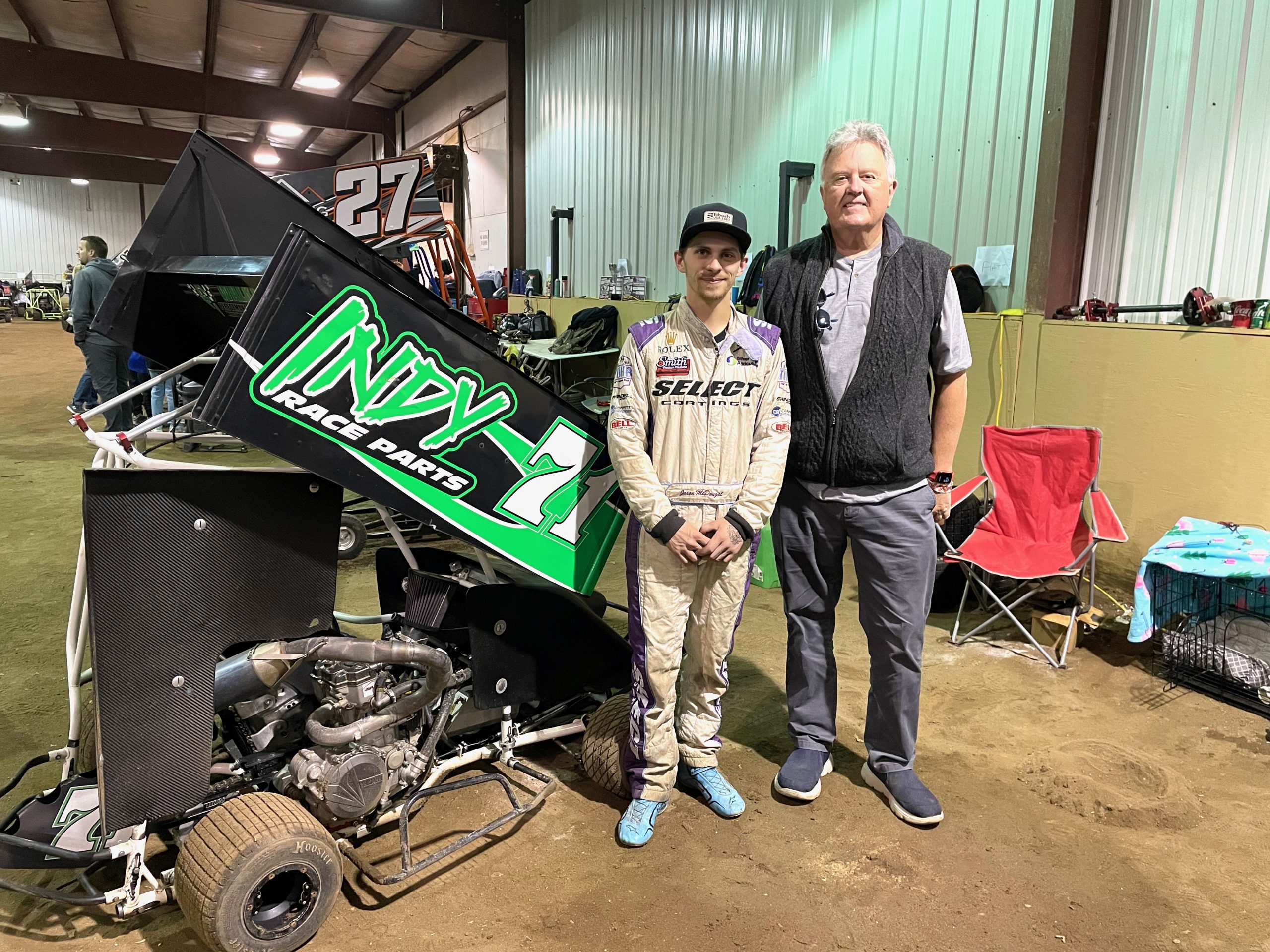
National Equestrian Center – Building #7 Dirt oval Lifetime Track #2,683 THE EVENT Editor’s note: When someone tries to put ten pounds of sugar in a five-pound back and it doesn’t work, who is responsible? Is it the sugar or is it the bag? Or, is it the person trying to put the sugar in the bag? All good questions. Please read along to see how this metaphor applied to today’s racing. I AM A TRACKCHASER. My name is Randy Lewis (above trackchasing with Carol in Morrocco). I live out in San Clemente, California. We’re only 74 miles north of the Mexican border. I’m not sure a person could pick a more inconvenient location in the continental United States if they wanted to be a world-class trackchaser. My residential location virtually assures the idea that I must fly to virtually every track I visit. I am a “trackchaser”. I trackchase. Have you ever in your life heard of “trackchasing”? I didn’t think so. Trackchasing for me is all about three things. First, I enjoy auto racing. Secondly, my hobby requires a good deal of overnight travel. When I venture out to see a race at a track I’ve never seen before I do not want my trip limited to racing only. The very last thing I want when I’m done trackchasing is to have memories of only racing. I want to take some time to see the local attractions of wherever I might be visiting. Those visits in many cases will provide more long-lasting memories than whatever I saw on the track. Finally, I want to create a logistical plan that allows me to accomplish the two points mentioned above without depleting my retirement account. That’s trackchasing for me. Hundreds of trackchasers have stopped for a moment to create their own personal trackchasing list. I think that is great. However, I will tell you that no one has ever taken trackchasing more seriously than I have. Do I have any data to back up that assertion? I do. To date, I have seen auto racing in 85 countries at more than 2,680 different tracks. Does that sound serious to you? I’ve been able to see the world doing this. If you’re interested in exactly what I’ve been able to experience all around the U.S. and the world I recommend you click on this link. Trackchasing Tourist Attractions After each and every event that I attend I post a YouTube video, a SmugMug photo album and a very detailed Trackchaser Report about the experience on my website at www.randylewis.org. My trackchasing contributions generate a good deal of interest in what I am doing. My YouTube channel (ranlay) has more than 1.3 million views. My website gets more than 20,000 views every month. Because I have seen racing in 85 countries at this point I am considered the World’s #1 Trackchaser. That’s good enough for me. Now I encourage you to drop down a few spaces and read about today’s trackchasing adventure. As you discover what went on at this track just think about the idea that I’ve done this nearly 2,700 times. I don’t mind admitting I am addicted to the hobby of trackchasing. It’s just fun! If you’re interested in looking back and seeing where I’ve been the following link is for you. If you’ve got a question, comment or whatever please leave it at the bottom of this report. It’s very easy to do. Or you can visit me on Facebook. Thanks! FOREWORD Sunday, February 28, 2021. I must tell you that being a race promoter is a very difficult job. It is not dissimilar to herding cats. Have you ever tried to push a wet string uphill? Being a race promoter is even more difficult. Today I was at the National Equestrian Center in Lake Saint Louis, Missouri. The center is about 30 minutes west of downtown St. Louis. I hadn’t expected to be here. This weekend was initially designated as an exclusive last weekend of the season ice trackchasing trip. Then mother nature intervened as she often does in the world of ice racing. It got so warm that four of my ice racing locations canceled their events and ultimately their seasons because of lack of good ice. I ended up trackchasing on Friday night at an indoor arena called the OK Corral (above) in Harrah, Oklahoma. Then I found just about the last ice racing event happening anywhere in North America in Madison Lake, Minnesota for a race on Saturday afternoon. With all of the above, I ended in Lake Saint Louis, Missouri on Sunday afternoon right here at the National Equestrian Center. To get here I had flown more than 2,000 miles and driven more than 700 miles in two days. As I looked around at the drivers, pit crew and spectators I was pretty sure that no one had traveled that far to see today’s racing. What had I come to see? I traveled to Missouri to see some go-kart racing that would meet trackchasing’s often stringent and at other times arbitrary rules. Essentially I was here to see go-kart racing where the karts were caged and sometimes winged and were driven by adult drivers. I would also be seeing racing with go-karts that were caged and winged but driven by youngsters as well as a good deal of flat go-kart racing. Sadly, none of that counted in my hobby of trackchasing. Why doesn’t that type of racing count? Your best bet is to corner a trackchasing founding father and ask him. Don’t try to ask her because there were no trackchasing founding mothers only fathers. I don’t make the news I only report it. Today I walked into one of the several doors of building #7 on the NEC property. It’s important to note that the National Equestrian Center does have several buildings. I don’t know if they’re all large enough to hold indoor go-kart racing. But I did record for posterity the fact that I was seeing racing in building #7. Why was that important? You’re probably all supporters of one political party or another. You do know that each political party when they are in power gets to do what they want to do, right? Of course, the political party that is out of power at that time gets pretty well pissed off about all of that but as soon as they get back in power they do what they want to do. It just turned out that the trackchasing founding fathers decided that seeing racing in multiple buildings on one property could all count individually. Why did they decide that? Simple. There was a huge complex of buildings located on the grounds of the Pennsylvania Farm Show property in Harrisburg, Pennsylvania. Most of the early trackchasers were from Pennsylvania or nearby New York. The founding fathers were protecting themselves! He who has the power often takes advantage of the power. I will tell you that despite several positives from today’s show overall I came away disappointed as a trackchaser and spectator. This was more of a personal disappointment that probably applied to me more so than just about anyone else. You see I am a trackchaser from California. Racing shows in the Midwest are not specifically developed for the exclusive entertainment of someone visiting from California. I understand that. Do I like it? Not exactly. I just have to deal with it. I have a strict policy when I’m on the road with my trackchasing hobby. Unless there is some other compelling reason or personal event, when the racing is over I want to get back to my home. I don’t just hang out all across the country with nothing to do. When the last checkered flag that I need to see falls I’m headed to the airport. Today I had two time parameters that I needed to acknowledge. The website for the Tri-County Speedway in Pontoon Beach, Illinois provided information about today’s racing. Why was that? The owners of Tri-County Speedway were the promoters for today’s go-kart racing. Their website told me that racing was to begin at 11 a.m. Good. Fine enough. There was also one nonstop flight from St. Louis back to Los Angeles today. It would be departing the St. Louis International Airport at 3:35 p.m. When I matched up an 11 a.m. starting time with a 3:35 p.m. airport departure things clicked. I recognized the fact that today’s racing location was 30 minutes from the airport. I figured if I left at 1:30 p.m. I would have plenty of time to make my flight after returning my rental car. I also figured that would give me 2 1/2 hours to watch a dozen or so divisions of go-karts run their heat races. Normally in go-kart racing, there are only enough competitors in each class to fill one heat race. That means six or eight karts per division or less. I thought to myself that they surely could handle 12 heat races in 2 1/2 hours. You may know where I am going with this! You should know that I try to put auto racing on the same level as sports like football, basketball and baseball. A basketball game will be completed in about two hours. Football and baseball games probably go about 3 1/2 hours. The professional stick and ball sports are going to start on time. That being the case I like to use the “three-hour rule”. What’s the three-hour rule? My entertainment quota for auto racing, under most circumstances but not all, is about three hours. More than three hours of sitting on a hard board are about the most I am willing to sit on a hard board. If the show is amazingly entertaining I can stay longer but normally three hours at an auto race is enough for me considering I likely traveled hundreds or thousands of miles to get there. Yes, I think you may know where I’m going with this. Today’s show did not provide a trackchasing countable go-kart heat race in time for me to make my flight. What could I do with that? I guess I just could have just walked out of the arena to make sure I made my flight right? However, as a trackchaser, I couldn’t do that. So as I waited to see the race that I needed to see. I acknowledged, understood and didn’t like it one bit. I was going to now get home 24 hours later than I initially expected. I would have to wait for the 3:30 p.m. flight tomorrow afternoon before heading back to California. I would arrive in the driveway of our modest seaside cottage at approximately 10 p.m. on Monday night. This was likely after virtually every other racer, pit crew member, race official and spectator had been in their beds a day earlier than me. No, I didn’t like the situation one bit. Now with this background let’s talk a little bit about today’s racing show. First, it was held indoors. It’s still wintertime in St. Louis. Today’s outside temperature was in the low 50s with a pretty good breeze. The racetrack was a very small maybe 1/10 mile in length dirt oval. There was virtually no banking and no dust but the fumes from an indoor race will get to you if you’re in the building for seven hours like I was today. I walked into the entrance to the building where there were no ticket takers. Immediately I found myself amongst the horse barns which were now being used as pit stalls for today’s racing teams. In point of fact, at this point, I didn’t need to spend any money on this event whatsoever. However, I felt the need, to be honest like I always do and found a ticket seller. I purchased my $20 pit wristband. For 20 bucks I could go anywhere I wanted and get up close and personal with the racers and the racing action. I think if you watch my YouTube video you’re going to enjoy it very much. You’re going to see a lot of high-speed close racing action amongst drivers of all skill levels, ages and racing machine sophistication. I always say don’t miss the video. I never like to be critical of the racing program in my reviews. I simply like to provide the facts as I was able to observe them. Sergeant Joe Friday always wanted to stick to the facts. Some people might think that one of my reviews here and there is critical. I guess if mentioning the facts is critical that would be the case. I never like it when a race promoter lists the time when “racing” will begin and what I call “racing” doesn’t happen. What’s my definition of racing? It’s simply dropping the green flag on a field of cars and racing for a certain amount of time or laps and then throwing a checkered flag. To me, that’s racing. Some people think that practice is racing. Some people think that hot laps are racing. To me, those are preliminary events. Practice and hot laps are not racing in my book. If a promoter is going to have hot laps they should be designated as such. Then a specific time when the real racing is to begin should fall under the racing category. This seems like a simple fix to me. Remember I was told that racing would begin at 11 a.m. I needed to be on the road to the airport by about 1:30 p.m. to make things work for my travel plan. At 11 a.m. the “racing” that I saw was really hot laps. Hot laps are practice. Hot laps are not racing. They didn’t start racing until an hour later at 12 noon. I will tell you this. Having 2 1/2 hours to see the one and only class that counts for trackchasing purposes is a lot better than having an hour and a half to do so. Today’s promoters were Tammy and Kevin Gundaker. I have never met either of these folks. I know they are well-respected race track promoters. Back in the day, I would see Kevin Gundaker (above) compete in some of the biggest late model shows all across the Midwest and the East. He was a top late model driver. I think the promoters did a good job of keeping one race running after the next today. The problem was that a yellow flag caution was created on average about every lap or maybe two laps. There was one racer competing in a two-kart race who spun out five times. Today I probably saw about 30 races. If I had to guess each race had five or six yellow flag caution delays. That’s only a guess and if I had to guess about that I would say that’s a low guess. However, with thirty races at six cautions each that totals 180 caution flags. Folks most people don’t get to the airport on time when there are 180 caution flags. I didn’t either. Why so many yellows? I guess there could be a few reasons. Racers are just competitive. If there are no rules against causing yellow flag delays (like one or two spins and you’re out of that race) there’s no motivation to back off a little bit. Quite a few of the drivers are younger. They’re just learning their way. They caused a lot of yellow flags as well. There was a little bit of rough driving as well. Another reason could have been the dirt. The announcer admitted to the crowd that the dirt wasn’t specifically developed for racing. It was probably laying around in the building from horse shows. The track seemed slick. I will say this. As shown above, it seems like most kart racers are pretty laidback as they wait for their race to commence. I had the time today to take plenty of photos and video of the racing action. If you take a look at that you’re going to see exactly what I’m talking about with regards to the facility, the race and the competitors. I think you’ll get a feel for the general overall ambiance of the event as well. My Kansas-based trackchasing buddy John Simpson recommended that I track down some of his friends who were competing today. He wanted me to meet driver Jason McDougal and his crew members, Clinton Boyles and A.J. Parker. I found the race team in the pit area. They were competing in the open wing division which in a lot of places would be called a 500 outlaw winged cart. These are fast little critters. I walked up and introduced myself to Jason. We talked for a little bit. I was a little surprised when Jason told me that he had raced in Perth, Australia, which is in the western Australia state of…wait for it, Western Australia in the country of Australia. I’ve seen racing in every one of the six Australian states. When I went to Western Australia I saw racing at the Collie Speedway. Knowing that Jason had raced down under was impressive. I know that Australian promoters bring down top U.S. racers to compete with their locals during Australia’s summer and our winter. John told me that he had won in the midgets in Western Australia. Yes, Impressive. Later the track announcer was telling the fans just a little bit about Jason McDougal’s background. Jason had competed in this year’s Chili Bowl in Tulsa, Oklahoma. The Chili Bowl gets more than 300 racers. It’s a huge event and televised live on national TV. Jason had moved up from one lower-level feature to the next several times in this year‘s event. That was impressive. Nice meeting Jason! What sunk the program for me today from getting to the airport on time was the quarter midgets. John had mentioned they might be a problem. I guess when Southwest Airlines established their airline schedule they weren’t thinking about quarter midgets. Quarter midget race cars are miniature sprint cars. Quarter midget drivers are normally aged 5-16 but normally skew on the much younger side. Today the race promoters decided to run the heats and the feature events for the quarter midgets before any of the trackchasing countable classes would appear on the track. It was this extra 30-45 minutes or more devoted to quarter midget feature racing that delayed my arrival into California by 24 hours. I understand that young drivers are exactly that…young drivers. Everybody needs to start somewhere. I do think a little bit more emphasis on some sort of a school for these drivers would be appropriate. It often seems as if they don’t understand the flagging system, the racing protocol and more. I fully understand that many of these youngsters are in their first season sometimes they’re even their first racing competition. I also couldn’t figure out from the website information if the “wing intermediate” class which some people would call “250s” was open to drivers 18 years of age or more or not. Not knowing that meant that the only class that I knew for sure would count by trackchasing standards was the “open wing” class. In other locations, these karts might be called “500 winged outlaw karts”. Today there were nearly a dozen open wing karts. They were going to race in two heat races. I could have left after one open wing heat race and maybe made my flight. However, I had come all this way so I figured I might as well see both open wing heat races. When all of that was finished and if everything were to work perfectly I could’ve arrived at my plane maybe within 30 minutes of the scheduled departure. However, if anything got delayed, and the National Car Rental shuttle bus system in St. Louis is not one of their best, I would not have made my flight anyway. If I did get to the airport late I would no longer have a rental car. I would also miss the feature racing at the NEC. Then I would need to find a place to stay and find a hotel shuttle bus to take me there. In the end, I decided not to even try for my flight. With the first round of heat races were finished the track went to intermission. I have no idea how long the intermission lasted. I left the building headed and headed for one of St. Louis’ famous pizza locations. You probably know there is New York pizza and Chicago pizza but there is also “St. Louis pizza“. They do St. Louis pizza with a kind of unique pimento-like cheese. It’s very distinctive and generally, I like it. I probably wouldn’t order it if there were other more traditional pizza opportunities. However, when in St. Louis do it the St. Louis way. When the go-kart heat races were finished and I had consumed much of my pizza from Stefanina’s I had a couple of options. I could simply go to my hotel and relax for the rest of the evening or I could go back and watch the feature events at the National Equestrian Center. I went back to watch the racing. I guess I am as much of a racechaser as a trackchaser at times. When the racing was being run under the green the racing was excellent. However, as I say, approximately 180 yellow flag delays can throw shade over even your most favorite dessert. It was fun seeing Jason McDougal race his number 71 in the open wing feature race. It’s always more fun watching someone you know out on the track. However, Jason’s car failed and he had to drop out early. It was also a lot of fun watching several of the other classes compete. There was this one little guy from North Carolina who wasn’t much taller than 4 feet. I’m going to guess he was eight or maybe nine years old. He ran in a couple of different classes in immaculately prepared equipment. He was an outstanding little driver although ended up getting shoved out of the lead a couple of times and finishing back a ways. By the way, there were drivers competing from about ten states here today. I thought that was remarkable. I thought to myself. This little fellow and his race team had come all the way from North Carolina to race. That’s a long way to be driving in a race car hauler for a go-kart race. He was obviously going to have to miss some school doing this. On the other hand, he looked like he might be the next Jeff Gordon. How many Jeff Gordon’s are there? The answer to that question is one. How many people can start in a NASCAR Cup race? The answer is about 40. How many new drivers make it to the cup level each year? The answer might be three or four. The point being is that the odds of making a major success of oneself in auto racing are about as likely as starting in the centerfield position for the New York Yankees. It is true that folks like Jeff Gordon and Tony Stewart and others started go-kart racing when they were five or six years old. However, thousands and thousands and thousands of kids start like that. Only a microscopic few and I do mean a microscopic few make it to the professional level. I’m not denying that when done properly and for the right reasons this kind of family activity can teach great values. The value of competition and fair play and hard work and good sportsmanship are invaluable on the racetrack and in life. After one of the races where there had been a good deal of rough driving the parents, the race crews and the track officials got into a little bit of a verbal sparring match. I was pretty amazed to watch the young drivers, who again were in the 8-10-year-old range remaining calm. The drivers weren’t throwing insults or didn’t appear to be majorly upset at all. However, the parents and pit crews were. Welcome to auto racing’s version of little league baseball. Today had been a full day. I arrived just after 10 a.m. for the 11 a.m. start. Being early I went outside and did a little bit of powerwalking so I could ensure I would have my four miles of walking in for the day. Then from 11 a.m. until 6 p.m. I was in building #7 the entire time with the exception of my pizza excursion. I had been up close and personal with just about everybody in the building. People don’t wear a mask at auto racing events in Missouri. People don’t wear a mask at auto racing events pretty much anywhere in the country. That’s just how it’s done. Can we judge the effectiveness of wearing a mask when so many people don’t do it? I don’t think we can. While I was in the building today I used my Apple iPhone 12 to make a hotel reservation. I pulled up my Priceline.com app and ordered a full-scale Sheridan hotel for the princely sum of 49 bucks plus tax. I paid for my room by using my Apple Pay feature on my phone. I have not always done it that way? Back in the day at about midnight, I would go door-to-door from one hotel and motel to the next asking about availability. When someone finally told me, if they even answered the door at that time of night, that they had a room I was at the mercy of their pricing structure. Now I get the very best properties at the very lowest prices. Tonight when I checked into the hotel I reminded the desk clerk that I was a titanium elite member of the Marriott and Sheridan frequent-stay program. She gave me a special coupon for a complimentary buffet breakfast and a $20 gift card for lunch at the hotel. Now the cost of my hotel had been decreased by nearly 50% and the price had already been decreased by more than 50% from the original rate by Priceline. I texted a St. Louis buddy of mine, Ron Otto, who I had worked with starting back in the 1970s. I asked him if he was available for lunch on Monday and of course, he was. I mentioned at the beginning of my review that I don’t ever want to be unnecessarily critical of any race event. At the same time, I’m not hear to sugarcoat problems I see in race programs. I always try to mention the things that went well, which normally far outnumber the items that can be improved. The staff running today’s event actually worked hard at keeping the program moving. The flagman was especially effective in not suffering from “one more lap syndrome”. The next race was always lined up and ready to go. The flagman (above) even helped push karts off. However, the one glaring statistic that cannot be overlooked is the 180 yellow flag delays. Mind you this is just a guesstimate. I did not count the yellow flags. However, based upon the number of races and the number of yellow flag delays I am confident this is a conservative estimate of the times the yellow flag mania. I believe I was the only trackchaser in the building. I was probably the only race fan from California. However, with drivers and crews from ten states or so I’m sure they would have liked to get on the road and headed for home after only 80 yellow flags and not 180. Maybe a solution can be found for this problem before next year’s event. By the way, I will forward my review to this weekend’s race promoters. I think people in their position appreciate objective feedback that covers the things that went well and the items that can be improved. MONDAY I was able to sleep in this morning and dictate this particular report. At noon I joined my buddy Ron (above) for lunch. We had a good time reminiscing about our work experiences from a long time ago…as well as today’s political climate. From there Ron dropped me at the airport. The Southwest terminal at STL is one of the best in the country. It’s long. This allowed me to complete 3.1 miles of my daily powerwalking. Now, back in Los Angeles, just the walk to my parking garage will get me over four miles. By the way, when I got out of Ron’s truck I wasn’t wearing my mask. I went inside the terminal and used the self-check-in kiosk and headed for security. It was then that a TSA agent stopped me and told me to put on my mask. I hadn’t even realized I wasn’t wearing it! I hopped on a 3:35 p.m. flight departure from St. Louis to Los Angeles and landed uneventfully at about 6 p.m. in the Golden State. This was not before I stopped and used my Priority Pass privileges at the Pasta House in the St. Louis airport. There I was given $28 worth of food because of my Priority Pass membership. What did I order? St. Louis pizza and their delicious fudge cake! Nope. Couldn’t do this without my sponsors. Good afternoon from the National Equestrian Center in Lake Saint Louis, Missouri. Randy Lewis – 85 countries – 2,683 tracks. Missouri The Show Me State This afternoon I saw racing at my 74th-lifetime track in the Show Me, yes, the Show Me State. I hold the #1 trackchasing ranking in Missouri. Missouri ranks #13, amongst all the states, in tracks seen for me in the U.S. Here’s a link to my all-time Missouri state trackchasing list. I have made 53 separate trips to Missouri seeing these tracks. Thanks for reading about my trackchasing, Randy Lewis World’s #1 Trackchaser Peoria Old Timers Racing Club (P.O.R.C.) Hall of Fame Member Missouri sayings: “Courage is going from failure to failure without losing enthusiasm.” JUST THE FACTS LIFETIME TRACKCHASER COMPARISONS The three most important trackchasing comparisons to me are: Total lifetime tracks seen Total “trackchasing countries” seen Lifetime National Geographic Diversity results Total Lifetime Tracks There are no trackchasers currently within 795 tracks of my lifetime total. Don’t blame me. Total Trackchasing Countries My nearest trackchasing competitor, a native of Belgium, has seen racing in more than 30 fewer countries compared to my lifetime total. Current lifetime National Geographic Diversity results That’s all folks! Official end of the RLR – Randy Lewis Racing Trackchaser Report Click on the link below to see the video production from the racing action today. Click on the link below for a photo album from today’s trackchasing day. You can view the album slide by slide or click on the “slide show” icon for a self-guided tour of today’s trackchasing adventure. Another day of indoor trackchasing…this time in Missouri